
Shum spotlights Canadian racism in Ninth Floor
In Canada, given our seemingly welcoming and generous culture, we are often quick to condemn highly popularized police brutalities and debates over immigration policies in…

In Canada, given our seemingly welcoming and generous culture, we are often quick to condemn highly popularized police brutalities and debates over immigration policies in…

In January, Manitoba celebrated the 100-year anniversary of becoming the first province to extend the franchise to women. In light of such a milestone in Manitoban history, it is worthwhile to reflect on how far women have come in terms of equality.
There are arguments to be made on both sides of the debate. On one hand, it has been shown time and time again that there is a gender wage gap. According to a UN report, women employed in the same profession, and with the same experience, make 24 per cent less than what men make.

Climate change is this generation’s most pressing social concern that will, at some point or another, affect everyone if we continue down our current path. Although climate change does not discriminate its victims, it is the most impoverished individuals of society that will be the first to suffer the consequences and bear the brunt of the effects of climate change.
According to a recent report by the World Bank, the effects of climate change will force 100 million people into extreme poverty by the year 2030.
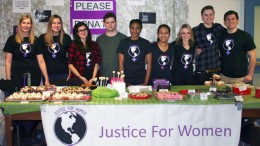
Three years ago, U of M student Alana Robert founded Justice for Women, a project designed to advocate and fundraise for critical human rights issues…

Artist, activist, and traditional Inuk throat singer Tanya Tagaq addressed a full house at St. John’s College’s annual Marjorie Ward Lecture on Jan. 25, drawing a connection between her work and her heritage.

A 14-storey apartment complex planned for a property adjacent to the University of Manitoba campus is expected to add more than 200 units to the…

Students of the Université de Saint-Boniface (USB) – the only publicly funded post-secondary institution in Manitoba without on-campus day care – are hopeful the university’s…
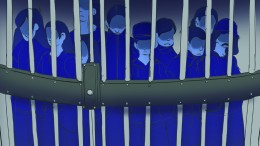
In a recent CBC interview, Howard Sapers, the Correctional Investigator of Canada, outlined some of the most recent statistics on prison populations and incarceration rates in Canada. They show dramatic increases in the number of Aboriginal people incarcerated in Canada, which can only be described as proof of the systemic racism inherent in our country’s judicial system.
25 per cent of the incarcerated population in federal correctional facilities are of Aboriginal ancestry. In the Prairie provinces, this rises to 48 per cent. When looking at Aboriginal women independently, over 36 per cent of women in Canadian prisons are of Aboriginal ancestry.
These numbers are staggering, but even more so when compared to the statistics from previous years. To put this into perspective, Aboriginal people made up 4.3 per cent of Canada’s population in 2011 (the year of the last census).

Jan. 21 marks the anniversary of one of the most important days in human history. The liberty that we enjoy on a daily basis made its transition from an idea to a reality on this day 223 years ago. It was the culmination of political, philosophical, physical, and mental turmoil resulting in an act by men and women who believed in the foundation of democracy. On Jan. 21, 1793, King Louis XVI was executed by guillotine. His head rolled no differently than the ones before it.
As we embark upon another year we can remember 2015 by celebrating our accomplishments, mourning our losses, and learning from our mistakes. To do so is intrinsic to our nature and integral to forming our motivations for the year to come. I thought it only fitting that my first piece written for the Manitoban be one of reflection. There are many events that have defined 2015, but for me there were no events more divisive or permanent than the terrorist attacks in France.
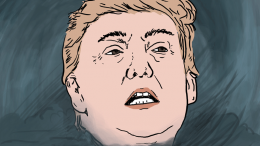
By now Donald Trump has made himself well-known for his rampantly racist and controversial political platform and the questionable comments he has made on his path towards seeking a presidential nomination. Notable examples include his plan to build a wall along the Mexico-United States border to keep Mexicans from entering the U.S. illegally, his proposal to ban all Muslims from entering the U.S., and his plan to end gun-free zones at schools, amongst others.
Although the idea of these policies actually being implanted likely seems laughable to the majority of Canadians, within the U.S. there is sizable minority of voters who openly and strongly support them and who would like to see Trump become the next US president.