Category: Editorial

  • I am more than one thing

    I am more than one thing

    I love being a multidimensional woman. I love not fitting in a box, not being what people perceive me as. There is a different feeling of freedom that comes with being a woman who does not make sense to people.

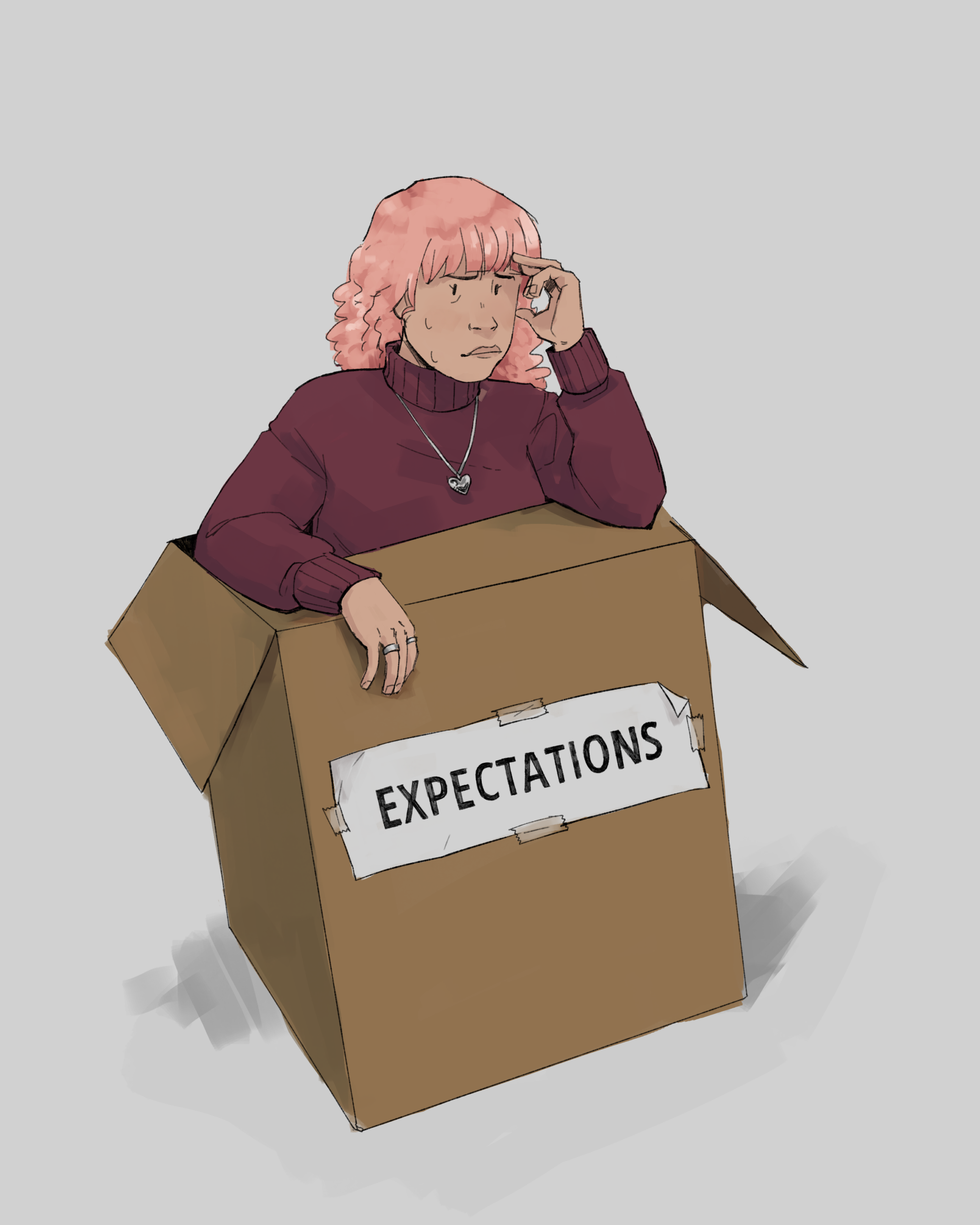
    I think being a woman means being handed a box as a little girl and being taught how to fit yourself into it — and especially, how to stay there, conformed. You play with dolls, play house and are conditioned to only like “girly things.” 

    You subtly learn what is expected of you and what is not. Then you grow up and realize you want to be more than who you thought you were allowed to be.

    Suddenly, you don’t fit in your box anymore, so you start cutting parts of yourself to squeeze back inside.

    Choice becomes a constant in your life. Do you make yourself miserable, or choose happiness and risk being criticized for it? Do you choose freedom, or love, at the expense of your identity? Why does being a woman so often feel like choosing one part of yourself over another?

    Contradictions exist in everyone because we are human. We are not meant to remain one thing. We evolve, grow and change. Yet contradictions in women are often seen as reckless and as things that need explaining.

    It took me a long time to reconcile my own clashing personalities — or at least what others deemed as such. How could I be the only Muslim woman wearing a headscarf in my swimming class? How could I be among the only two women in my boxing class?

    How could I be someone who everyone thought was sweet yet have boundaries? How could I be a good daughter and do what made me happy?

    Culture and tradition have an evil way of masking expectations as virtues. You learn that being loved means being easy to accommodate, and being good means being agreeable. Eventually, you become so accustomed to being perceived that you begin perceiving yourself.

    For a long time, it felt like there was a theatre in my head, an audience watching while I performed. Every decision seemed to contradict another part of who I was. But who was I performing for? Who was I disappointing, if not myself, by denying myself freedom simply because someone might perceive me differently?

    There is nobody to perform for. No audience. Nothing to earn — not respect, not approval, not love.

    When I think of all the amazing women around me, including my mother, I see the millions of different things they have dared to be throughout their lives despite everything. They are soft and stubborn, loving and independent, traditional and unconventional, sometimes all at once. I want to be like other women.

    Maybe that is also why girls have always loved Barbie. “There is so much more to me,” she sings in Barbie: A Fairy Secret. And there always was.

    Barbie could be strong and still be soft. She could be unapologetically feminine without femininity being the entirety of who she was. She could fall in love and have a boyfriend without her story beginning and ending with him. She could be a princess in one story and something completely different in the next, and none of those versions made the others less real.

    Maybe we were never supposed to choose. Maybe being a woman is being allowed to be all of it.


  • Why I love being an unc

    Why I love being an unc

    I have always been an “unc,” despite only being in my early twenties. 

    According to the Merriam-Webster Dictionary, the word unc comes from African-American English and is an abbreviation of uncle. The term was originally used for uncles or older men, but in recent years the internet has appropriated the word, using “unc status” to describe someone who acts older than their age in addition to people who are old or getting old. 

    I first noticed my unc status at age 15 during a trip to Italy. I desperately wanted to spend time admiring medieval and Renaissance art or bask in the splendour of Gothic cathedrals. My peers, however, were far more interested in taking photos for social media. I quickly realized I had different interests and priorities compared to others in my age group. It certainly did not help that I was nicknamed Gramps for the rest of that trip. 

    Being an old soul can be isolating. I am often the only person in the audience without grey hair at a classical music concert (and the only person of colour, too). It also prompts strange reactions. I mentally brace myself for the awkward silence and blank stares that typically ensue when I tell people I unironically play fiddle music. I am mad for tweed blazers and wool sweaters, or “old people clothes,” as many in my life have lovingly put it. 

    Despite my work in arts and culture, I find it difficult to follow popular culture, and I am frequently lost in conversations about the latest trends and celebrities. I am somehow both chronically online and perpetually out of the loop. If you have ever approached me with a piece of celebrity gossip, I probably had no idea who you were talking about, sorry. This comes from a place of genuine disinterest, but I would be lying if I said I did not actively avoid the mass-produced and algorithm-driven content designed to be nothing more than a cash grab. Does my “unc-ness” come with a tinge of snobbery? Perhaps.

    It is also disappointing that the resurgence in vintage fashion and lifestyles, particularly in online spaces, is sometimes accompanied by conservatism, with people blindly romanticising the “good old days” without critical evaluation of the racial and gender inequalities of the time. I, for one, have no desire to align myself with these notions, and my affinity for old things does not extend to outdated values and bigoted beliefs. 

    However, on the flip side, having unusual interests makes my relationship with those who can match my wavelength extra precious, and some of the best moments of my life have been spent with people who are equally as oddly specific and nerdy about cultural history as I am. It allows me to identify the people who matter, and I do everything to nurture meaningful connections with them. 

    More importantly, I slowly realized that people who just don’t get it might shrug or give me an odd look, but they quickly move on with their lives. It is true that we all make value judgments of other people, whether consciously or not, but life is too short to be preoccupied with what someone may or may not be thinking inside their heads.

    It is also entirely possible that I have lost the plot. Perhaps I have been overly focusing on my differences with people and overlooking our commonalities. I like to think that human beings are infinitely complicated and diverse, and there are always facets of our psyche that are incomprehensible to anyone but ourselves. Maybe being peculiar in our own ways is just a part of what it means to be human. 

    I am aware of the great risk of sounding “woe is me” with this article. I can assure you that I am not trying to make myself a martyr over a trivial issue, and we all know there are bigger fish to fry in the grand scheme of things. I am not bashing conformity either, and there is a right time and place for expressing oneself. But embracing my unconventional side is one of the most liberating things I have done for myself, as cliché as it may be. 

    In the meantime, I will continue to yearn for antique dark wood furniture and go on long walks to nowhere in particular. If you ever see me wearing a grandpa sweater and a flat cap on campus, know that it is my way of living authentically — and I urge everyone to find their own way of achieving that.

  • Africa, Mama

    Africa, Mama

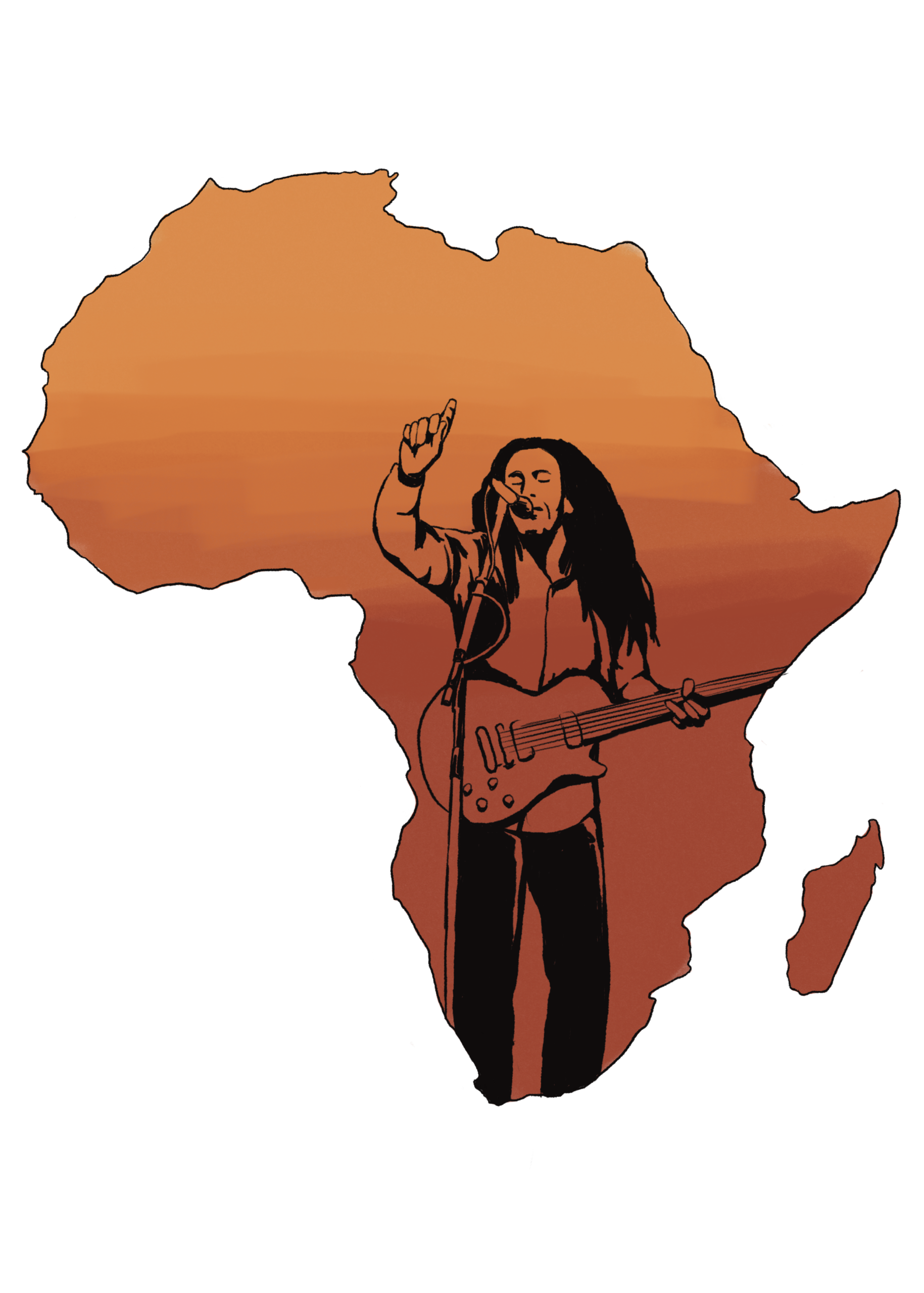
    “If you know your history, you would know where you’re coming from, then you wouldn’t have to ask me, who the heck do I think I am.”

    I heard it first from Bob Marley but I am not sure if he invented the saying. But, through “Buffalo Soldier,” he helped generations of listeners to reflect on it. The line has since struck me as more than a reminder to learn dates, names and events. It is a reminder that history shapes how we understand ourselves. And perhaps nowhere is this more complicated than among Africans and people of African descent living in the diaspora.

    Somewhere, deep in our minds, it can become remarkably easy to bring race into the room when we are trying to explain our lives. Why have I not achieved what I thought I would by now? Is it racism? Why am I being treated differently? Is it because I am Black? Why is getting a job so difficult? Why do some people still react surprised or even amazed that I can speak English this well? Is it because I am African? Why is dating so complicated? Why does society seem to expect something different, usually more, from me? Does being African or Black affect how people see me?

    Sometimes, the answer is yes.

    Race matters. Racism does exist. White supremacy still exists. The histories of slavery, colonialism and racial exclusion have not simply disappeared because we have entered 2026. They have shaped institutions, economies, cultural representations and social relationships, and their effects can continue to be felt in the lives of Black people and Africans across the world.

    But there is another question worth asking. What happens when race becomes the lens through which we begin to interpret everything about ourselves?

    This is not a call to stop identifying racial discrimination when it happens. Rather, it is an invitation to examine what happens when a history of racialization becomes so deeply embedded in our consciousness that we begin to understand even ourselves primarily through the categories imposed upon us.

    Because white supremacy does not only operate by telling other people that we are inferior. Its deeper success is achieved when its assumptions become so familiar that we begin to measure ourselves against them.

    To understand why this happens, we must understand what Africans and people of African descent have been made to carry. The histories of slavery and colonialism did not merely involve the extraction of labour, land and resources. They also involved the production of ideas about who Africans were. Africans were repeatedly represented as uncivilized, childlike, incapable of self-government and in need of European intervention.

    The violence was therefore very much psychological.

    A system that has told people that they are inferior eventually creates a problem that extends beyond the people doing the telling. It creates the possibility that the people being described will begin to ask whether the description is true. If we also consider the complicated relationship some Black Americans have historically had with being identified as African, we see it is easy to dismiss such distancing as ignorance, internalized racism or, in the language of the internet, “delulu.” But can we really blame someone for reacting defensively to an identity that a society has spent generations teaching them to associate with backwardness? If “Africa” has been repeatedly painted as less civil, prosperous or modern, then rejecting an association with Africa can become a form of psychological self-protection.

    That does not make the rejection historically accurate, but it makes it understandable. And that distinction matters. The problem is not simply that some people do not know African history. The problem is that many of us have inherited a version of African history that begins with our supposed deficiency.

    We are taught about slavery before we are taught about the civilizations that existed before it. We learn about colonial conquest without always learning enough about the societies that were conquered. We hear about African poverty without adequately understanding the historical and political processes that helped produce contemporary inequalities. We are often introduced to Africa through what it lacks.

    Africa was never simply the recipient of civilization. 

    This is where remembering history becomes important, as Marley pointed out. Africa did not begin with European colonialism. Her societies were not waiting in history for Europe to arrive and introduce civilization. Her peoples across the continent developed complex political systems, economic networks, philosophies, intellectual traditions, technologies, agricultural practices, architecture and forms of social organization. Civilizations across the continent participated in regional and long-distance trade and produced remarkable cultural and material achievements.

    I am not romanticizing Africa. Africa continues to experience her own fair share of conflict, inequality, political failure, exploitation, patriarchy, corruption and countless other problems. Africans should be able to criticize these realities honestly and criticism is not contempt. But acknowledging African problems does not require concluding that Africans are inherently problematic. That distinction is essential.

    The goal is to remember simply, accurately and importantly that Europe is not the yardstick.

    Africa is not valuable because it resembles Europe. African people are not valuable because Europeans recognize their value. African humanity precedes the racial hierarchy imposed upon it. 

    What, then, do we carry that we must remember from history?

    We carry the memory of survival and of resistance. We carry languages, music, literature, food, spirituality, philosophy, kinship systems, artistic traditions and forms of community that survived attempts to erase or subordinate them. We carry creativity, strength and belonging. This keeps us going and moving. I say, this is what matters. Therefore, we cannot let race become the only lens through which we interpret everything about ourselves.

    The question now is not simply, “Who is preventing me?” It is “Given the history I have inherited, what am I going to do with what I carry?” 

    To know history is not to become trapped in it. It is to decide what deserves to be preserved, challenged and left behind. Marley’s “Buffalo Soldier” reminds us that identity can be complicated and people can carry histories they did not choose. But we must remember. Not because our ancestors’ suffering is all we have, but because forgetting leaves other people to tell us who we are. 

    Europe is not Africa’s reference point. 

    To know this is to finally stop asking whether we are enough according to someone else’s measure.
  • Small-scale farming is the future of tomorrow

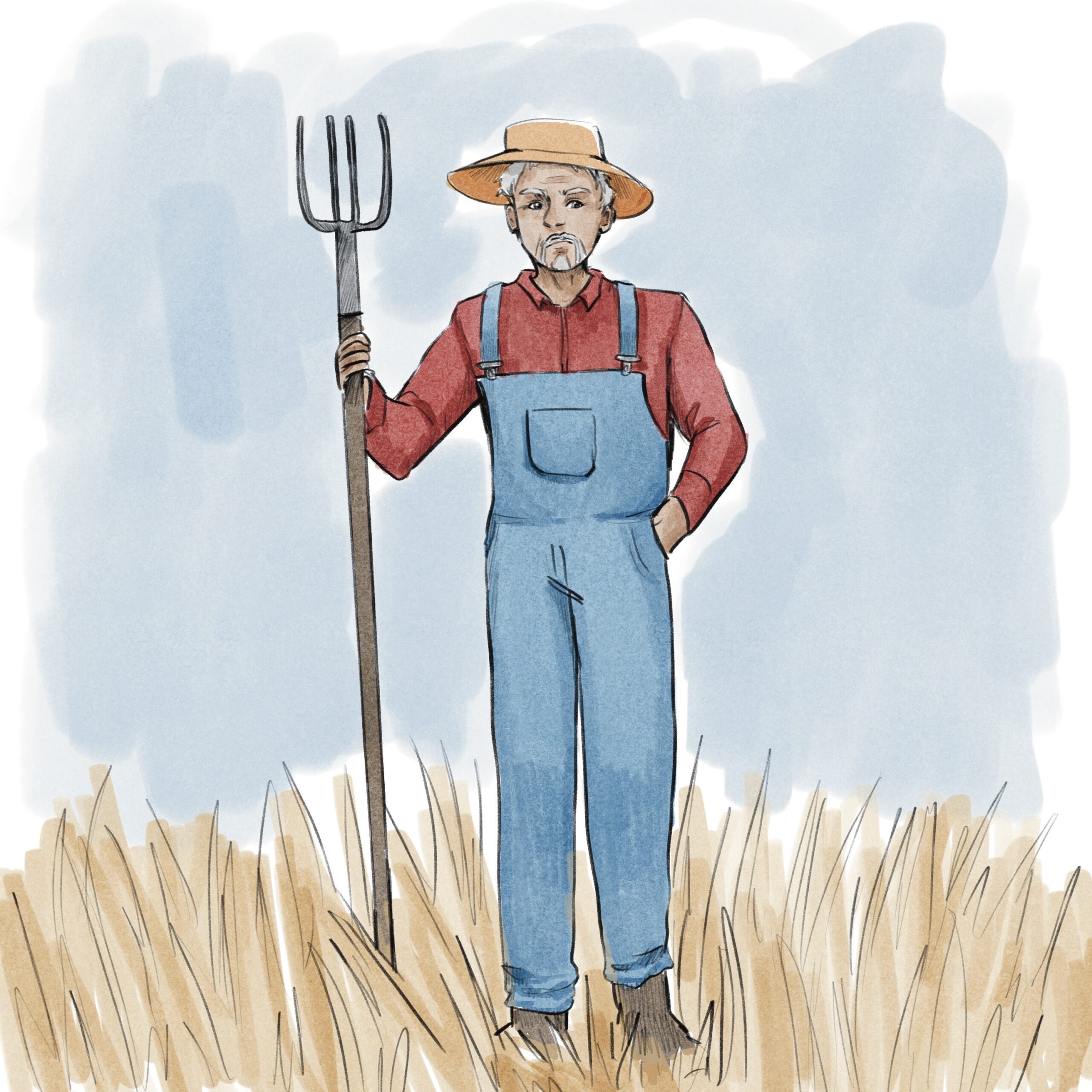
    Small-scale farming is the future of tomorrow

    Have you ever looked in your fridge and wondered where your food comes from? Food production is often based on aesthetics, time production and profitability rates, with production often being fast-paced, using pesticides and plant growth hormones. Food is fundamental to a sustained life, but when was the last time we questioned what goes into our bodies? 

    Canada imports $65 billion worth of food annually, with our main suppliers being the U.S. and Mexico, making Canada frequently reliant on other countries for our demand for fruits and vegetables.  The Canadian climate is not suitable for growing the variety of fruits you find in local grocery stores. Despite this heavy reliance on food imports, Canada is still dependent on local farmers to produce much of its domestic food supply. The Canadian farming sector provides jobs for 2.1 million people, but job security is conditional on the ability to yield crops.

    The ability to secure profit is linked with climate, absence of natural disasters and crop yields. These uncertainties can pressure farmers to use pesticides and growth hormones to be able to protect their harvest and maintain production.

    The Canadian Wheat Board (CWB) was established in 1935, being the biggest buyer and seller of Canadian wheat, regulating the market for smaller farmers due to growing anxiety around unfair pricing by large grain corporations. Until 2012, the CWB was backed by the government, having clauses that if crops were to fail, there were pool programs and extensive protection programs in place. These same protection programs no longer exist to the same extent, with the government instead offering suggestions to prevent crop failure, such as using pesticides, how to manage drought and how to adapt to dryland cropping systems. 

    These suggestions from the Canadian government are only temporary solutions to longer-lasting problems. Pesticides are among the most widely used chemicals in the world, with Canada having one of the least stringent regulations among industrialized countries, despite the potential risks and impacts on food and health of Canadian citizens. To feed into sustainable food production, we must terminate the registration of pesticide products where the primary active agent has been banned in at least one complying OECD nation due to health and environmental concerns. 

    In the U.S. this summer, there is a foodborne virus going around stemming from a parasitic infection known as cyclosporiasis, with over 8,000 confirmed cases. The infection has been connected to the purchasing of iceberg lettuce from Taylor Farms, a multi-billion-dollar organization, but the FDA has since stepped back and said the Taylor Farms test for cyclospora was a false positive. No matter the source, this health emergency likely resulted from neglect of responsibility. If the companies that are supposed to protect their consumers are failing to properly test their produce before shipping out, how can we even trust the food in our grocery stores? 

    We need OECD-regulated products and we need to be protecting our smaller-scale farmers who aren’t billion-dollar industries but families who rely on revenue to support themselves.

    Smallholder farms are the key to sustainable agriculture. Yielding higher biodiversity with varied crops and ecological land management with limited insecticides, small-scale farming is the future of tomorrow. Ask yourself, where does your food come from before you use it to fuel your body?

  • Unplugging from the Matrix

    Unplugging from the Matrix

    The Matrix (1999), directed by the Wachowskis, is ingrained in our modern understanding of the internet and pop culture. The film follows Thomas Anderson, also known as Neo, a disillusioned programmer whose free time is spent online searching for something he knows as “the Matrix,” and a man at its core, Morpheus. He finds his answers and awakens from the world he knows — a late 90s generic American anycity — and into the grimy and depopulated “real world” a thousand years in the future. His suspicions are confirmed that the world he thought was real, in fact, is a simulation created by machines and artificial intelligence (AI) which are using humans as an energy source to fuel their own existence. Neo, by logic of this world, is the chosen one who eventually learns to harness control over the code that makes up the matrix and eventually leads the revolution against the machines. 

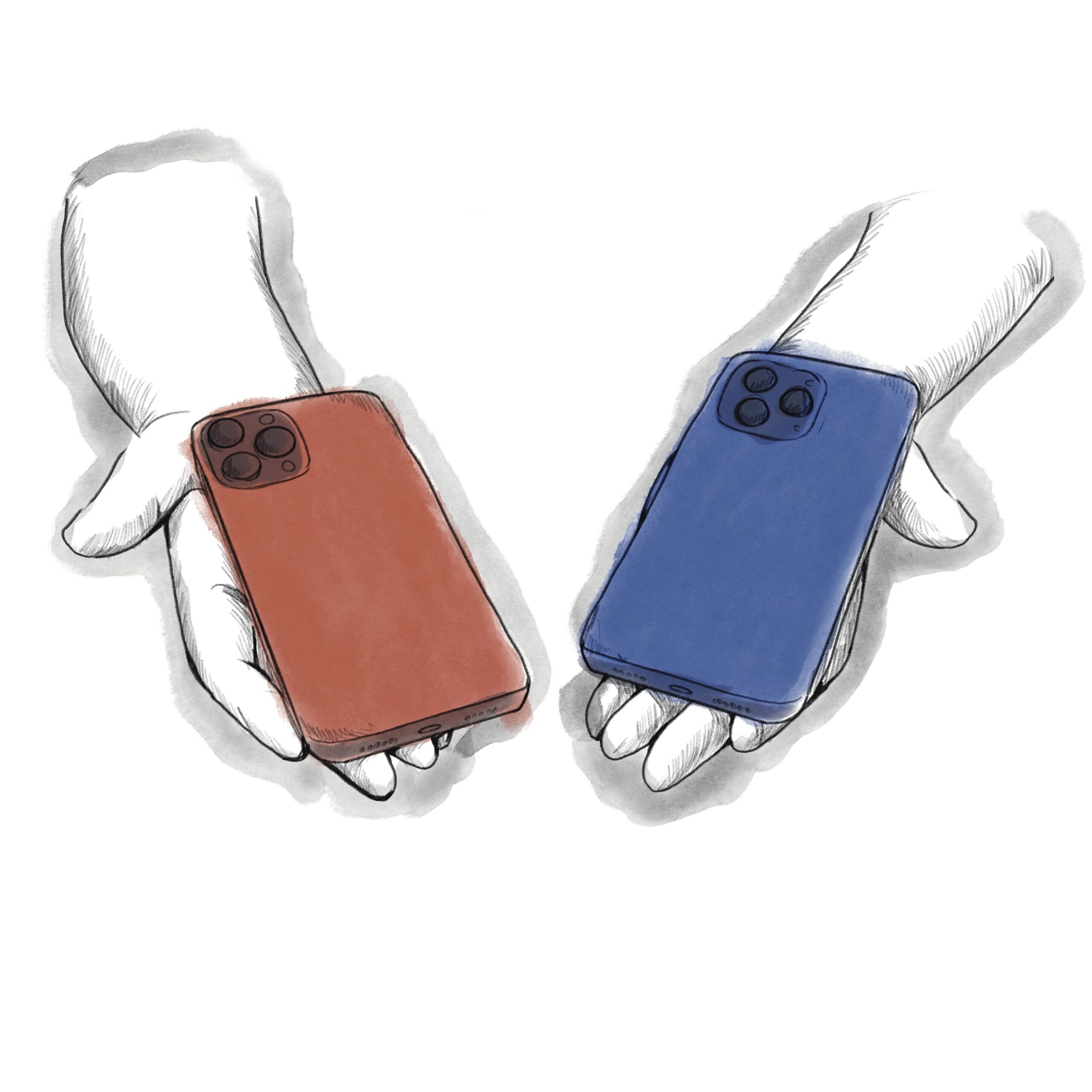
    Most famously, the film is purported to be the originator of the choice between the red pill versus the blue pill, the former of which serves the purpose in the film to “wake up” the protagonist Neo to the reality of his situation as caged within a digital world — “how deep the rabbit hole goes.” If Neo takes the blue pill, on the other hand, he will continue to live in the world he knows. Offered this by Morpheus, Neo takes the red pill and begins his journey. This act of “taking the red pill,” through cultural osmosis, has made its way onto the Internet as becoming “redpilled.” I don’t have much to say on the red pill movement in this editorial, but I will say that it is very ironic that a hateful online community got its philosophy from a film about the unreal nature of the internet, directed by two trans women. 

    While I cannot speak on the accuracy of the future depicted in The Matrix, we do live in a similar world in the current day. While we aren’t kept unconscious in pods where our life juices are drained out of us to fuel AI, the digital layer over our lives is developing faster than anyone can monitor. Although not The Matrix, what we do online matters both online and in the “real world,” and the line is getting progressively more blurred as time goes on. Digital “third spaces” are becoming more and more prevalent, particularly since the initial COVID-19 pandemic, and people are spending most of their days online. There’s also the irony that the AI data centres being constructed around the world are, like their Matrix counterparts, sucking up the necessities for human life as we know it. 

    Understanding my own relationship with the internet has become difficult in the past year as I took on the role of Editor-in-Chief at the Manitoban. Though I can’t deny having an upbringing that had an internet connection, I have always teetered a little luddite in some of my preferences. I strongly believe that the newspaper should have a digital presence at this time, but how about myself, Mikaela?

    Earlier last year, when my friends and I would spend time together, at least one of us would make a joke about how we would be on our phones. There was definitely an air of irony about the situation — one of us would comment that no one was watching the movie we coordinated weeks in advance, or once we got to a restaurant, we would order our food, then watch Instagram Reels (at least I would — despite my dependence on my phone, I never really became a TikTok user). Eventually, last November, the first of my close friends fully detached herself from Instagram and moved all correspondence to her phone number. From then until now, about half of my friends have joined her in logging out of classical social media accounts, and we’ve moved the majority of our correspondence to WhatsApp (I know, still a Meta company). 

    In all honesty, I would really like to delete Instagram and with it, all the things on it that overwhelm me, worry me, and eat up my free time. I don’t want to consume content that is AI-generated, which is more likely than not. Stanford University’s Institute for Human-Centered AI has reported that in 2026, 51.72 per cent of content online is AI generated. Selfishly, I also cannot bear to watch genocides through 30-second clips. Plus, I can feel my mental health declining witnessing second-hand the results of our ongoing climate disaster. 

    I don’t want to be attached to this machine. Ignorance would be bliss, I suppose.

    But the nasty thing about it all is that the torrent of information that pours into my brain the second I open my phone contains real and important information about the real world around me. I am witnessing most of these events as a digital bystander, with the rules on helping people across the globe tied to likes, shares and follows. I strongly feel that my role working for a newspaper and working in information also means I must maintain an awareness of the world on the internet. In fact, I must do it to maintain the purpose of the newspaper — to platform and discuss topics relevant to the U of M students and community. I cannot simply ignore a whole other world by turning off my phone. 

    Now, this certainly sounds like a dramatic cross to bear! I will not stand here and say it is my job alone to take on the brunt of what the internet has to offer for the greater good of my community. In fact, there are a lot of really cool journalists who function mostly online and have established their presence across social media. It’s also not my job alone in the newsroom at the Manitoban — there are currently fifteen other people, most with social media accounts, that all work here and do their best to keep up with current events. At the end of the day, the internet is such a vast ocean, and the amount that I witness is only a drop. The combined knowledge of the Manitoban staff is probably around a glassful, which offers some peace of mind.

    I will say, though, that it is irresponsible for me personally as a journalist to discount the goings-on of the internet. I must stay plugged in. 

    So, can I even unplug from the Matrix around us? Do I take the blue pill, live a life where I continue scrolling, or do I take the red pill and leave this behind? 

    Something that I failed to discuss earlier in my recap of The Matrix’s plot is that even after Neo’s initial exit from the Matrix, he and the other freed humans regularly return to it. Computer programs similar to the one that keep mankind in pods also train Neo to eventually attain power to free other humans. Both worlds are held in the same light, with the understanding, “if you die in the Matrix, you die in real life.” Plugging back in is functionally them boarding a bus to the Matrix, an actual location that might not exist in the physical, but still has physical ramifications. When the red pill is taken, you don’t actually ever abandon the Matrix, you only abandon the comfort it could provide. Indulging in this dangerous knowledge might be painful, but Neo learns how to harness this information for himself and eventually balances between the worlds as a way to free humanity.

    I actually don’t know how I am going to be working in the digital world in the future. I might have “taken the red pill,” but now the work has to begin to maintain a balance between the worlds. There are probably a thousand different tips and tricks to cut down on perceived time wasted on social media, but I don’t know what will work for me in my life, at least right now. In the meantime, I guess I will keep on scrolling.

    This is Mikaela’s non-exhaustive list of journalists that stay active on Instagram:

     Blue Jay Walker @blue.jay.walker

    Rachel Gilmore @r.gilmore

    Bisan Owda @wizard_bisan1

    Isaac A. Peltz @isaacapeltz

  • Newspapers are bigger than us

    Newspapers are bigger than us

    Physical print has always been important to me. Every inch of my house is covered with books, newspapers and letters, reflecting my ongoing need for remembering and connecting beyond the digital realm — a realm that can sometimes feel soulless and devoid of intimacy.

    As more and more people choose to get information online, I find myself searching for a connection that only physical print can offer amidst the artificial intelligence and psychological decline that the internet is slowly growing amongst the masses. 

    Newspapers have always acted as a source of mass communication issued daily, weekly or biweekly. The Acta diurna, the forerunner of modern-day newspapers, was created in ancient Rome, posting statements of political and social events. Newspapers maintain the same purpose — to inform and act as a connection within the public sphere. 

    A few years ago, I remember telling a friend I had joined the Manitoban, expressing my desire and enthusiasm for journalism, to which she had responded with something along the lines of, “Newspapers are dying anyway.” Many people, like my friend, view journalism — especially in the print media context — as a dying venture. I’d like to assert that perhaps it is people who insist it’s “dying,” who are undereducated about its political and historical importance.

    Print media has a form of quiet intimacy. It fosters community, whether it’s in the form of book launches, art exhibitions or just reading a newspaper or magazine over a morning coffee. There’s something special in physically holding something that you have helped create. 

    These outside spheres of third-party locations act as meeting places that facilitate meaningful conversations and intelligence that go beyond arguing with a 56-year-old named Todd on Facebook who insists the world is flat. 

    The little elements of physicality that come with interacting with art or being in the vicinity of physical or print media create moments of ownership. Whether it’s owning the newspaper or magazine you helped create or being immersed in the creative space and appreciating the time and effort that went into making work you can physically hold, these experiences deepen a sense of connection and value. 

    Nostalgia also strongly contributes to my longing for physical media. My childhood memories are filled with televisions with fuzzy screens and magazines were a go-to staple for fashion information. I find that people still yearn for the familiarity of these mediums, rather than the unfamiliar feel of a cold screen.

    Despite being able to easily find news online, there’s something special about being able to hold it in your hand. I would like to encourage everyone to pick up a piece of print media from your local coffee shop, doctor’s office or bookstore and enjoy the experience of being immersed in something other than your screen. 

    Newspapers, like all physical media, are important tools of connection. I encourage anyone passionate about writing or creating something bigger than themselves to sign up for an art club or maybe even join their local newspaper if they even have an inkling of interest. 

    I’d like to end this article by saying how much I’ve enjoyed writing articles this year for whoever reads them. I hope you enjoyed reading them as much as I did writing them. This is Quinn signing off.

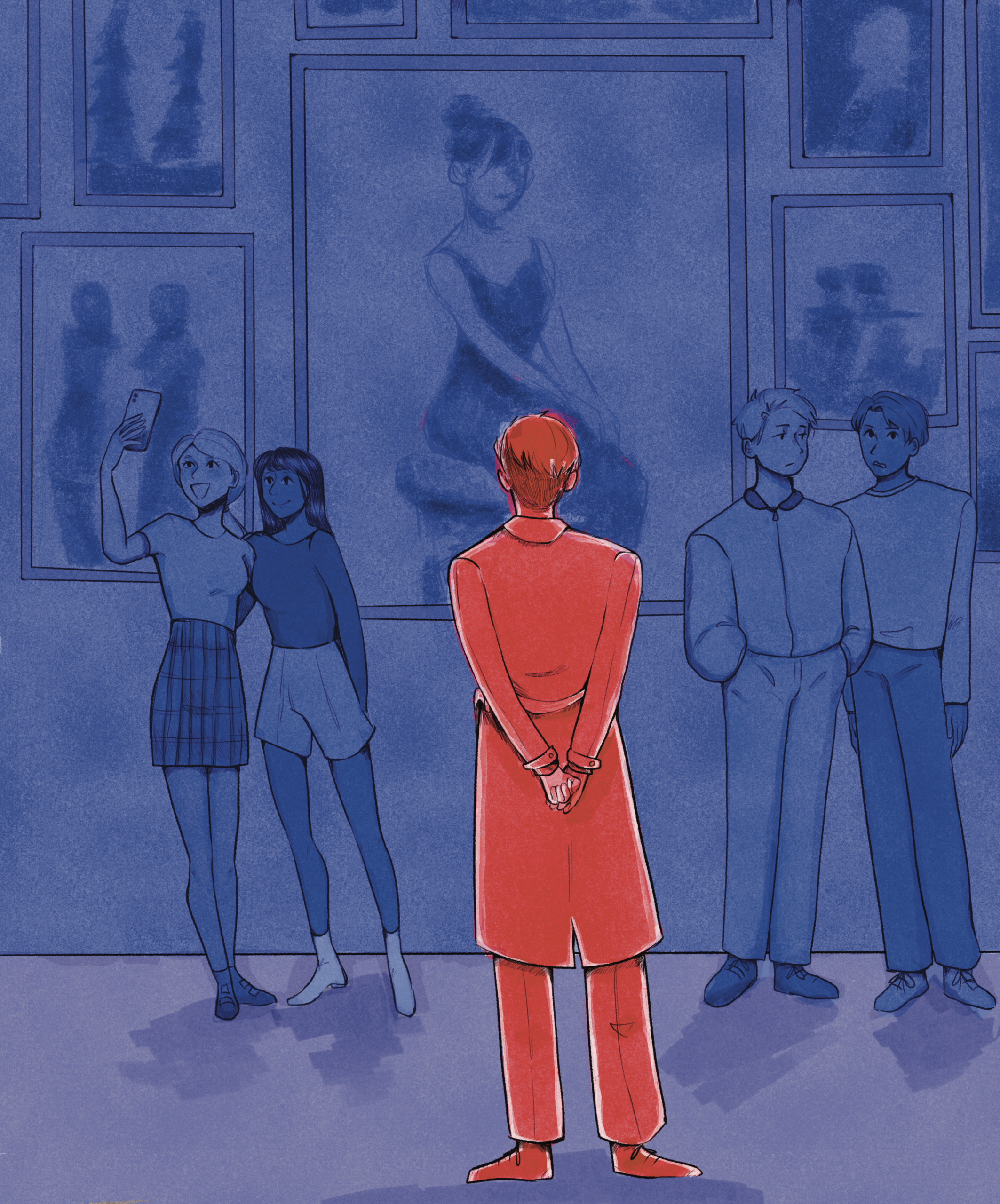
  • The wonders of museums

    The wonders of museums

    Museums offer a place for more than just displaying art, science and the events of the past. Museums are places for people to get lost in and discover interests and passions on display, to learn about the past and look at the future of what these showcases are teaching us. 

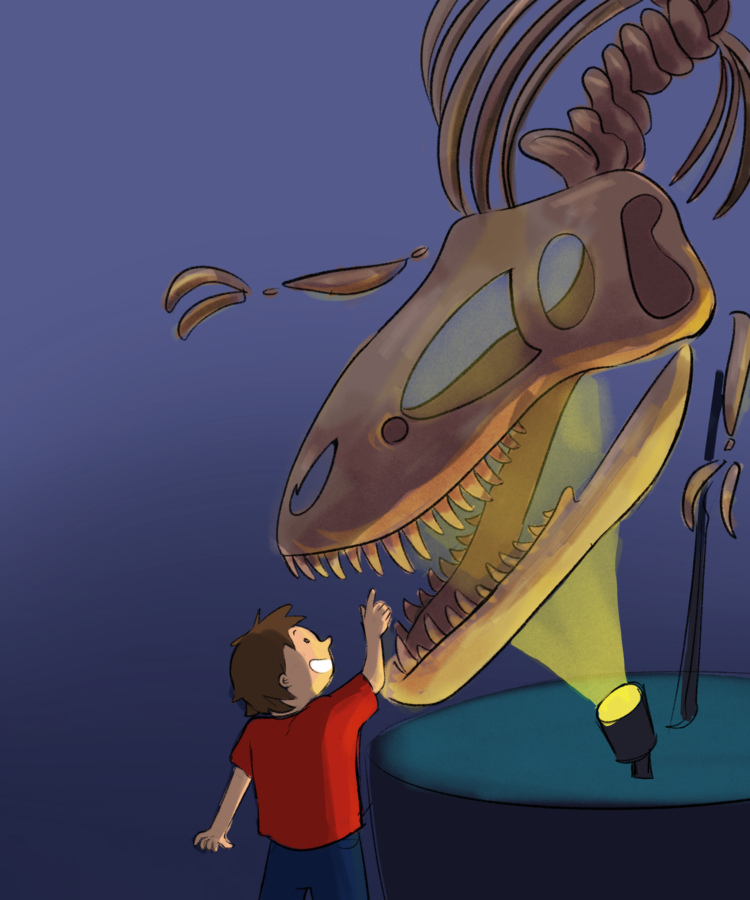
    For some, like myself, museums even push us to pursue or engage with fascinations we had growing up. As a kid, I was fascinated by dinosaurs and wanted to get my hands on everything I could that involved them. Every rock I picked up, I hoped would contain some sort of fossil that I could take home. I had books of all kinds of dinosaurs — picture books, science books, dictionaries — and I would read them over and over. When my family and I would go to the Manitoba Museum, I would wander around all the exhibits, but when it came to the dinosaur and prehistoric history sections, I would become fully immersed in what the museum had to offer. 

    The Canadian Fossil Discovery Centre in Morden would also inspire me. Morden is a hot spot for fossil discovery, so it was only reasonable that I had to go there. Being a fossil museum, every display was like looking at gold for me. Every weird, iconic and niche dinosaur and prehistoric reptile I saw, I had to know everything about, which would lead to me talking my parents’ ears off about everything I saw. 

    There was one fossil centre, however, that would set my interest in stone and shape me and what I wanted my future to look like.

    When I was around fourteen years old, we took a road trip to Alberta to visit some family. One of the major activities we did was take a trip to the Royal Tyrrell Museum in Drumheller, a paleontology museum and the highlight of my trip. Everything I could think of seeing was in there, and much more.

    I read every card of information, watched every video and walked through every exhibit, doing anything I could do to fill my head with as many dinosaur facts as possible. When I reached the end, I realized my dad and I were the only ones from my family left there — everyone else went back home. I didn’t even notice I was there for over six hours. When we caught up with everyone else, my uncle asked what I thought about one of the plant exhibits. I was confused, though. I didn’t see the exhibit he was talking about. I dragged my dad back to the museum that night to make sure I didn’t miss anything and spent another hour and a half going through it again.

    If it wasn’t for these trips to museums and fossil centres, I doubt I would’ve chosen the courses that I did and pursued my interest as I have. Those exhibits, for many people, are more than just cool information booths. They are a confirmation that their interests are things to chase after. They are examples of their love of art and science on display to inspire them to reach for their dreams.

  • Ceramics is the art of acceptance

    Ceramics is the art of acceptance

    If there is one thing ceramic artists can agree on, it is that you have to be ready for any and all outcomes. I spend weeks on the work that I do, and I know that it could go wrong at any point. 

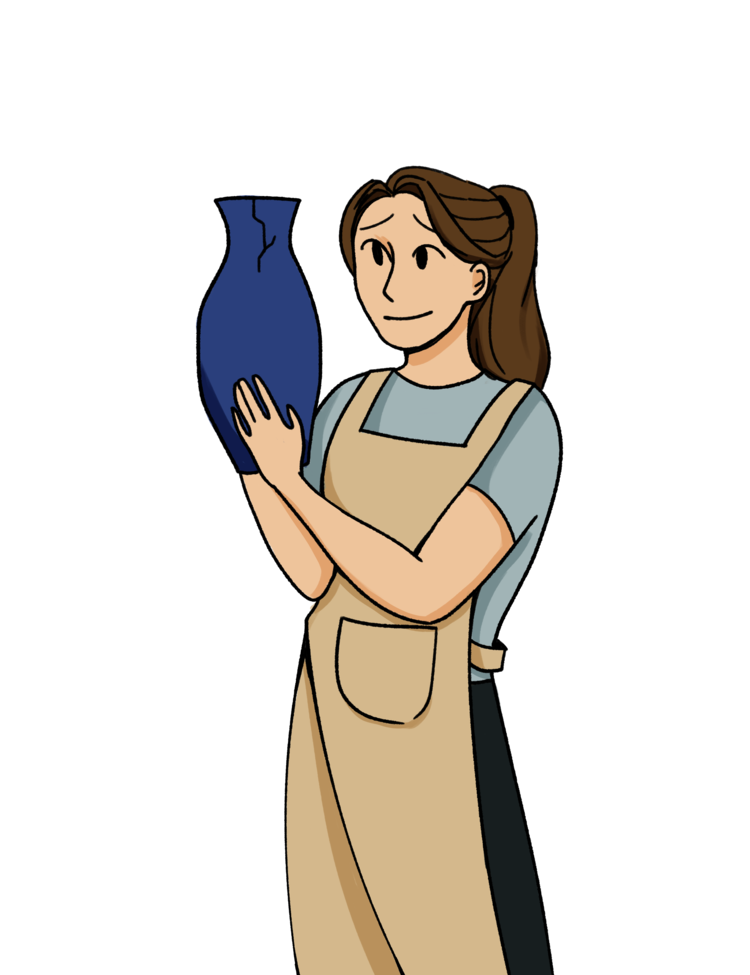
    I have watched works be knocked to the ground and shatter, fall off the wall and smash into a thousand tiny pieces or break right in half when it was carried wrong. There is no silence quite like the one that follows in the studio when there’s an unexplained crashing sound. It is disappointing to have the outcome of such hard work end so abruptly. 

    However, I have never seen acceptance come faster than after a work is broken. There is nothing to be done except to move forward and there is no going back to how it was before. The best thing to do is to try again.

    I employ that same philosophy with my own work — whatever happens happens. It often happens that a crack will mysteriously appear overnight, or the clay will warp or sag or any number of things will go wrong. More often than not, damage control is what I become preoccupied with. Even after taking delicate care to ensure the best chance of success, there is no guarantee that it will be okay at the end. 

    It is a cathartic experience. Before every firing, I lean over the kiln and look at my work one last time, remembering it exactly as it was in that moment because when I see it again it will never be the same. I close the lid and accept that there is no going back, I can’t hit the brakes on it now. 

    Even when things don’t turn out as planned, I have learned that there is still much to gain from a bad outcome. I learn the limits of my techniques, what needs fine-tuning and what I can do better next time. 

    There’s no possible way to control the exact outcome — it may work, it may not. Maybe it will be beautiful or horrifically ugly. Does it feel like a personal betrayal when my work has a crack or doesn’t work out? It does! But for a little while. I knew it could happen anytime, but acceptance swiftly follows. 

    I am of the opinion that when you’re unhappy with an artwork, it’s best to tuck it away for a while before looking at it again. When I pull it out again, I look at it with much kinder eyes. Maybe it’s not what I wanted, but that’s okay. Its existence is proof that I exist, and isn’t that a wonderful thing?

  • Hidden lessons from the screen

    Hidden lessons from the screen

    Everyone watches television shows and movies, quotes characters and debates over whether Batman could beat Iron Man with proper preparation in a battle. But for me, the most intriguing thing about a character isn’t what, but how they think. Over time, I’ve realized that certain characters tend to stay with me long after the credits have rolled.

    Somewhere along the way, I started taking mental notes of the characters I really liked. I would listen to their theme songs, wear their style and cut my hair in a certain way to match theirs. But it’s not always their lifestyle that draws me in. It’s their way of thinking. 

    Characters in shows are exaggerations of human traits, but when you separate the drama from the mindset, there are ideas worth keeping, like Tyler Durden’s fight with society, Harvey Specter embodying confidence, Spider-Man reminding us that doing the right thing rarely looks heroic and Barney Stinson’s reminders of intentional self-reinvention.

    Tyler Durden from Fight Club is one of the most controversial characters in modern film. He is loud, reckless and destructive. He rejects comfort and questions society in every step of his journey. One of the key points I took away from watching this character was the desire to never be complete.

    Advertisements promise happiness through possessions, convincing people their identity is built through brands and products. This media influence was never needed for survival among people. Although Tyler pushes the narrative that his ideas and goals are dangerous and extreme, prompting audience to ask, “How much thinking do we do on our own?”

    Harvey Specter from Suits embodies confidence. He walks into every room like he belongs there, carries himself with calm and confidence, which eventually helps him win. Throughout the series, his success is tied to preparation, strategy and reading people. His famous attitude of, “I don’t believe in luck, I make my own luck,” has stayed with me till this day. Preparing yourself before everything and working on yourself while being uncomfortable is something I strive for. Of course, the show dramatizes everything — real-life courtrooms rarely look like a television courtroom showdown — but the underlying lesson is that confidence is a skill that grows with preparation and self-belief.

    In the world of superheroes, Spider-Man, or Peter Parker, is not a billionaire, a king or god, but an average young person who suddenly got extraordinary abilities. What makes him great is not the powers, but the moral burden that comes with them.

    The famous quote, “With great power comes great responsibility,” is relevant beyond superhero stories. Spider-Man’s life is rarely a win — he struggles with his personal life and often grapples with expectations placed on him to do what is right. A Spider-Man ideal I decided to add to my routine is the mindset that responsibility is often about finding the balance between living the different parts of your life and managing the expectation to do what is right.

    Among all the characters who shaped the way I think, Barney Stinson also from How I Met Your Mother stands out. For me, the idea of reinventing yourself everyday is something I can’t help but want to emulate. He always has a new rule for himself and learns from each mistake he makes. Barney’s famous catch phrase, “suit up” is more than you think. It symbolizes a choice about how to present yourself in this world. The backstory of his character reveals that he wasn’t always confident and charismatic. At one point, he was insecure and unsure of himself. The idea I take away from his character is that people are not stuck with the version of themselves they started with.

    When you strip away the drama, each character represents a certain mindset, such as questioning the system we are accustomed to, walking into a room with confidence, accepting responsibility, finding balance and believing in yourself for reinvention. Of course, these are fictional characters, but the ideas and lessons they carry are real. In the end, mindsets are not something we are born with — they are what we build, one idea at a time.

  • How spaces choreograph for us

    How spaces choreograph for us

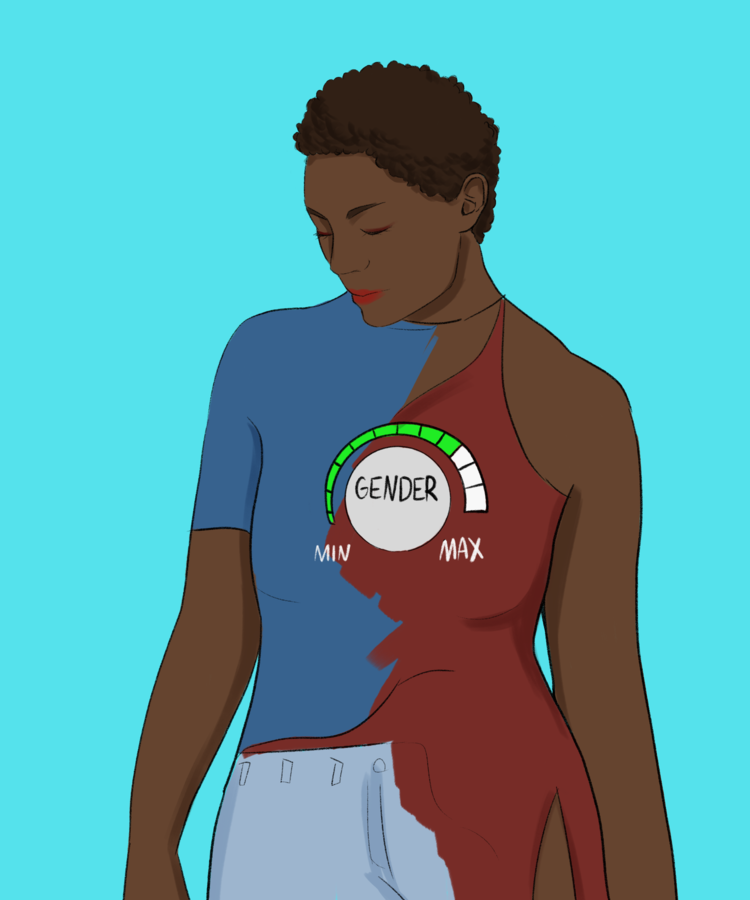
    How much of our gender expression is choice, how much is choreography?

    In the fall of 2025, I spotted someone on campus whose clothing seemed unusually bright, in contrast to the subdued and “calm” hues of a Winnipeg semester. The colours were vibrant and the makeup deliberately loud. The contrast was stark. My first thought was simple — that’s too much.

    I didn’t say it out loud. But I recall my reaction was immediate.

    A few months later, at a conference dinner, I found myself wearing a gown. Now, I am usually a jeans-shirt-and-sneakers person, confident in understated comfort. But that evening carried its own expectations. I let a friend style me. I wore the makeup. I put on the heels. The compliments came and I did not feel out of place. If anything, I smiled all through the event, even though I had felt and complained many times to her that “it was too much.”

    Two different places. Two different required scripts. But, for both, gender felt less like an instinctive self-expression and more like a choreography, something we ought to follow.

    We sometimes discuss gender as if it can be a pure expression and arises from authenticity. Be yourself. Dress how you want. Show up as you are. And yet, most of us intuitively understand that not every version of ourselves fits every room.

    Campuses have a distinct aesthetic vibe. And from my observation, in Winnipeg’s fall, the vibe is practical — neutral colours, denim, hoodies and sturdy, functional shoes built for changing weather. The atmosphere is relaxed, casual and almost utilitarian. Against that backdrop, brightness reads loudly — not necessarily wrongly, but noticeably.

    On the other hand, I think dinner parties operate at a higher pitch. They welcome elevation. Glamour is not excess there, it is alignment. For example, in my case, a gown and makeup did not disrupt the room, rather, they blended in with the space. But that alignment was learned, acquired, encouraged through persuasion and reassurance — “Hey, Peace, it’s not too much. It’s just right. It’s appropriate. You look good. Enjoy it.”

    What unsettled me about my own reaction to the fall campus event, upon reflection, was not the brightness of the clothing. It was the speed with which I recognized and registered it as misaligned. As though I carried, unconsciously, a mental decibel scale for acceptable presentation. As if I knew, without ever being told, how loudly or not femininity, in this case, should speak in a particular space.

    That realization forced a harder question — who sets that volume? Why did I think that way?

    Sociologist Erving Goffman described social life as a series of performances, with each of us managing impressions depending on the stage we occupy. We adjust tone, posture and even vocabulary depending on whether we are in a classroom, at a job interview or at dinner with new faces. It would be naive to pretend clothing and gender presentation are exempt from that same negotiation.

    But acknowledging performance is different from interrogating its pressure.

    At the conference dinner, no one forced me into a gown. I agreed, although not without some convincing and a few moments of checking the mirror. I was also curious to see myself differently. I enjoyed the affirmation. Yet it would be incomplete to ignore that the invitation to “switch it up” was gendered. I was not advised to explore with androgyny or go further into my comfort zone. The expectation of the evening leaned in one direction — a more feminine, more polished, more visible direction. 

    I complied, not because I lacked confidence, but because I came to understand the script. This is not to say that wearing my usual pants and sneakers would have made me feel out of place. But I would have been. The room had a clear aesthetic, and my gown aligned easily with it.

    And perhaps that is the point. Scripts are rarely written down. They are absorbed. We learn without noticing how much effort a space rewards. How much brightness it tolerates. How much deviation it registers. Over time, we learn what seems expected the next time we enter a similar room, what belongs and what feels out of place.

    The individual I noticed in the fall did not violate a rule. There was no dress code. Vibrant colours and elaborate pinky makeup that matches your pink outfit are not prohibited. The only thing disrupted was harmony. The quiet, collective agreement about how campus typically looks. My reaction revealed that I, too, am attuned to that harmony.

    So maybe the issue is not that someone was “too much.” Maybe it is that we are deeply trained to detect when someone exceeds the “aesthetic expectations of a room.” And perhaps that reveals more about us than about them. If gender is self-expression, then it is also social negotiation. It moves between authenticity and adaptation. Between environment and instinct. Between who we think we are and who a room invites us to become. 

    We all perform in various ways, therefore the question is not whether we should. The question is whether we recognize how frequently the performance is subtly staged for us, and if we ever stop, mid-judgment or mid-adjustment, to ask — is this what I want to express or what this space has choreographed for me?