Growing up in Zimbabwe, public political discussions were rarely authentic. From a young age, I knew that
criticizing the government in any way was dangerous, even among friends. I remember my cousin at the
University of Zimbabwe telling me that government officials sometimes attended classes to monitor
discussions. This stifled the conversations students and professors could have about the government and
incited a fear of honesty within the university. I had the impression that it was almost impossible for institutions
to be impartial when teaching, especially subjects like politics.
Obviously, the free speech landscape in Canada is very different. Here, there is open criticism and praise of
the government without repercussions.
This got me curious about how universities teach politics in democratic settings. While there is no pressure
from the government, another problem arises — is it possible to teach political studies without imparting some
of your biases onto students? Even without intimidation from the government, can other factors affect how free
students feel to speak their minds?
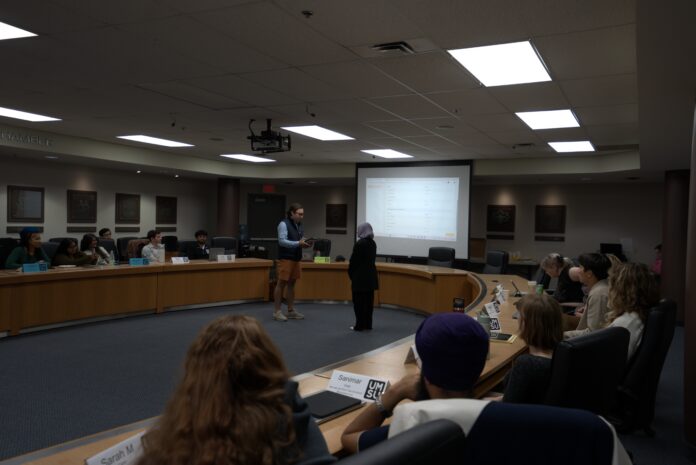
I registered for an intro to political studies course and attended a few classes. One of the first things I noticed
was how my professor tried to maintain neutrality.
While we were discussing the assigned readings, I could tell she was doing her best to remain impartial to all
the points raised. It seemed important to her to play the role of moderator and observer, calling on students to
speak and using questions to direct the conversation. Despite her efforts, at times it was hard for her to remain
indifferent to points made by students that she strongly agreed with.
I also did not detect any bias in the questions we discussed. They seemed open-ended and elicited various
responses from students.
I was also impressed by how freely everyone spoke. There were so many varying opinions and perspectives,
and it was refreshing to see them expressed without apprehension. People’s thoughts were somewhat evenly
distributed — there was no majority toward any single line of thinking, and often, people introduced points of
view I had not considered before the class. In my opinion, no one felt pressured to agree with anyone else. I
also felt comfortable voicing my thoughts on certain topics, knowing I was in a room full of differing or agreeing
views — and that was okay.
As political issues become more polarizing, it is important to have spaces where young people can express
their views openly, exchange ideas and learn from their peers. It is also crucial for them to be knowledgeable
about political matters. I believe politics affect almost every aspect of a person’s life. The decisions made at the
top — concerning matters like taxes or laws — shape the way society functions, so an understanding of how
things work is essential. Furthermore, learning about the theories that shape western and global political ideas
can be interesting and, in some ways, explain why the world is the way it is.
Reflecting on the stark differences between political discussions in Zimbabwe and Canada has been eye-
opening. It is remarkable to see how freely ideas are exchanged here, and it is something that should not be
taken for granted. However, it is also important to approach these discussions with a critical mind. Being able
to listen, question and evaluate different perspectives ensures that these conversations remain meaningful and
productive.