For Brenda Austin-Smith, a professor in the department of English, theatre, film & media at the U of M, the power of cinema has always been inseparable from the power of feeling. Her research spans film performance, stardom, audience emotion and the small details such as lighting, sound and camera placement that shape how films move us. Together, these threads highlight her interest in the ways movies matter to people and become meaningful parts of their lives.
Austin-Smith traced her fascination with films back to her mother, a devoted film lover who grew up in the small town of Cape Breton and snuck into theatres whenever she could. “She told me all about those films and those stars when I was young, and even let me stay home from high school sometimes to watch a film on TV with her,” she said.
Though Austin-Smith completed all her degrees in English, she gradually shifted her scholarly focus toward cinema. “I owe it all to my mom,” she added.
Her work ranges widely across film and media studies. One of her forthcoming essays explores the 1947 Hollywood film The Bishop’s Wife. It examines how “angels” function on screen and how their benevolence brushes up against the unease we associate with ghosts or spirits.
According to Austin-Smith, the film’s premise — an exceptionally handsome angel appears smitten with the bishop’s wife — raises questions that linger beneath its light tone. “Why isn’t the angel already perfectly happy? What could the angel do to a human husband who might be in his romantic way?” she noted.
These tensions, she argued, point to a broader cinematic pattern. For example, films about angels tend toward humour and charm, perhaps to soften the overwhelming implications of an otherworldly being entering human life.
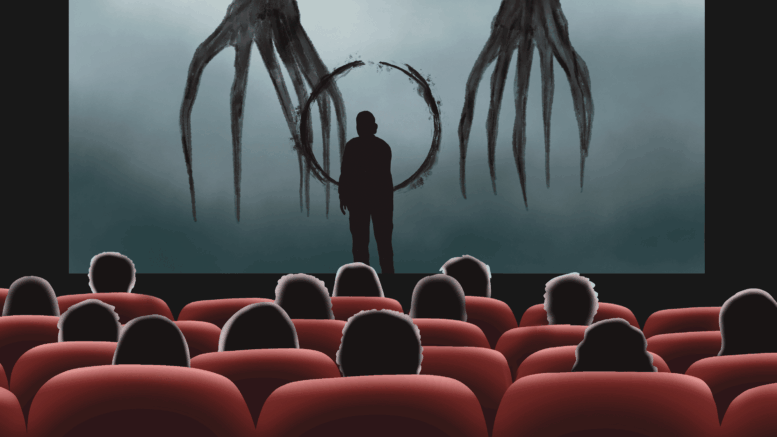
That interest in the emotional undercurrents of film is what consistently draws her to her work. She recalled watching Arrival and hearing the low, resonant sound accompanying the aliens’ appearance. “I knew that was the sound of grief — heavy, rumbling, in your bones — and I was overcome with tears,” she said. She explained moments like that illustrate how film form communicates feeling long before the plot reveals anything.
According to Austin-Smith, memory plays a similar role. She noted how vividly people recall who they were with when they saw a particular film, or where they sat in the theatre. Accuracy matters less than the emotional imprint. “Films help us recall things about ourselves. They can become cinematic placeholders for nostalgia,” she said. “A film can bring many things back to us the way music can.”
Her research on fandom and cinephilia reflects that same emotional connection. Cinephiles — people with a deep, enduring love for film — often experience movies as far more than stories. For them, film becomes personal and intimate through memorized dialogues, an enduring crush on a star or a scene known by heart. “A film is almost never just a film for fans and cinephiles. It is a treasure to be shared with a chosen few,” she noted.
Austin-Smith emphasized the afterlives of films — the enduring presence in cultural memory, noting that iconic lines continue to circulate long after their original context has faded. In this way, films “get under the skin of lived culture,” revealing values and anxieties in ways that cannot always be predicted.
As viewing habits shift across massive screens and handheld devices, she shared her concern about the growing impatience that digital culture encourages. She also emphasized that many films may have been lost, forgotten or never digitized. “The internet is like the ocean. Things get lost, taken down, not restored, no longer circulated,” she said. “Films can disappear, which is tragic.”
Yet the magic remains. Even on a small screen, she still feels the pull of a film’s opening moments. “The opening shots of a film remain a portal to me, a door into a place of art and wonder,” she said. “I’m a Dorothy who wants to stay in Oz a bit longer.”