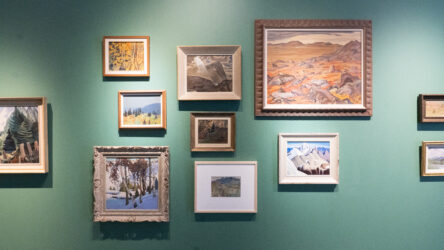
The Winnipeg Art Gallery (WAG) unveiled its latest exhibition, Terra Cognita/Incognita, on Aug. 19, featuring over 125 landscape-themed artworks from the gallery’s permanent collection and pieces by four local artists.
Riva Symko, the WAG curator behind the exhibition, explained that the idea of Terra Cognita/Incognita is to look at the land through lenses of colonization, reconciliation and climate change. Having witnessed the effects of climate change firsthand, she decided to reexamine landscape art at the gallery.
“I haven’t been able to look at historical landscapes really the same since I’ve started to notice the climate change in my own environment,” she said.
“I’m from the Canadian Rockies […] Images of the mountains, for instance, are dear to my heart, but I also know that when I go to visit the Rockies this summer, it’s full of smoke from wildfires.”
The exhibition consists of seven subthemes, such as pastorals, the more-than-human world and land as material and resource. The pieces, selected from the 30,000 works in the gallery’s collection, span over time periods, cultures and mediums.
“I wanted historical and contemporary art to speak to the same themes […] I also tried to get a good cultural variety,” the curator stated.
“There’s a lot in here, and I did that deliberately to show how much a variety there is in landscape genre, and just how ubiquitous landscapes are in art.”
Symko noted the title of the exhibition comes from the Latin terms used in early maps to denote known and unknown lands, an analogy for the undiscussed political histories that lie behind landscapes. The paintings by the Group of Seven that are on display, for example, reflect colonial views of Canada’s natural world.
“The Group of Seven […] really shaped how Canadians look and see the landscape, and they had a very specific and explicit program to create a Canadian art,” she said.
“We’ve thought of their work as these pretty pictures of the landscape, of nation-building, and [they show] us this great, vast, wide-open environment ready for exploitation and settlement. Of course, that leaves out the Indigenous side of the story […] but nevertheless, these have really permeated Canadian consciousness.”
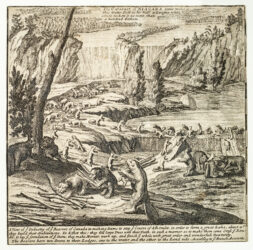
One of Symko’s favourite pieces in the show is a 1715 European engraving that depicts a colony of bipedal beavers building a dam. The artist had never been to Canada nor seen a beaver before, according to the curator.
“[The artist] got some of the story right. [Beavers] are hard workers. They do have kind of a timber industry, I guess, but he’s made them very human, but also kind of like a cross between a monkey or a cat,” she commented.
“It’s interesting to look back on these early imaginings of Europeans’ views of the Americas, but also the beaver becomes the symbol of Canada,” Symko added. She explained that beaver pelt was one of the first big export industries in Canada, tying the animal to a nation-building story.
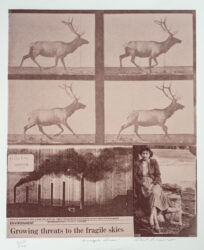
On balance, Terra Cognita/Incognita also includes works that reflect Indigenous perspectives. For example, “Fragile Skies” by M’Chigeeng First Nation printmaker Carl Beam depicts caribou, air pollution and what is believed to be his mother to explore “the interconnected worlds of humans, animals and the land.”
By mixing landscapes of different chronologies and mediums, Symko hopes visitors will make their own connections between the works.
“I want people to just come in, find the pieces that stand out to them, think about those, and maybe ask questions about […] why these pieces are together, because they don’t maybe necessarily make sense in a more traditional exhibition format,” she stated.
“Sometimes when you take things out of context, it allows you to see it in a new way.”
Terra Cognita/Incognita is on display until Nov. 1, 2027. For more information, visit wag.ca/exhibitions/terra-cognita-incognita/.