“If you know your history, you would know where you’re coming from, then you wouldn’t have to ask me, who the heck do I think I am.”
I heard it first from Bob Marley but I am not sure if he invented the saying. But, through “Buffalo Soldier,” he helped generations of listeners to reflect on it. The line has since struck me as more than a reminder to learn dates, names and events. It is a reminder that history shapes how we understand ourselves. And perhaps nowhere is this more complicated than among Africans and people of African descent living in the diaspora.
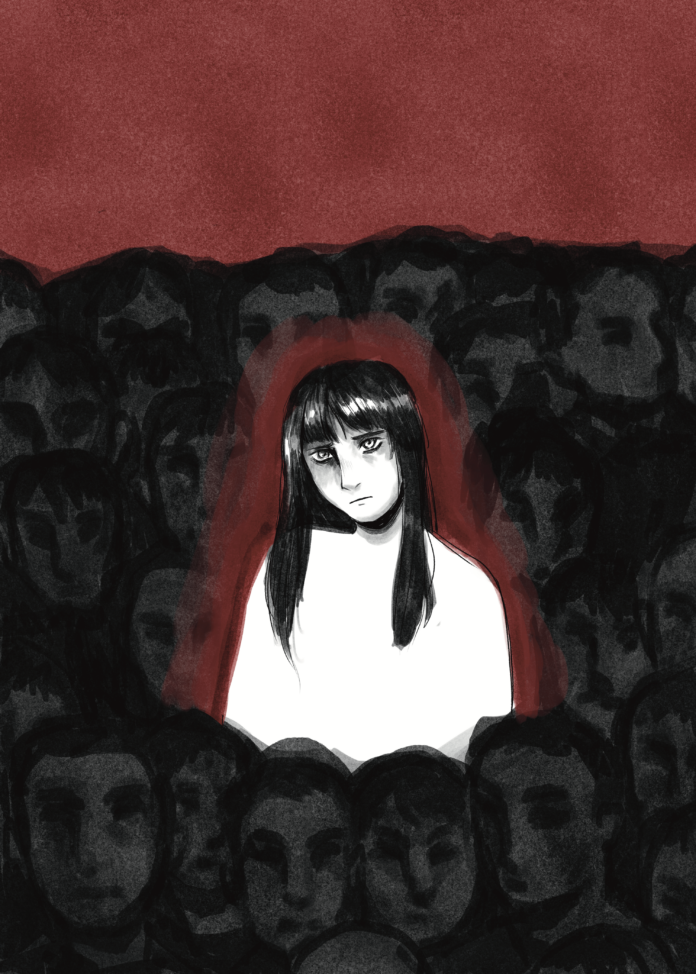
Somewhere, deep in our minds, it can become remarkably easy to bring race into the room when we are trying to explain our lives. Why have I not achieved what I thought I would by now? Is it racism? Why am I being treated differently? Is it because I am Black? Why is getting a job so difficult? Why do some people still react surprised or even amazed that I can speak English this well? Is it because I am African? Why is dating so complicated? Why does society seem to expect something different, usually more, from me? Does being African or Black affect how people see me?
Sometimes, the answer is yes.
Race matters. Racism does exist. White supremacy still exists. The histories of slavery, colonialism and racial exclusion have not simply disappeared because we have entered 2026. They have shaped institutions, economies, cultural representations and social relationships, and their effects can continue to be felt in the lives of Black people and Africans across the world.
But there is another question worth asking. What happens when race becomes the lens through which we begin to interpret everything about ourselves?
This is not a call to stop identifying racial discrimination when it happens. Rather, it is an invitation to examine what happens when a history of racialization becomes so deeply embedded in our consciousness that we begin to understand even ourselves primarily through the categories imposed upon us.
Because white supremacy does not only operate by telling other people that we are inferior. Its deeper success is achieved when its assumptions become so familiar that we begin to measure ourselves against them.
To understand why this happens, we must understand what Africans and people of African descent have been made to carry. The histories of slavery and colonialism did not merely involve the extraction of labour, land and resources. They also involved the production of ideas about who Africans were. Africans were repeatedly represented as uncivilized, childlike, incapable of self-government and in need of European intervention.
The violence was therefore very much psychological.
A system that has told people that they are inferior eventually creates a problem that extends beyond the people doing the telling. It creates the possibility that the people being described will begin to ask whether the description is true. If we also consider the complicated relationship some Black Americans have historically had with being identified as African, we see it is easy to dismiss such distancing as ignorance, internalized racism or, in the language of the internet, “delulu.” But can we really blame someone for reacting defensively to an identity that a society has spent generations teaching them to associate with backwardness? If “Africa” has been repeatedly painted as less civil, prosperous or modern, then rejecting an association with Africa can become a form of psychological self-protection.
That does not make the rejection historically accurate, but it makes it understandable. And that distinction matters. The problem is not simply that some people do not know African history. The problem is that many of us have inherited a version of African history that begins with our supposed deficiency.
We are taught about slavery before we are taught about the civilizations that existed before it. We learn about colonial conquest without always learning enough about the societies that were conquered. We hear about African poverty without adequately understanding the historical and political processes that helped produce contemporary inequalities. We are often introduced to Africa through what it lacks.
Africa was never simply the recipient of civilization.
This is where remembering history becomes important, as Marley pointed out. Africa did not begin with European colonialism. Her societies were not waiting in history for Europe to arrive and introduce civilization. Her peoples across the continent developed complex political systems, economic networks, philosophies, intellectual traditions, technologies, agricultural practices, architecture and forms of social organization. Civilizations across the continent participated in regional and long-distance trade and produced remarkable cultural and material achievements.
I am not romanticizing Africa. Africa continues to experience her own fair share of conflict, inequality, political failure, exploitation, patriarchy, corruption and countless other problems. Africans should be able to criticize these realities honestly and criticism is not contempt. But acknowledging African problems does not require concluding that Africans are inherently problematic. That distinction is essential.
The goal is to remember simply, accurately and importantly that Europe is not the yardstick.
Africa is not valuable because it resembles Europe. African people are not valuable because Europeans recognize their value. African humanity precedes the racial hierarchy imposed upon it.
What, then, do we carry that we must remember from history?
We carry the memory of survival and of resistance. We carry languages, music, literature, food, spirituality, philosophy, kinship systems, artistic traditions and forms of community that survived attempts to erase or subordinate them. We carry creativity, strength and belonging. This keeps us going and moving. I say, this is what matters. Therefore, we cannot let race become the only lens through which we interpret everything about ourselves.
The question now is not simply, “Who is preventing me?” It is “Given the history I have inherited, what am I going to do with what I carry?”
To know history is not to become trapped in it. It is to decide what deserves to be preserved, challenged and left behind. Marley’s “Buffalo Soldier” reminds us that identity can be complicated and people can carry histories they did not choose. But we must remember. Not because our ancestors’ suffering is all we have, but because forgetting leaves other people to tell us who we are.
Europe is not Africa’s reference point.
To know this is to finally stop asking whether we are enough according to someone else’s measure.