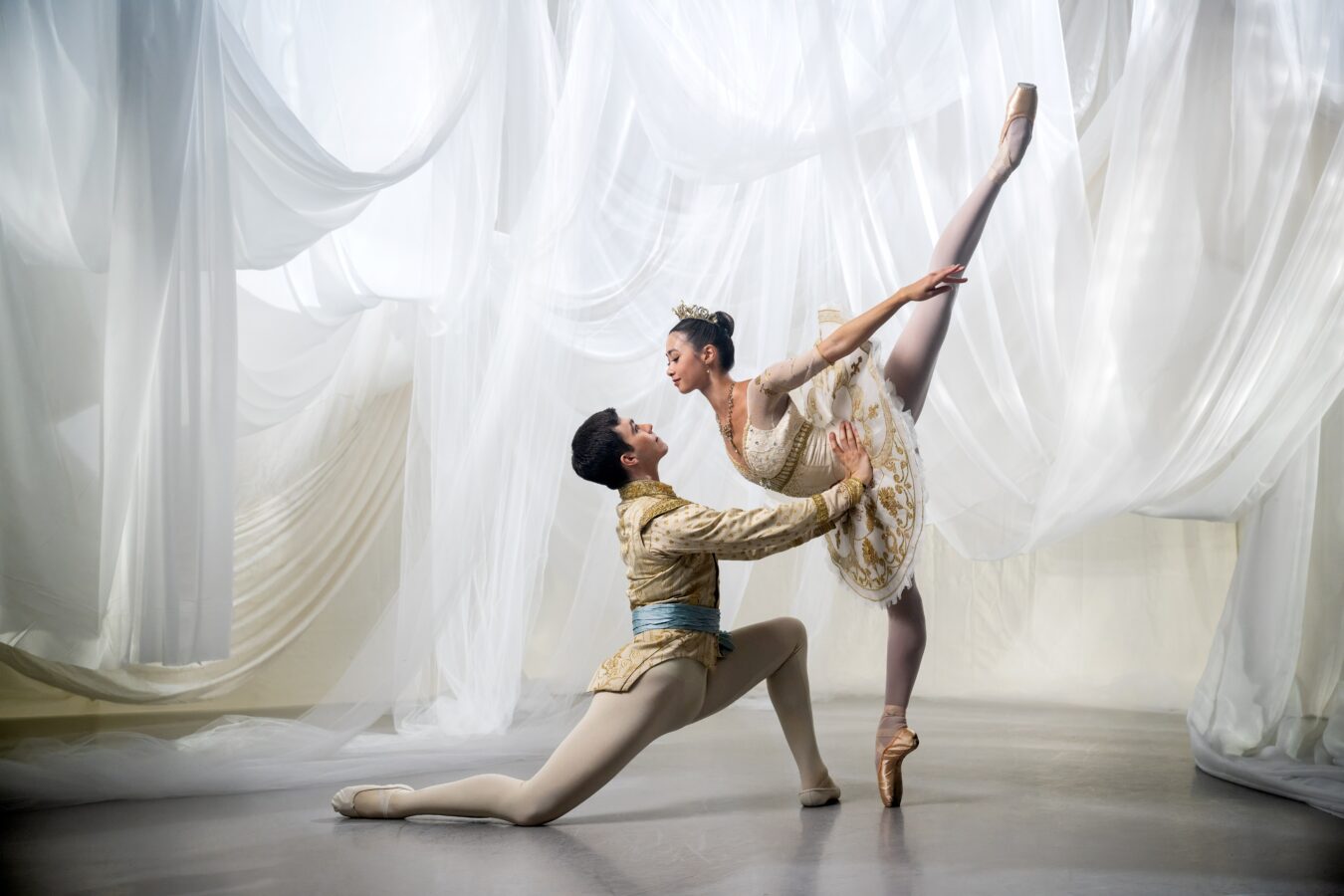
While American actor Timothée Chalamet controversially claimed that no one cares about ballet anymore, one would not believe it with how packed the Centennial Concert Hall was on the evening of March 14 as audiences excitedly waited to watch the Royal Winnipeg Ballet’s (RWB) The Sleeping Beauty.
The penultimate performance of a five-show run, this was not the first time RWB had presented the classic ballet set to Pyotr Ilyich Tchaikovsky’s iconic score, but it was the first time dancing to choreography by Christopher Stowell, the company’s new artistic director.
The role of Princess Aurora is considered a dream role for many ballerinas. Dance Magazine noted that the role offers both technical and artistic challenges. Alexandra Ansanelli, retired principal dancer at New York City Ballet and the Royal Ballet — two of the world’s most prestigious ballet companies — called performing Aurora “the epitome of what it means to be a ballerina.”
There are lofty expectations, but Vancouver-born Kyra Soo was more than up for the task. Soo executed her performance with stunning grace and precision, most notably in the famously challenging “Rose Adagio,” where she held her balance on one toe, en pointe, for over a minute, only supported in intervals by holding the hands of her “suitors” (soloist Logan Savard, soloist Peter Lancksweerdt, second soloist Joshua Hidson and corps de ballet artist Tymin Keown). On March 19, it was announced that Soo had been promoted from the corps de ballet to the rank of soloist, and with such a bravura performance here, I fully understand why.
Partnering Soo was then-second soloist Marco Lo Presti as Prince Florimund. Having already seen Lo Presti as the Nutcracker Prince, he was just as impressive this time, carrying the role with charisma and gravitas. He provided steady partnership to Soo, displayed great acting skills during Act II’s dream sequence, and sent the audience into thunderous applause with his Act III variation. Like Soo, Lo Presti received a promotion following the production’s run. He was promoted to the highest rank of principal dancer — certainly well deserved.
The rest of the cast was just as impressive. Principal dancer Stephan Azulay relished his role as the evil fairy Carabosse, cackling enthusiastically while cursing the newborn princess, while Maggie Weatherdon, recently promoted to second soloist, was ethereal as the Lilac Fairy, floating about the stage as if she really had wings. The famous pas de deux between Bluebird (second soloist Liam Saito) and Florine (principal dancer Alanna McAdie) was a great showcase for the dancers’ agility. The ensemble numbers were intricately executed, the dancers not missing a beat despite the complex formations. And it was a special treat to see retired RWB dancers Yayoi Ban, Alexander Gamayunov and Jaime Vargas make guest appearances in character roles, highlighting how RWB continues to honour its past.
It was my first time taking my younger sister to the ballet, and even she, not a dance lover, was impressed by the quality of the production, all the way down to the detailed costumes, designed by Anne Armit, and the music, wonderfully performed by the Winnipeg Symphony Orchestra conducted by Ming Luke. Luke, who will become RWB’s musical director next season, was a passionate and enthusiastic conductor, and it could be felt throughout the whole ballet.
The Sleeping Beauty was the first real look at RWB under Stowell, with most of the season having been curated by retired artistic director André Lewis up to this point. If this is any indication of what is to come for the company, Winnipeg ballet enthusiasts should get excited.
For more information on the Royal Winnipeg Ballet, visit rwb.org.