
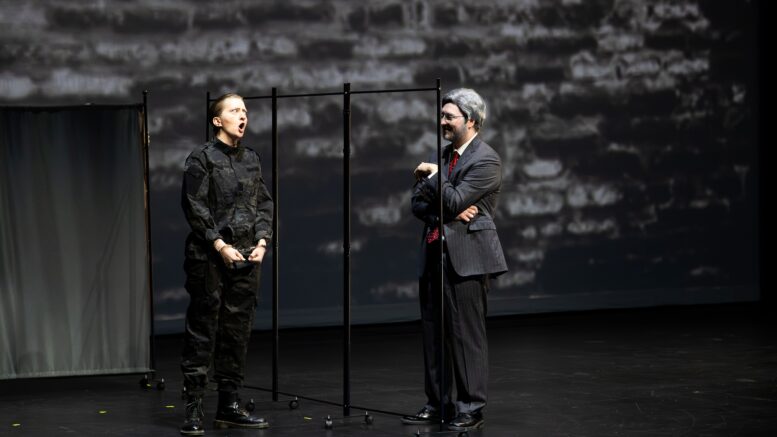
The Desautels Chamber Opera Group, formed by voice students at the U of M, performed George Frideric Handel’s Arminio at the Desautels Concert Hall last weekend. Despite the opera being over 200 years old, many themes found in Arminio still ring true today.
Arminio is based on the Battle of the Teutoburg Forest in 9 CE, where the Romans tried to annex Germanic territories but failed. This was a pivotal moment in European history — the battle effectively ended Roman ambitions to conquer the Germanic tribes and bolstered Germanic autonomy.
Handel’s telling of the battle centres on its historical figures. In the opera, the Germanic chieftain Arminio is ambushed and captured by the Romans to be executed. His wife, Tusnelda, laments her husband’s imprisonment but quickly realizes that it was orchestrated by her own father, who is a Roman ally.
Katherine Twaddle, the stage director of the production and opera studies coordinator at the faculty of music, pointed out that the story of violent annexation by a powerful country in Arminio is all too familiar, and choices were made to modernize the 18th-century opera.
“We’re certainly not setting this [production] in a specific country of the 21st century. We’re keeping it between the Romans and the Germanic tribes, but we are setting it in 2025 because it just resonates with our time so much,” she said.
“The cast will be dressed in military garb. They will be wearing camo and khaki […] The first half is set in a military bunker, which is not the usual set for an opera, and we’ve got the military characters carrying and, let me emphasize this, toy guns.”
Twaddle explained there is also the theme of familial betrayal in the opera. This stands out as Arminio is betrayed and nearly executed by his father-in-law. She said that while the original has a “big forgiveness and happily ever after,” she did not think this was possible in their production and opted for an ambiguous ending instead.
In this production, Arminio is freed just as the battle begins, but there is no forgiveness to be found in the end. The father-in-law, defeated, drops his gun and walks off stage, leaving the other characters with a fractured family.
“I think the main thing is about [how] political conflicts and military conflicts [and] belief conflicts [tear] families apart, and the importance of being loyal to your family and listening and not getting caught up in your own need for status. And that’s a big part of this story, [the father-in-law’s] need to have a high status, even if it means having a high status with the enemy […] The story echoes with many wars and conflicts around the world, not just one superpower,” said Twaddle.
Visit umanitoba.ca/music/concert-hall-events for future performances by the Desautels faculty of music.