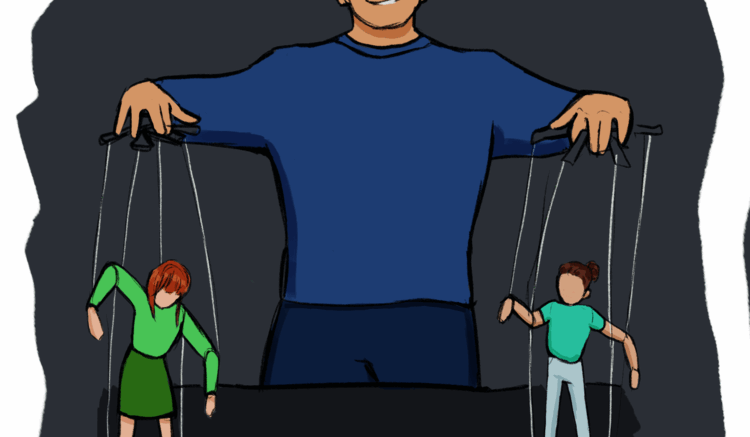
In recent years, social media has given rise to the terms “girl’s girl” and “pick me.”
The first describes a woman who is completely down for the girls — loyal, kind and always supportive of her fellow women. The latter describes a male-centered girl, one who brings other women down for the validation of men. At first glance, these terms seem harmless, beneficial even. They seem to simply describe two different personality types, but beneath the surface is a more troubling reality — these terms that were once meant to empower women are increasingly being weaponized against them.
Even though each term has a traditional meaning, now these terms seem to be tools to sow division among women. Today it seems like, in the social media space, women are criticized not by their actions but by how other people interpret their actions.
For example, a “pick me” is no longer just someone who openly belittles other women for men’s sake. Based on my social media experience, she can be any woman who dresses differently, speaks differently or makes choices that others find inconvenient or unfamiliar. A woman who prefers hanging out with men might be dismissed as a “pick me,” even if she genuinely feels more comfortable in that environment.
Another woman might be called a “pick me” for expressing a personal preference that happens to align with traditional femininity like cooking, baking or wanting a stable heterosexual relationship. Suddenly, the label has little to do with calling out harmful behaviour and everything to do with dismissing women’s choices as illegitimate or male-influenced simply because they differ from people’s expectation.
The same distortion happens with the term “girl’s girl.” Instead of meaning a supportive, empathetic woman, it has become a label women are expected to wear. A girl’s girl must like the “correct” things, have the “correct” opinions and show unwavering solidarity with other women, even if those women are wrong, harmful or unkind. It seems like if a woman steps out of line she is stripped of her “girl’s girl” status and looked down upon.
This shift reveals something deeper — society has found yet another way to make women compete. The labels create an invisible checklist of what “good” womanhood looks like. It makes the already complex world of interactions between women even harder. These labels encourage judgment and criticism among women. Instead of asking why a woman acts a certain way, social media encourages us to immediately assign her a label that defines her worth.
Ultimately, women deserve the space to be complicated, imperfect and evolving without being categorized or condemned. Empowermen