Category: Comment

  • Removing barriers to fair elections in Winnipeg

    Removing barriers to fair elections in Winnipeg

    What sets municipal elections apart from those at other levels of government is that candidates are less constrained to toeing the party line.

    Municipal elections give an opportunity to bring forth creative ideas in a way that other levels of government don’t.

    While the party structure’s influence on the provincial and federal levels of Canadian government limits individual candidates’ capacity for candour, municipal elections are generally expected to be more open, with a greater flow of ideas coming out of increased freedom of expression for candidates.

    The opportunity presented by an open and independent municipal election is accentuated this year because this is arguably the first chance for a major change in the makeup of city council in several election cycles.

    With this in mind, Winnipeg’s 2014 municipal election is fast approaching. The early polls opened Sept. 29.

    The election will be an opportunity for Winnipeggers to select people to represent them at city hall and chart the path of the city for the next four years.

    However, this opportunity is threatened by a number of barriers to meaningful participation and a fair election.

    These barriers include incumbent advantage, a first-past-the-post electoral system, and a number of more broad social and economic barriers that prevent full participation for sections of the population.

    Incumbent advantage

    Incumbent mayors, city councillors, and school trustees are almost impossible to knock off and this time around the mayor and four councillors have stepped out of the race.

    Veteran councillor Dan Vandal has won, through acclamation, the federal nomination of the Liberal party in St. Boniface for the looming 2015 federal election.

    Councillor Justin Swandel has decided not to run again after a turbulent final term in which he butted heads with members of the media and his fellow councillors.

    Scott Fielding has secured the nomination of the Progressive Conservative party in the provincial constituency of Kirkfield Park.

    And after only one term on city council, Paula Havixbeck has jumped into the race for mayor.

    Lastly, Sam Katz, Winnipeg’s three-term mayor, has decided not to run.

    Russ Wyatt, councillor for Transcona, was running in a one-on-one race against labour-endorsed Ray Ulasy, but decided to exit the race on Sept. 12 announcing that, like Vandal, he would be seeking a Liberal nomination for the upcoming federal election.

    After withdrawing his nomination papers on the Friday afternoon, Wyatt announced Sept. 16—the last day for candidates to submit their nomination papers—that he had changed his mind and would be re-entering the municipal election.

    Perhaps someone pointed out the Liberals haven’t won the riding since its inception in 1998.

    Or that both the Conservatives and the NDP have already selected candidates with similarly strong brand recognition.

    Or that Wyatt’s personal brand may not be as popular in the much larger federal riding as it has been in the relatively small municipal ward he has done so well in.

    Wyatt’s decision highlights one fact of political life in Winnipeg – incumbents have an inherent advantage.

    Running one more time is always a safe bet, and this isn’t something new.

    Simply carrying name recognition is an asset in any political campaign. And name recognition just happens to be something that comes with having your name and face etched into dozens of bus stop benches, garbage bins, and basically any other public property associated with city services that’s nailed down.

    More specific to Winnipeg is the lack of election laws regulating spending and spending announcements during the election cycle.

    Last week the Winnipeg Free Press’ Bartley Kives reported on major spending announcements by incumbent councillors Jeff Browaty and Mike Pagtakhan.

    On Sept. 22, just one month before the election, Jeff Browaty and Mayor Sam Katz announced a $520,000 investment in Chornick Park, a park located in Browaty’s ward of North Kildonan.

    On Sept. 19, Pagtakhan announced $250,000 worth of investment in Dufferin Park.

    The WFP’s editorial staff have also brought attention to Brian Mayes’ online promotion of ward spending over the last several months.

    This sort of spending announcement wouldn’t be allowed in a provincial election.

    Section 92 of the Elections Financing Act bars any provincial government department or crown agency from advertising or publishing any information about its programs or activities for the 90 days prior to an election.

    While Browaty argued that the announcement of public expenditures hasn’t given him any sort of advantage in the election, Pagtakhan ceded that it may offer incumbents an advantage but decided to do it anyways.

    First-past-the-post

    A first past-the-post electoral system—like the one we currently have for all levels of government—exacerbates the problem of unfair incumbent advantage and discourages a variety of candidates from signing up out of fear of “vote-splitting,” and as a result prevents the emergence and support for candidates with unconventional ideas.

    Vote splitting is when two or more candidates who share some values or are generally from one end of the political spectrum split supporters, enabling another candidates to obtain a plurality of votes.

    Fear of vote-splitting veers voters toward candidates who already have popular support and away from less popular and less recognized candidates who they might otherwise support.

    At its worst a fear of vote-splitting keeps candidates from running altogether.

    The most common alternative to first-past-the-post is a ranked ballot system.

    Under a ranked ballot system, voters rate their preference of candidates from first to last.

    The candidate with the lowest number of first votes is eliminated and their votes are transferred to the next favourite candidate on the voters list.

    This process continues until one candidate has the majority of votes.

    In the 2010 municipal election former NHL player, and centre-right candidate, Thomas Steen won his Elmwood – East Kildonan council seat with 33.7 per cent of the vote.

    Shaneen Robinson and Rod Giesbrecht, two left-leaning candidates, ran and split the remaining vote almost equally between them in the historically left-leaning corner of the city.

    The final count was Steen – 3,921, Robinson – 3,705, Giesbrecht – 3,501, with two other candidates, Gordon Warren, and Nelson Sanderson, each garnering a couple hundred votes.

    It’s not hard to imagine how ranked ballots might have changed the outcome of that election.

    Warren and Sanderson’s votes would have been split up between the other three candidates and then, depending on who held the lead between Robinson and Giesbrecht, one of them would be eliminated, their support most likely swinging to the other.

    The Daniel McIntyre ward may have shifted as well under a ranked ballot system. Long-time incumbent Harvey Smith won the seat with only 36.2 per cent of the vote in 2010.

    Although Smith is considered a progressive voice at city hall, he’s also been councillor for 22 years.

    Votes in Daniel McIntyre were similarly split amongst younger, alternative progressive candidates in the ward – Cindy Gilroy-Price and Keith Bellamy .

    Even in districts where it may not have had an immediate effect on election outcomes, such as Russ Wyatt’s 83.4 per cent decimation of upstart Vlad Kowalyk in Transcona, or Gord Steeves’ 82.3 per cent hammering of Harry Wolbert in St. Vital, ranked ballots would create an opportunity for more alternative candidates to run.

    Opposition to the incumbent wouldn’t be so fearful of a monolithic candidate and would be more willing to field numerous opposition candidates, expanding discourse within the election and ensuring more voices are heard.

    Half of the power of any election is not just in selecting a representative, but creating a forum for new ideas on how a society might operate or how a community might organize itself.

    Our current system of voting doesn’t just narrow our choice of candidates, it narrows the discourse around what our future might look like. And a broader discourse is something Winnipeg badly needs.

    The current municipal elections have been largely devoid of creative ideas.

    Although some would argue that Steeves has been very creative in some of his campaign promises—see: aerial drones—candidates are more scared at the prospect of alienating voters by announcing what they stand for than they are of not getting any votes because they haven’t said anything.

    Instead of a discussion about who brings the best ideas to the fore, we’re stuck choosing between well-established candidates who all want to “invest in infrastructure” and “increase transparency.”

    Having followed the election closely, I’m hard-pressed to think of a candidate who doesn’t want to invest in infrastructure or has taken a lukewarm position on increased transparency.

    Beyond electoral barriers

    These are only the first and most plainly obvious barriers to fair elections.

    They address electoral issues but not any of the broader social issues that act as barriers.

    They don’t fully address why women, people of colour, and other groups are underrepresented amongst our candidates and our elected officials.

    In late July, CBC published an article pointing out that only five of Winnipeg’s then 39 city council candidates were women.

    Since then the total number has increased to nine out of 59, or 15 per cent.

    Less than half of the wards even have a woman running.

    Seeing a turnaround in this sort of underrepresentation will require a broader, more concerted effort in organizing and won’t be limited to actions leading up to elections.

    Electoral reforms aren’t a fix-all solution but they are necessary, and one part of creating a more fair and representative city hall.

  • More than just academics

    More than just academics

    As October rolls in, we see students are settling back into the regular grind of classes and part-time jobs. With all of this going on, it’s often tough to find a moment to look at the larger issues going on in Manitoba.

    All students at the University of Manitoba, through UMSU, hold a membership in the Canadian Federation of Students (CFS), which the students’ union joined in 2005. As chairperson of the CFS Manitoba, I am proud to represent students in front of provincial, municipal, and federal governments. 

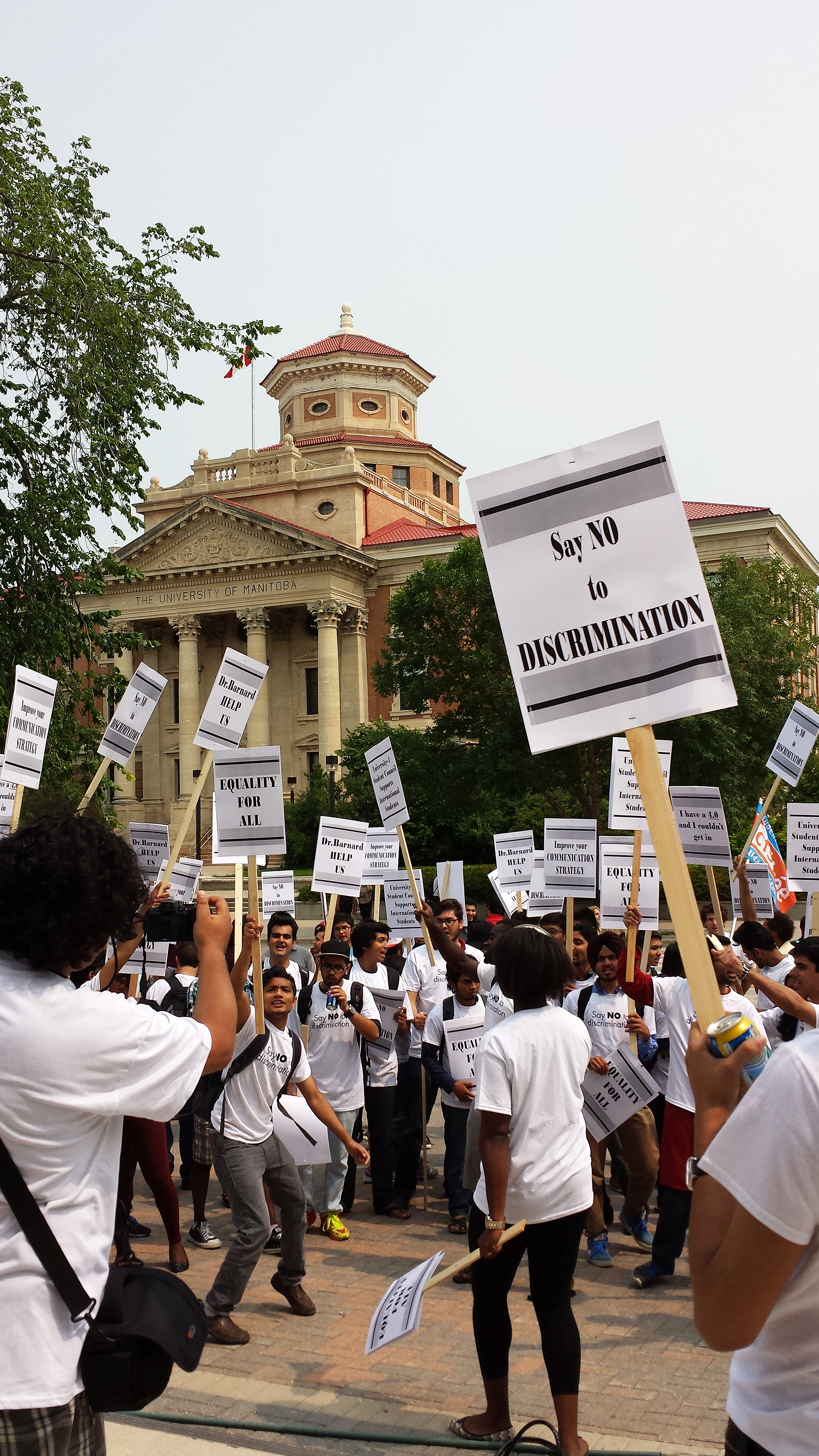
    Since my term began in June, we’ve been active in supporting international students facing discriminatory policies from the faculty of engineering, lobbying all mayoral candidates, and successfully having lobbied the provincial government on Bill 63. 

    For those not in the know, Bill 63 worked to abolish the Council on Post-Secondary Education and, through research and lobbying, CFS-MB was able to ensure that student representation is guaranteed on the future committee that will guide the direction of post-secondary education in the province. 

    All of this, of course, fits well into our long-standing history of successful campaign work on student issues, going back to the 10-year tuition fee freeze. We’ve done a lot of work in the past and have a lot more to look forward to in the future. 

    Rumours of cuts to academic programs on campus and discussions over the future transportation situation for U of M students are clearly on the horizon, with the U-Pass referendum occurring this fall as well.

    I’m not going to pretend for a moment that any of what I’ve mentioned above is a result of an exhaustive individual effort, or some form of a student union superheroism. No – efforts and long track records of success have to come from vibrant and active student movements that are pushed by their membership. No effective political movement can ever be successful over a sustained period of time without having strong volunteers to push and construct an agenda that truly looks out for students.

    In Manitoba, we currently have the third lowest tuition fees in the nation, according to the most recent information from the Canadian Centre for Policy Alternatives, making the province a hospitable place to settle down. This level of accessibility doesn’t come accidentally; rather, it comes from years of sustained pressure on the provincial government to increase access for those who need it most. 

    And that doesn’t mean the struggle is over. International students in Manitoba still pay at least twice, if not three times, what domestic students pay. Rates of participation for indigenous populations in post-secondary institutions are still below what they need to be. 

    As a province, we still have a long way to go for education to become truly accessible for all citizens, not just segmented populations. As students, we have a responsibility to advocate, organize, and envision the world we want to see upon graduation. For me, that includes a world that acts on issues around climate justice, systemic racism, and inequality.

    In an attempt to create a truly inclusive, responsive, and collaborative movement, we need to work together, bringing the best that all students can offer to truly create social change. 

    On Oct. 11, we’ll be taking a first step in that process as we host a campaigns forum titled, “Building a Student Movement” in collaboration with Justice for Women and the Global Political Economy Students Association. 

    Held at the U of M Fort Garry campus, the forum will seek to re-imagine campaigns centred around topics like sexual assault on campus, the international student movement, and the future of post-secondary accessibility in the province. We need participation from students in that process to best develop campaigns that fit your needs on campus. 

    Looking forward to seeing you there,

    Zach Fleisher, Canadian Federation of Students-Manitoba chair

  • Letter to the Editor

    Letter to the Editor

    As a former vice-president student services and member of the Board of Trustees, I would like to provide some background information about UMSU’s endowment fund.

    The endowment fund is a separately incorporated entity with its own constitution and bylaws and is managed by an eight-member Board of Trustees, including three community members, one student-at-large, two executive members as voting members, the president as a non-voting member, and the UMSU general manager as secretary. 

    The endowment fund is a registered charity under the Canadian Revenue Agency (CRA) and, therefore, must file annual reports to the CRA and meet certain requirements to maintain charitable status. The purpose of the fund as designated in the constitution is to provide financial aid and assistance (awards, grants, services) to benefit students at the University of Manitoba. 

    Back in 2008, prior to the major stock market crash, UMSU Council approved a motion asking the Board of Trustees to move the endowment fund (then worth $3.35 million) out of the high-risk stock market and invest it into a guaranteed income certificate (GIC) in a local credit union, with an annual interest rate of 5.15 per cent for five years. 

    This move was recommended by UMSU’s accounting staff and praised by UMSU’s independent auditors. 

    At that time, UMSU was also paying upwards of $80,000 per year to a company to invest students’ money in the stock markets, and UMSU was advised that the average rate of return the endowment fund saw over the previous 10 years invested in the stocks was less than 5 per cent, so it made sense to move the funds out of stocks into a GIC for a guaranteed rate of return and to protect the principle. 

    This investment was made at a local credit union, as all deposits, including interest, are guaranteed without limit by the Deposit Guarantee Corporation of Manitoba. This is not the case for banks and other financial institutions and investment companies, and according to previous board reports, was a very important consideration for the Board of Trustees, especially in light of the financial crisis of 2008.

    At no time did previous executives use the funding at their discretion. As noted above, the endowment fund was invested and locked into a GIC for a five-year term ending in the fall of 2013. Meeting all requirements of the fund’s constitution and the CRA, the Board of Trustees allocated income from the fund to an approved annual budget for student awards (e.g. UMSU awards, Bison awards), grants (e.g. travel grants, hardship fund), and services (e.g. GoSA, Bison Patrol, Textbook & iClicker Lending, UMSU Living, Foodbank) in April of each year for the following year. 

    The budgeted expenses never exceeded revenue for the endowment fund, and, in fact, significant funds were always carried over to the following year to continue to build the fund. As an example, on the CRA website listing registered charities, the endowment fund’s assets for 2012 are listed at $3,844,712 and assets for 2013 are at $4,152,564. Also, at the year ending April 30, 2013, the total revenue was $384,269 and the total expenses were $283,768.

    The endowment fund was established over 15 years ago and I hope that it will continue meeting its intended purpose to support and service the students at the University of Manitoba for many years to come.

    Ronnie Cruz, former vice-president student services and member of the Board of Trustees.

  • Letter to the Editor

    Letter to the Editor

    UMSU executives attributed removal of the GoSA Coordinator position to unsustainable funding from the endowment fund.

    I would like to comment on the work of the UMSU Endowment Fund Board of Trustees to secure the fund’s future.

    Endowment funds are intended to create a long-term source of income for an organization. Funds that grow are able to provide more income for their organization.

    The UMSU Endowment Fund is able to grow by investing the mandatory endowment fund fee ($6.00/student/semester).

    However, much of the endowment fund fee was being diverted from long-term growth of the fund towards short-term operating expenses of various UMSU services. In essence, money collected from the endowment fund fee was functioning as a pseudo UMSU operating fee. This severely retarded the growth of the fund and its ability to generate future interest.

    Spending on entitlements today diminishes the future spending of students tomorrow.

    Understandably, students have an expectation of the status quo. They assumed there would be a GoSA coordinator this year as there had been the year before.

    As such, ​I commend the UMSU Endowment Fund Board of Trustees for taking unpopular, but necessary, action. Students today are upset, but students tomorrow will be appreciative.

    Jordan Lerner

    MD Student

    College of Medicine

    University of Manitoba


  • ISIS and the contradictions of U.S. foreign policy

    Kevin Linklater

    The rise of the Islamic State of Iraq and Syria (ISIS) has been covered a lot in the media, and some mention has even been made to how the 2003 U.S. invasion and subsequent occupation of Iraq helped create this monstrous group.

    Little attention, however, has been paid to the power struggles and centuries-old rivalries in the region, and the contradictions that U.S. policy in the Middle East is producing for American security interests.

    Recently, the Obama administration has floated the idea of attacking ISIS in Syria in order to curb their reach into neighbouring Iraq.

    Anyone with a cursory knowledge of what has been going on in the Levant region must be shaking their heads.

    While the U.S. has come out against the Assad government in Syria’s civil war, they are now proposing to move militarily against Assad’s biggest foe, ISIS – the clearest manifestation of a U.S. foreign policy that is inconsistent and self-defeating.

    This, however, is just the tip of the iceberg in terms of the contradictions of U.S. policy in the region.

    While the relations between actors in the region are very complicated, there is a hugely important one that is barely mentioned in the Western media: the rivalry between Iran and Saudi Arabia, perhaps the fundamental tension in the region.

    This centuries-old rivalry was for a long time just about plain old geopolitics and who would have dominance in the region. In the intervening years, however, this rivalry was overlaid with a religious element: the Sunni-Shia split within Islam.

    In 1501, the Safavid Empire—a precursor to the modern state of Iran—converted from Sunni to Shia Islam (and with it, so did a majority of the population). This helped to unify the new empire under one religion and set it apart from its Sunni Arab neighbours with whom the Persians had long been rivals.

    During the Cold War, both Saudi Arabia and Iran were closely allied with and received crucial support from the U.S., as their governments were conservative monarchies and staunchly opposed to communism.

    This changed in 1979, when the Iranian revolution overthrew the U.S.-backed Shah and ushered in a new theocratic state. American and Saudi interests became even more closely aligned, as both countries saw the new government in Tehran as a direct threat to their interests .

    The larger Sunni-Shia conflicts seen in Iraq, Syria, and Lebanon are being fomented by Iran and Saudi Arabia, as each backs its own side in the numerous conflicts throughout the region.

    The problem is that American interests in Iraq and Syria now align more with the Iranian side than with the Saudi side.

    Even more troubling is the support that the U.S. gives to Saudi Arabia is helping to fuel the type of terrorism that America has become obsessed with fighting since 9/11: first in the form of al-Qaeda, and now in the form of ISIS.

    When the West thinks about terrorism, usually what we are actually thinking of is Salafist-inspired Sunni Islamic terrorism – a fact we somehow always omit when addressing the subject.

    Salafism or Wahhabism is an ultra-conservative, fundamentalist interpretation of Islam that was born and nurtured in the remote deserts in the interior of the Arabian Peninsula. It is also where the Saudi royal family originates.

    In fact, the foundations of the Saudi state come from a pact between the Saud and Wahhab families – the former handling political affairs, and the latter handling religious matters and providing legitimacy to the monarchy.

    While the Saudi state is careful not to directly fund terrorist groups like al-Qaeda or ISIS, it does directly support the madrassas (religious schools) and conservative clerics that espouse the puritanical interpretations of Islam that form the basis of belief for these terrorist groups. Also, individual members of the Saudi royal family have provided support to these groups, although not in an official state capacity.

    Thus we see American foreign policy at cross-purposes with itself in Iraq and Syria in the short term because of its opposition to the Iranian government. More worryingly, though, are the long-term effects that America’s relationship with Saudi Arabia are likely to have in fermenting Sunni Islamic fundamentalism in the region and globally.

    The birth of ISIS can be traced to the numerous U.S. blunders in Iraq, but its growth and success is due in large part to the inability of America to manage the contradictions of its foreign policy in the region.

  • You’re sad? Go for a walk.

    You’re sad? Go for a walk.

    You’re depressed? Go for a walk. That’s the common response to individuals with a mental illness seeking help.

    A recent op-ed published in CBC Manitoba by David Grebstad demonstrates a prevailing attitude about the diagnostic process and access to treatment for individuals with mental illnesses: that these individuals aren’t really sick, are taking a toll on our tax dollars, and acquiring services they do not need.

    This attitude is harmful and contributes to the overall stigma against mental illness, making it more difficult for individuals in need to access treatment.

    New criteria necessary for those in need

    A number of changes were made to the Diagnostic and Statistical Manual of Mental Disorders (DSM-5) criteria for post-traumatic stress disorder (PTSD) in 2013, including the addition of a criterion that specifies the nature of the exposure to the traumatic event: the individual can learn the event happened to a close friend or family member and experience PTSD symptoms themselves.

    Grebstad wrote he had “reservations” about this criterion. He fears that with this change, PTSD will become “far too broadly diagnosed.”

    This is highly unlikely to happen.

    Post-traumatic stress disorder has a 9.2 per cent prevalence rate across Canada, according to a 2008 study by McMaster University, and an eight per cent prevalence rate according to Statistics Canada.

    The DSM-5 was published in May 2013, nearly 20 years after its previous version, the DSM-IV. Over 500 scientists and clinicians were involved in the revision process, and all changes were subject to approval by the American Psychiatric Organization Board of Trustees, who then appointed a Scientific Review Committee to assess the changes.

    Finally, a Clinical and Public Health Committee reviewed the changes and assessed the public health impact of the DSM-IV criteria.

    One motive for updating the manual was to increase access to treatment for those whose symptoms were not well defined by the previous version.

    “The changes [to the PTSD diagnostic criteria] in DSM-5 are a response to continuing new findings and new understandings about just what trauma is, and what trauma response is, and how tightly (or not tightly) trauma symptoms are linked to actually having been exposed to a trauma yourself,” said Ed Johnson, associate professor of psychology at the University of Manitoba.

    Johnson said that this linkage between actually experiencing trauma and showing PTSD symptoms is not as tight as one might expect. The changes, he said, are an important step to capturing who exactly is experiencing trauma symptoms – the key point here being symptoms.

    Take, for example, emergency personnel. These individuals are first on the scene of horrifically tragic events. These events may not be occurring to those individuals personally, but they are witnessing them or learning about them.

    The prevalence rate of PTSD in emergency personnel is twice that of the general population, according to a study by the University of British Columbia.

    “In that context we can kind of understand that, yes, even if something didn’t happen to you, you may still suffer the effects of trauma,” said Johnson.

    Increased access to treatment a step forward, not a step back

    Grebstad, a Canadian soldier who by his own admission does not suffer from PTSD, said he is wary of increased access to treatment.

    “It is unfortunate to say there will be those who will use this broader definition to acquire undeserved benefits, which will in turn divert those resources from where they really need to go,” he wrote.

    For an individual to receive a diagnosis of PTSD, they must meet other symptomatic criteria – not just one single criterion. In other words, an individual must show a number of other symptoms that lead to a negative impact on their quality of life. Work performance and social interactions, for example, are significantly affected.

    Post-traumatic stress disorder is a frightening illness. Symptoms of PTSD include but are not limited to: re-living the event in vivid detail through flashbacks and/or dreams, prolonged psychological distress, sleep disturbances, and self-destructive behaviour.

    “Anyone who meets those criteria is, in my opinion, deserving of treatment. They’re suffering,” said Johnson.

    Stigma persists

    In the case of a physical illness, say, a kidney infection, one would go visit a doctor and receive antibiotics without a hitch. Kidney infections, like most physical illnesses, do not carry the stigma that exists for mental illnesses.

    Recognizing that you need help when you have symptoms of a mental illness, and then actually going as far as trying to obtain that help, is one of the most difficult steps to recovery. Much of this is due to the stigma that still surrounds mental illness in general.

    The Mental Health Commission of Canada established a project in 2009 to combat stigma called “Opening Minds.” According to the commission, 60 per cent of individuals with a mental illness will not seek help due to fear of labelling (for example, stereotypes such as “crazy” or “has baggage”).

    It’s hard to imagine an individual seeking out “undeserved ” psychological and health services for an illness many deem to be a sign of weakness or a defining feature of a person. It’s hard to imagine people would willingly place themselves at risk for being discriminated against and labelled.

    “We know stigma is a significant barrier for people and there’s a lot of effort being put into reducing stigma, and that’s terrific. But it’s still there. The last thing we want is for people to avoid seeking help when they need it,” said Johnson.

    We need to make an effort to work toward increasing access to treatment, not decreasing it. Whatever the origin of an individual’s mental illness, the illness is seriously impacting their life. Suffering individuals deserve treatment, and those who continue to perpetuate negative stigma against mental illness are only further impeding their recovery.

  • Issues to follow in the civic election

    Issues to follow in the civic election

    Zach Fleisher

    If you’re like most Winnipeggers, then you haven’t spent an outrageous amount of time following the #wpg14 hashtag, otherwise known as the lead-up to the 2014 City of Winnipeg election.

    Campaigns have been saturated with attacks emanating from hyper-partisan politicos, and a never-ending deluge of selfies and photographs from council candidates. There has even been some mention of policy from a wide-ranging gallery of candidates. At last count, nine individuals were vying for the mayor’s chair.

    It is probable that most Winnipeggers won’t vote in this election; according to the City of Winnipeg, turnout since 2002 hasn’t topped 50 per cent, with 48 per cent of citizens casting their ballot the last time around. Since that time, the city has been rocked by scandal, from real estate audits to police headquarter relocation overruns.

    With that in mind, I’d like to bring up three different issues to follow in the lead-up to the election.

    Crime in Winnipeg

    Winnipeg gets a bad rap for violent crime and is often referred to as the murder capital of Canada, which puts the city in a negative light. In the past few years, the city has tried to reform this perspective by investing a fair amount of money into the police service. Winnipeg runs and administrates its own police force, which has taken steps to improve these often startling numbers.

    Along with the $3.5 million purchase of a police helicopter, which, according to the police service, flew an average of 43.1 hours a month in 2012, the police have seen a significant increase in funds. The police response operating expenses are $27 million greater in the 2014 preliminary budgete than in 2012.

    Since that time, the 2013 crime stats show that the city is getting seemingly safer, with a 13 per cent drop in violent crime, combined with a 17 per cent fall in property-related crimes. Candidates have proposed a variety of ideas, ranging from the expansion of a block-by-block strategy, to flying drones, to additional support and surveillance by the police.

    However, in light of recent announcements around new potential policing strategies, no major candidates have come forward moving to combat the root causes of crime in our city. Colonialism, racism, and poverty all lead to marginalization in our society – certainly not an easy topic to tackle in the age of Twitter and 30-second news sound bites.

    Keep an eye out for any candidates speaking to the true root causes, rather than focusing on a tough-on-crime approach that simply seeks to increase police on the ground and eyes in the sky.

    The transit system

    Since the 1950s, Winnipeg has consistently grappled with the need for a rapid transit system. We’ve discussed the potential for subways, monorails, and light rail. From all of this, a shattered consensus formed to advocate for a southwest transit way that would connect the downtown to the University of Manitoba Fort Garry campus.

    Beginning in the late 2000s, after initially cancelling the program, Mayor Sam Katz emerged as somewhat of a champion of a bus rapid transit system, which has been partially constructed as a busway leading up to Pembina and Jubilee. Delays have led to the overall projected cost of finishing the project now rising to an estimated $590 million. Of that amount, the city would be on the hook for only $225 million, with the senior levels of government moving forward to cover the cost.

    Despite the initial burst of hope, that the city might be able to finish a project that had been on the docket since the 1970s, it seems that the future of Winnipeg’s rapid transit is anything but a sure bet. Calls for a referendum on the continued construction of the leg have left the project with a weak level of public support. Combined with mayoral candidate Gord Steeves’ proposal to kill the plan entirely, it is quite possible that Winnipeg will continue to be the only Canadian city of our size without a functional rapid transit system.

    As of this writing, no candidates for the mayoral office have presented the public with any form of a realistic or feasible plan to either finish the existing route or continue to expand the rapid transit network.

    New faces in old spaces

    Finally, another aspect of the municipal election to watch is the sheer number of new faces popping up as candidates in this October’s race. Winnipeg is notable in that an incumbent mayor has not been defeated in a re-election bid since the 1950s. With Mayor Katz announcing in June that he would not seek re-election for a third term, the door was suddenly wide open, with mayoral contenders like Judy Wasylycia-Leis, Brian Bowman, Gord Steeves, Paula Havixbeck, and Robert-Falcon Ouellette putting their names forward.

    While the mayoral race has garnered the vast majority of media attention, it is important to recognize that the mayor only has a single vote on council.

    The number of open council seats and competitive races is also an intriguing aspect of the civic election. Like Katz, we have seen many prominent council members such as Dan Vandal (St. Boniface), Scott Fielding (St. James), Paula Havixbeck (Tuxedo-Charleswood), and Justin Swandel (St. Norbert) choose not to file for re-election in their ridings.

    In addition to these wide open races, the city will likely see vigorous competition in the Daniel McIntyre ward, where challengers Cindy Gilroy-Price, Keith Bellamy, and John Cardoso are taking on the incumbent Harvey Smith. In Old Kildonan, incumbent Devi Sharma faces a tough challenge from school trustee Suzanne Hrynyk.

    Of course, the names mentioned above only constitute a small number of the numerous candidates putting their name forward on Oct. 22. Watch for forums, new ideas, and chances to meet candidates to increase as the leaves begin to fall. As citizens, this is our chance to engage with those seeking to represent us.

  • It gets bitter

    It gets bitter

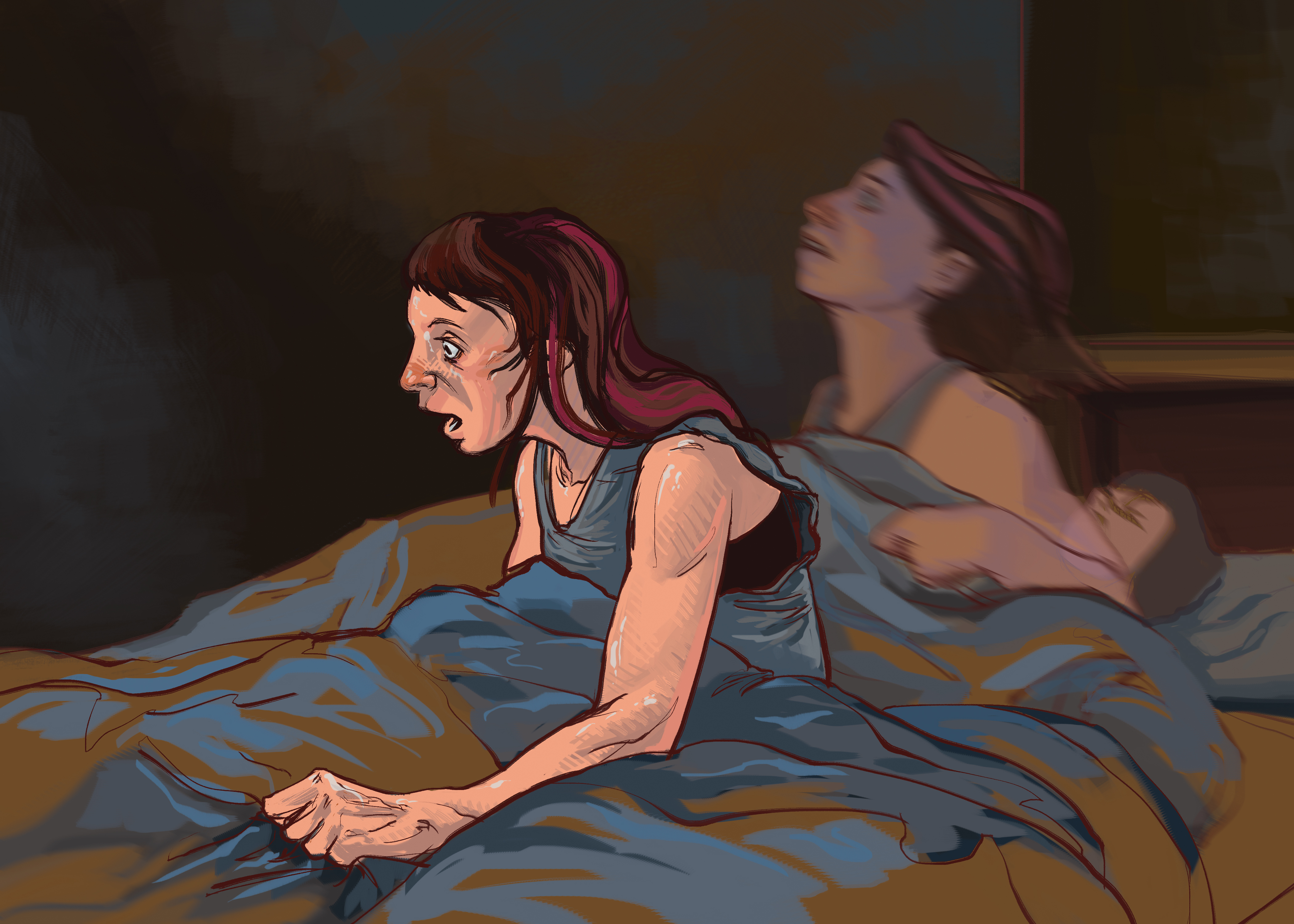
    When I got home from work on Monday, Aug. 11, I had experienced a particularly emotionally exhausting day. Then, when I signed into Facebook, I read the news about Robin Williams’ passing. It was soon after the news had broken, because barely any news sources mentioned his struggle with addiction and mental un-wellness, and my newsfeed was flooded with posts of, “I can’t believe it!” and, “Now my favourite movies are so sad!”

    Grief and mourning are difficult things to maneuver, and I am certainly not one to tell people to be more up-to-date on the lives of celebrities – but these reactions didn’t sit well with me. It was a shining example of the lens through which mental health is viewed; no one acknowledges its severity until it is too late.

    And now, two weeks later, many of us are moving on with our lives and forgetting how shocked we were that someone so beloved and successful took their own life. Many of us won’t even think about mental illness again until another suicide makes the headlines, not realizing that Canada averages 3,777 suicides a year. But those of us who deal with mental illness will still remain here, even when the headlines are gone.

    When I was small, my grandfather, who was experiencing the early signs of Alzheimer’s, took his own life. To me he had only ever been a smiling, loving man full of quips and lively stories. Yet for some reason, when my mother told me what had happened, I was able to accept it. It made sense, and I never thought him selfish or cowardly for it.

    Maybe it’s because my mother explained it in terms of, “He got very sick, and now he’s died,” as if death is death, whether by cancer or depression – or maybe it’s because I grew up to continually struggle with a state of mental un-wellness. My understanding is that death can be the ultimate result of mental illness, just as it is of physical illness.

    I currently spend my days teaching music to a group of kids in a setting that encourages discussions of mood disorders, addiction, abuse, and the pursuit of recovery from mental wellness. While I spend so much time with these kids making music, joking around, and watching goofy videos on YouTube, I’ve had the opportunity to get to know their struggles and get my heart wrenched as I realize that these kids are dealing with the same things I am.

    I can’t help but reflect on the times that I’ve reached out to people only to have them tell me that I have my shit together and not to worry, or to have them say that they’re there for me but be too busy to answer my call in a crucial moment, or to have them tell me that I just need some vitamins and exercise, or that “everyone gets sad sometimes.”

    There are moments when I’m shaking and hyperventilating and people say, “But you’re so outspoken! I wish I had your confidence!” And I can’t help but notice that maybe I have something in common with Williams in that I have managed to be functional and successful enough in my life that it’s hard to convince people of my struggling.

    If you’ve never experienced relapse while dealing with mental illness and addiction, let me tell you that it’s a terrifying thought that people will keep on swimming by, totally unaware that you are drowning.

    When I’m talking about mental health to youth, I never use the words, “It gets better.” The phrase makes a mockery of mental illness. It implies that once you grow up and get a good job and find a partner who loves you, everything will be okay! It doesn’t provide any of the support needed to actually help people make it through school, get any job—never mind a good one—and build healthy relationships with others.

    It also doesn’t prepare you for the disturbing realization that the chemical imbalance in your brain doesn’t disappear when something good happens in your life.

    Mental illness isn’t selective; you can struggle with it even if you have a wonderful support system, even if you’re a successful actor, even when you appear to be strong and happy on the outside – and yes, even once you’ve addressed an issue with addiction.

    Recovery isn’t a point on a map with a straight road leading to it; it’s an ill-planned road trip with too many stops and not enough days to visit them all. But each stop does have important lessons and memories to collect, and if we embark upon this journey, we will learn to cope, deal, and realize our warning signs along the way. Each trip is different for every person, as are the landmarks and lessons.

    What could proper supports for those hoping to achieve mental wellness look like?

    •An end to stigmatization, including and not limited to doctors, peers, and family giving mental illness the same weight and respect as physical illness.

    •The incorporation of mental health into the public school curriculum. When facilitating group therapy for youth, I discovered that, not only is it a good way to let kids get stuff off their chest, it’s a great exercise in active listening, and learning to support and care for our peers.

    •Mental health awareness in the workplace. We should never feel afraid of losing our jobs because of depression and should never feel ashamed of taking a mental health day.

    •An intersectional approach to health care that includes access to stable housing, nutritional food, and peer support.

    •The acknowledgment that addiction does not cause mental illness but is more commonly the response to it. When someone is struggling with addiction and mental illness simultaneously, it is called a co-occurring disorder, and treatment needs to address both issues in tandem – something at which currently available resources often fail.

    •Patience.

  • Police militarization on the rise

    Police militarization on the rise

    Andrew Vineberg

    A war is raging in a strange and backward part of the world. An occupying army is using advanced military technology and weaponry against a terrified population, drawing the eyes of human rights observers and critics across the globe. I’m speaking, of course, about the American Midwest.

    Violence in the Midwest exploded again recently in the settlement of Ferguson, Missouri, a region with a history of apartheid and sectarian division. The chaos has drawn the world’s attention once again to the tragic and seemingly intractable conflict in this historically troubled region.

    Tensions flared after the shooting of an unarmed 18-year-old African American man by a white police officer on Aug. 9. The victim, Michael Brown, was stopped by Officer Darren Wilson for jaywalking.

    Such check stops are a routine part of any war zone, but high stakes nonetheless. Although Wilson was unaware of this at the time, a cigarillo theft at a convenience store earlier that evening had no doubt produced a general atmosphere of tension and fear in the town, which made violence inevitable.

    Following the revelation of the killing, as well as further revelations that Brown was shot “more than just a couple” of times (to use the police chief’s words), Ferguson saw the surge of protest and unrest that typically follows the uncovering of such civilian casualties of war. The town’s police enacted a swift military response, deploying their officers as soldiers in green camouflage, wearing body armour and gas masks, and carrying assault rifles and shields. Ferguson soon had all the hallmarks of a classic U.S. military war zone: armoured cars, snipers, tear gas, auditory weapons, and other commonplace tools of control during a military occupation, like a curfew, a media blackout, and a no-fly zone.

    Police officers have been pointing their weapons indiscriminately at unarmed civilians and challenging bystanders: “Bring it, you fucking animals, bring it.” Much like in Iraq, journalists in Ferguson must now avoid being shot or taken prisoner.

    As usual, there has been no formal declaration of war. The government states as always that this is not a war but “police action.”

    And as is typical of American conflicts, international criticism and scrutiny have followed.

    Amnesty International has sent in human rights personnel to monitor the crisis. The police force’s actions have provoked criticism from foreign governments and the United Nations. Observers in Palestine have broadcast their solidarity, offering advice on treating tear gas injuries.

    Last week, the governor of Missouri declared a state of emergency and placed the area under the authority of the National Guard.

    Securing dominance in the strategically important and energy-rich region of the Midwest has always been a priority for the U.S., but since 9/11 America has seen a marked increase in direct military response by authorities every time a new conflict springs up.

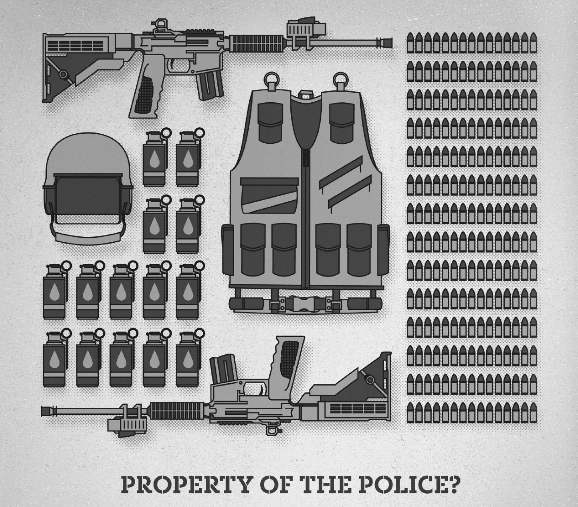
    Following America’s declaration of war on both terror and drugs, a huge influx of surplus military weaponry has fallen into the hands of American law enforcement. These armaments are acquired for the necessity of stopping terrorism – a responsibility which has always been a top priority for local American police departments.

    There are questions about whether these weapons and tactics are being used strictly for the purpose of fighting terrorism. In war, definitions are often subjective. Might these alleged “terrorists” being fought by police also be called “freedom fighters,” “petty criminals,” “minor offenders,” or “innocent civilians?”

    This conflict has many names and many fronts, from the War on Drugs to the War on Terror. Ultimately, every front is part of the broader war that is America’s law enforcement—a war waged between the paramilitary forces of the cities and towns of the United States, and the residents of those cities and towns—or at least certain classes of residents, like those in African American communities which stubbornly insist on not reflecting the ethnic makeup of their local police department. For impacted civilians, life is an enduring siege.

    Statistics about civilian casualties are uncertain; there is no tally of how many Americans are killed by police each year. A conservative estimate by the FBI of certain types of “justifiable police homicides” records an average of about 400 a year.

    More complete estimates report around 5,000 Americans killed in this war since 9/11. Law enforcement claims a black man’s life in America every 28 hours. Local militaries have increased their number of SWAT team raids 1,500 per cent over the last 20 years; most are for drug-related search warrants which are disproportionately carried out against people of colour, and have increasingly resulted in non-suspect casualties.

    The war has produced the world’s highest incarceration rate: 2.2 million people.

    As with many of America’s wars, Canada has been eager to join the coalition.

    Canada’s war against Canadians is nothing new; in particular, the centuries-old fight against First Nations peoples has shifted from royal armies to the police, from the Great Plains to the city streets and prisons.

    The North-West Mounted Police, founded as a paramilitary to quell native resistance, was succeeded by the RCMP, who proudly continue those practices. Provincial and city police carry on the Indian wars, whether it’s tactical strikes against unarmed native men, or a war of attrition in the form of procedural indifference over Aboriginal deaths.

    In British Columbia, one of the war’s bloodiest fronts, police have killed 267 people in the last 15 years, and ceasefire prospects are grim.

    Several recent high-profile skirmishes have brought Canada’s police war back into the public eye, from shooting a schizophrenic cartoonist crawling on the street to their decisive nine-bullet victory over a teenage boy with a knife on an empty streetcar. The shooting of an unarmed man at a baseball game in the Norway House reserve in northern Manitoba served as a stark reminder that war can rear its head anywhere.

    Like America, Canada has begun the transition of its “police action” into a war of aggression, and their law enforcement agencies into elite militaries.

    During the 2012 G20 protests, Toronto police encircled and contained their civilian opponents with expert military maneuvering. Armoured assault vehicles have been acquired by Ottawa, York, Quebec City, Montreal, and even New Glasgow, Nova Scotia, population 9,500.

    This year, Montreal police purchased not just tanks but also long-range sound cannons in the wake of their clashes with hordes of dangerous young people in 2012. And, of course, the RCMP has been proudly returning to their military-colonial roots, not just accumulating multiple armoured vehicles, but sending in heavily-armed squads of Mountie soldiers to ambush peaceful anti-fracking protests in New Brunswick, brandishing Tasers and firing rubber bullets.

    There is no question: Canada and the U.S. are embroiled in yet another long, ill-defined, asymmetrical war of occupation in a perilous region full of deep ethnocultural tensions and intractable centuries-old conflicts. A war against the embattled and anguished peoples of North America.

    The question is: Might their military involvement be doing anything to prolong the conflict, as opposed to ending it? Certainly crime and unrest in this part of the world are of grave concern. Equally concerning is the creeping rise of volatile radicalism, as indicated by these latest outbreaks of protest. These currents of dissent and insurrection stand opposed to cherished American and Canadian values, like eternal trust in the moral legitimacy of our law enforcement system.

    But is military action the proper response to these issues, or simply escalating the violence and frustration in these beleaguered lands?

    Furthermore, is there perhaps some larger historical context that links the frustrations of poor Americans back to actions of the U.S. government? Could the economy of the U.S., in some, complicated, hard-to-fathom way, have negatively impacted the financial stability of people all the way in Missouri?

    Has the U.S. ever done anything to lose their trust, to draw their rancour? What could possibly motivate them to brazenly take to the streets and demand that officers stop shooting unarmed members of their community?

    When citizens take valuable water and milk from an innocent McDonald’s to treat their tear-gassed eyes, is it simple immorality? Or are the police somehow contributing to their actions? These questions are perhaps best left to the sociologists.

    The most pressing question of all is, are we simply to resign ourselves to the inevitability of this war? Shall we not ask ourselves if America and Canada might withdraw their forces, scale back their militarism and seek peaceful negotiation with their bruised and scarred civilian populations?

    Maybe this is the moment we finally shake off the chains of inevitability and say we will not accept any more of this war.

  • Bill C-36 endangers sex workers

    Bill C-36 endangers sex workers

    Casey Plett

    Since Last month, the federal government has been shepherding through a new bill regarding sex work laws. Having passed a second reading in the House of Commons, the Protection of Communities and Exploited Persons Act—or Bill C-36—looks very likely to become law. Contrary to the wholesome sounding name, the bill will do little to “protect” sex workers; it will actually be devastating and harmful to women who work in the industry.

    Until the Canada v. Bedford case in December 2013 , sex work had been technically legal in Canada, but catch-22 laws made it difficult to be legal in practice. For example, it was illegal to operate a “common bawdy house” or any consistent indoor location (like a brothel or even one’s own home), or “live off the avails” of sex work – a provision meant to target pimps but which also covered bodyguards, drivers, madams, etc. “Solicitation in a public place” was also illegal for sex work purposes.

    If it sounds as though it was impossible to conduct sex work in a safe and legal fashion, you are correct; it was. For that reason, the Supreme Court struck down these laws last December. It was a unanimous decision and they gave the government a year to write a new law if they wished.

    Bill C-36

    The result of this thoughtful deliberation is Bill C-36 – and it is worse. It is so, so much worse, and it is dangerous.

    Let me explain.

    First, the bill will make it illegal to buy sex but not to sell it.

    Second, third parties will not be allowed to facilitate advertising—i.e. newspaper or online ads—so in practice it will be impossible to advertise.

    Third, it will be illegal to offer services in a public place “that is or is next to a place where anyone under the age of 18 could reasonably be expected to be present.” What is defined as “next to” a place will be open to police interpretation.

    Fourth, others receiving money “in the context of a commercial enterprise” from sex work—such as bodyguards, drivers, and madams—would be open to prosecution.

    The outcome of these stipulations will make it impossible for sex workers to work legally in any way but solo, leaving them potentially more vulnerable and exposed to hazards of the job.

    If it sounds impossible to conduct sex work in a safe and legal fashion under these laws – correct, it will be!

    The problem is…

    That isn’t actually the goal for the bill’s supporters. Many are explicit in their views; they believe all sex work is inherently bad and that C-36 is a safe way to pressure the industry into nonexistence.

    Local MP and supporter Joy Smith wrote in the Winnipeg Free Press last month, “A truly progressive society encourages the equality and dignity of women, not the prostitution of women.”

    Protecting the dignity of all women, however, requires actually listening to the women whose lives you are legislating. Sex-worker-run organizations like the Canadian Alliance for Sex Work Law Reform, Maggie’s, POWER, and Chez Stella are against C-36. Sex workers are the ones who know how to make their own lives better, not you or me or anybody else.

    Criminalizing buyers only makes life less safe for sex workers. “If there are less johns out there, women have to lower their prices to say competitive,” notes Emi Koyama in her publication “War on Terror & War on Trafficking.”

    “What many people often do not understand is that the reduction in demand can lead to far greater impact [on sex workers] than on farmers who grow cabbages or companies that produce electronic gadgets.” “Many more cannot get or keep other jobs because of mental health issues, addictions, criminal record, immigration status, or discrimination (and a severe lack of social resources to help them with these issues,” adds Koyama.

    As well, criminalizing buyers “gives remaining johns greater bargaining power [ . . . ] for example, a woman who had always insisted on using a condom may be forced to engage in less safe practices simply to stay competitive.” Indeed, when this type of model was put into practice in Sweden, a police report found that’s exactly what happened, in addition to increasing the violence and danger workers faced.

    Opponents of sex work frequently talk about human trafficking. No one will deny that trafficking is a horrific crime demanding an aggressive response. But to conflate sex work and trafficking is both lazy and dangerous. Proponents of this idea rarely provide evidence that legalizing sex work actually increases trafficking. In New Zealand, where they have implemented decriminalization, that hasn’t happened.

    Furthermore, perhaps because of the horror of such crimes, facts are often unexamined and conflated. For example, Koyama notes an oft-cited statistic that the average sex worker enters the industry at age 13, which leads back to one study that, among other problems, only includes underage youth, omitting those who entered over 18 by default from the dataset.

    Other more recent studies estimate the average youth—again, no adults—entered at 15-16 years of age, which is still terrible, but “the average underage sex worker enters at 15” is a very different reality than “the average sex worker enters at 13.”

    We don’t want to know

    Those who promote C-36 rarely seem to have a genuine understanding of how the industry really works – that, or they don’t seem to care to know.

    I think there’s something else at play too, though: most people just don’t want to think about it. They don’t want to grapple with how sex work ties in with broader issues of economic, social, and racial justice. At its core, sex work makes people deeply uncomfortable and so they want those who do it to go away.

    Bartley Kives, writing for the Winnipeg Free Press last December in the wake of the Bedford decision, said, “Most conscientious Canadians [ . . . ] aren’t crazy about the idea of a legal brothel opening up between the 7-Eleven and the three-for-one pizza joint.” He went on to bemoan the idea that municipalities would have to figure out how to regulate such an industry and ended by saying, “the City of Winnipeg isn’t up to the task.”

    The thing is that sex work already happens on that block. It probably happens on Kives’ block. When I drove for an escort agency, we went to literally every neighbourhood. We hit St. James and Fort Garry and North Kildonan just as much as we did the hotels and condos downtown.

    “The argument that [those against legalization] always bring up is, ‘Nobody dreams of becoming a prostitute!’ And when I was growing up, I heard similar arguments for McDonald’s (nobody wants to work at McDonalds!),” said Naomi Sayers, who runs the indigenous feminist blog kwetoday.com. “But you know what, some people do work at McDonald’s whether they like it or not. The difference is that they can file complaints to address rights violations. Sex workers can’t [ . . . ] This will be the case under Bill C-36.”

    In the end, C-36 does not address risks in sex work but pushes the industry farther out of daylight. “The thing here is politicians, though they may know us as clients, they do not understand how sex work works,” Valerie Scott, one of the plaintiffs in the Bedford case, said in the wake of the decision. “They won’t be able to write a half-decent law. It will fail. That’s why you must bring sex workers to the table in a meaningful way.”

    They didn’t and, of course, she was right.

    This week, C-36 was in its third reading, and the Standing Committee on Justice and Human Rights will hear from over 60 witnesses, including Sayers. The Canadian Alliance for Sex Work Law Reform has a local chapter, the Winnipeg Working Group, and their Twitter (@WinnipegWG) or Facebook is a good place to begin listening and learning about ways to take action to oppose the bill.

    I don’t drive anymore, but I still worry a lot. Sex work will never go away, but it can be made safer. Bill C-36 will not do that. When someone says, “we aren’t up to the task,” it’s hard for me to not hear: “Those women you knew are not my problem.”

    But they are. So listen to them.