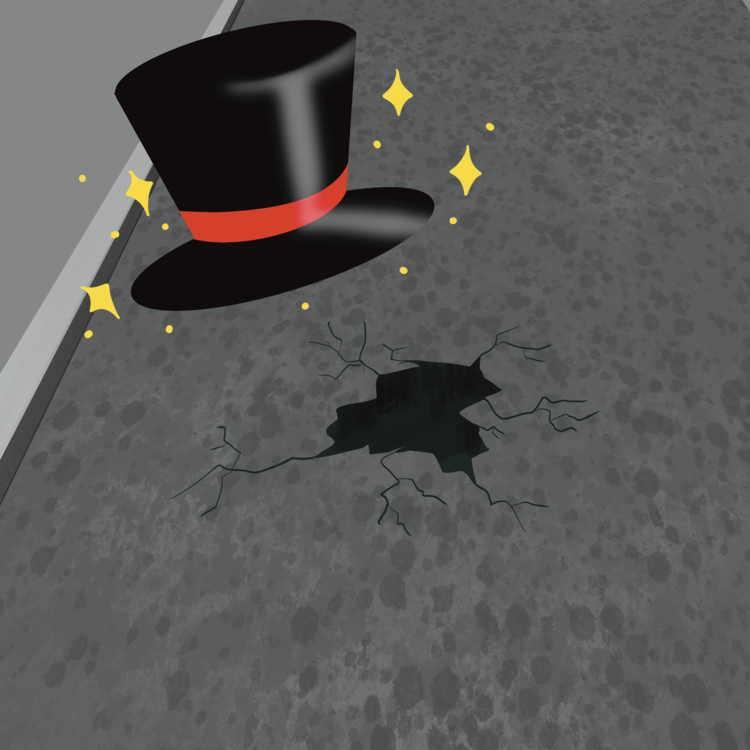
Every spring, Winnipeg enters its annual “pothole season,” when crumbling roads spread chaos from main routes to side streets, frustrating drivers, Manitoba Public Insurance (MPI) and city officials alike.
This recurring “pothole magic” stems from a devilish trio — heavy car use, climate change and sprawling development — leaving rising repair costs and unsafe roads in its wake.
Freeze-thaw cycles fuel Winnipeg’s potholes each season. Melting snow seeps into pavement cracks, and when temperatures drop, the sub-base expands, putting pressure on the pavement until it fails, creating new potholes overnight. Mix in heavy traffic and poor pavement, and you’ve added a key ingredient to the pothole magic recipe.
This unwelcome phenomenon spares no corner of the city, from Downtown and North Kildonan to Sage Creek and Waverley West. Pothole magic has become the city’s Achilles’ heel. In early 2024, Winnipeg filled more than 70,000 potholes within three months. In roughly this same period, MPI logged 1,466 pothole-related claims, up from 379 the year prior, citing the winter’s extensive freeze-thaw cycles. By 2025, those numbers dropped slightly to 45,247 potholes and 682 claims.
Climate change worsens conditions. The Narwhal in 2022 reported that warmer, wetter winters across the Prairies will put additional strain on cities struggling to maintain aging infrastructure. More frequent freeze-thaw cycles on a warming planet will increase these challenges. Roads in older neighbourhoods, already nearing the end of their lifespans, will deteriorate more quickly, further raising maintenance costs.
Urban sprawl also contributes to the problem. Low-density development stretches Winnipeg’s road network — and its budget — thin. U of M engineering professor Ahmed Shalaby told CBC News that many of Winnipeg’s roads were built 40-60 years ago, making them more vulnerable to cracks. Writer Michel Durand-Wood also told CBC that the city has more roads than it can afford to repair. This adds to the recipe of endless potholes, accelerating pothole magic.
Winnipeg’s pothole magic problem, worsened by climate change, is a fast-growing symptom of the city’s neglect and lack of financial foresight. Potholes reveal a deeper issue — Winnipeg’s failure to build within its means.
Decades of sprawl have created a city that is too big and too spread out to maintain. More pavement means more wear, more potholes and endless temporary repairs. Each spring, radio hosts joke about the damage while City Hall repeats the same patchwork cycle — raising costs but avoiding the real conversation about how pothole magic exposes our overreliance on cars.
This cycle harms those least responsible for it. Lower-income residents, people without driver’s licenses and those who take transit or cycle are subsidizing a car-dependent lifestyle that benefits wealthier residents. Bus riders see fewer improvements to transit and cyclists still wait for a safe, complete active transportation network while the city spends hundreds of millions expanding roads.
Winnipeg’s own Transportation Master Plan 2050 calls for a 50 per cent shift away from cars, yet over 80 per cent of Winnipeggers rely on a private automobile in some capacity as their main mode, about 9 per cent take transit and only 6 per cent walk or bike, according to Statistics Canada. As U.S. soccer analyst Taylor Twellman brilliantly said in 2017, “The definition of insanity is doing the exact same thing knowing the result.” That’s Winnipeg and many North American cities today.
City Hall keeps treating potholes with patches instead of policy, but studies show that reducing car dependency, investing in transit and cycling and rebuilding older neighbourhoods make cities more financially resilient. Better land use can lower costs, support climate goals and improve quality of life.
We cannot keep joking our way through pothole season every year. Pothole magic won’t disappear until Winnipeg stops repeating its mistakes and starts building a sustainable, livable city for everyone. Until we have real hard conversations between us as residents and city council, pothole magic will continue for a long time.
Adam Johnston hosts “Not Necessarily The Automobile” on Thursdays at 11:30 a.m. on UMFM 101.5. He can be reached at [email protected]