Former U of M professor Gerry Sande has played a key role in the development of performance technology that has been used by Olympic and World Championship curling teams.
Curling is widely believed to be one of the world’s oldest team sports, with roots dating back to the 16th century. Curling has evolved from its origins on frozen lochs and ponds to the modern indoor rink. While outdoor play continues in some regions when conditions permit, every national and international championship now occurs in an environment where the ice is scientifically controlled.
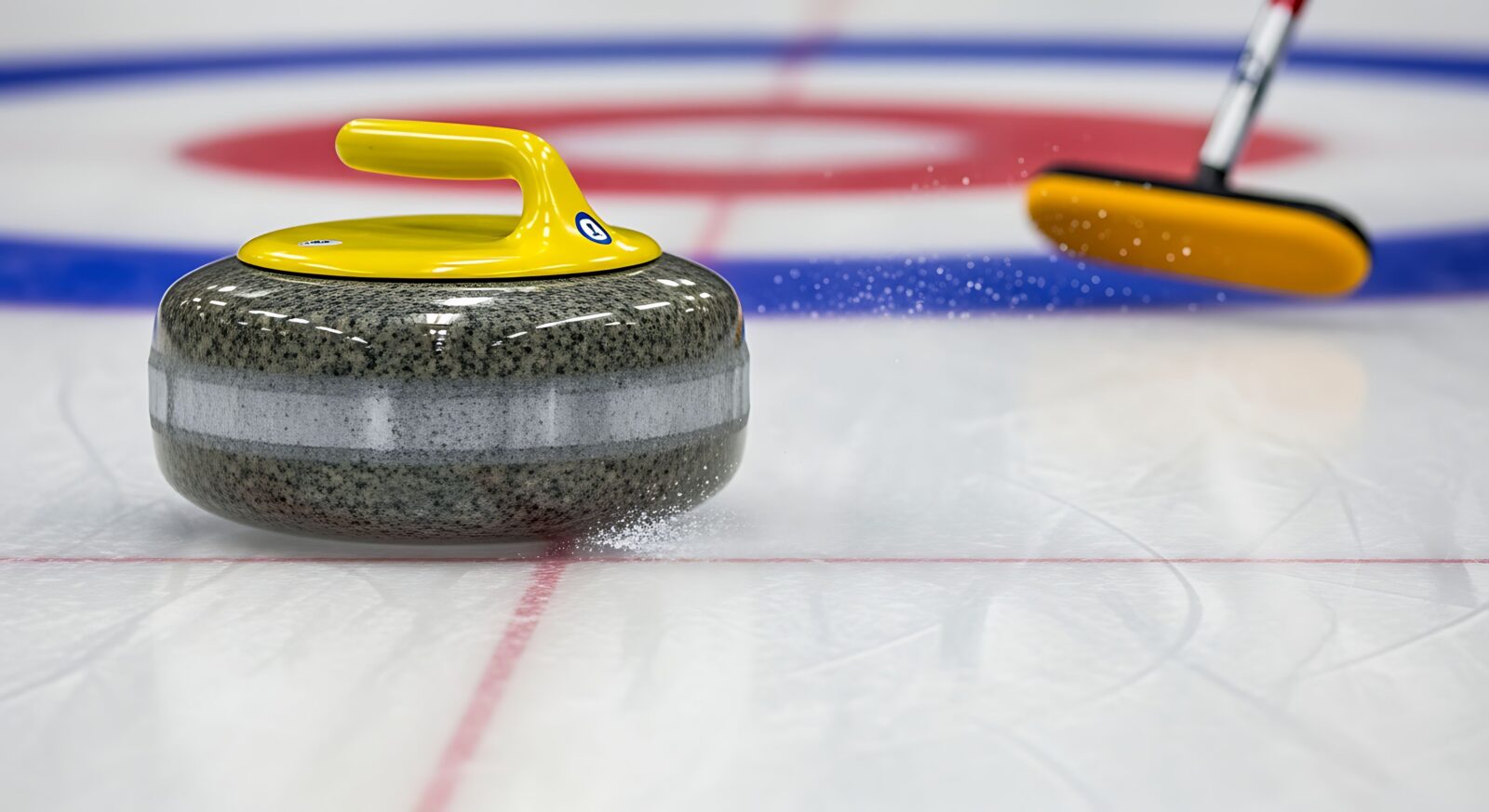
Regardless of venue, curling requires the use of brooms to sweep the ice on which the granite stone slides. Brooms are essential in every format of the game. They can be used to alter a stone’s path — changing its curve or making it travel further — both for attacking and defending. They are central to the slow, careful tactics of traditional teams and the quick pace of mixed doubles.
In a game where a millimetre’s distance makes all the difference, curling teams focus heavily on perfecting their sweeping with these brooms. After all, a winning strategy is heavily reliant on impeccable sweeping technique.
Just this year, there has been a crackdown on sweeping techniques by the World Curling Federation (WCF). The new 2026 Sweeping Technique Policy introduced by the WCF affects several of the sweeping techniques used in modern curling. While the policy does not eliminate all existing methods, it clarifies what types of sweeping are permitted and restrict techniques that could excessively manipulate the stone’s movement.
The main principles of the policy include that sweeping should only be used to increase the distance a stone travels, help it hold a straighter line, or slightly influence its curl. However, the policy clearly states that sweeping must not be used to slow the stone down or deliberately increase its deceleration. Techniques designed to dramatically alter the stone’s path in this way are now prohibited.
For Sande, an academic, nationally certified curling coach and the founder of Sande Curling, the improvisation of compliant curling techniques has been a decades-long challenge.
During the early 2010s, Sande set out to better understand how effective sweeping in curling really is. His goal was to find a way to measure performance objectively so athletes could improve their technique. He was interested in factors like the amount of downward force a sweeper applies, how fast they sweep, how performance changes over time and how fatigue affects power and consistency.
At the time, there was no technology capable of accurately measuring these details during sweeping. While searching for possible solutions, Sande came across pressure-sensing technology from the company Pressure Profile Systems (PPS).
A collaboration between Sande and PPS began in January 2013. Together, they developed a system that could closely analyze sweeping performance. The system made it possible to track where and how much pressure athletes apply while sweeping, as well as how their efficiency changes as they become fatigued. This provided researchers and athletes with valuable information for improving sweeping technique.
Through this collaboration, a new curling training brush was developed to help measure sweeping performance more accurately. The brush uses thin pressure sensors from PPS that can detect how much force a player applies while sweeping.
These sensors, a PPS product known as DigiTacts, were built directly into the brush head. They send data wirelessly to a computer where it is shown together with video footage of the athlete sweeping. This allows coaches and researchers to see exactly how much pressure is used, how often a player sweeps and how their performance changes over time.
The technology can also show when a player’s performance drops because of fatigue. This helps teams study stamina and decide which players are most effective at sweeping.
During testing, the system revealed details that are normally impossible to catch. For example, one player was found to lose pressure every fifth sweeping stroke. After coaches adjusted the player’s footwork, his sweeping efficiency improved by up to 50 per cent.
The sensors work by measuring changes between two electrodes when pressure is applied. According to Sande, the PPS system provides very detailed performance data, much more than most other curling training tools.
Sande has used the PPS training brush for over a decade to study and improve sweeping technique in curling. With the help of this system, coaches have been able to improve their teams’ sweeping techniques, and the system has been used by teams and athletes who later won national championships, world championships and Olympic medals.