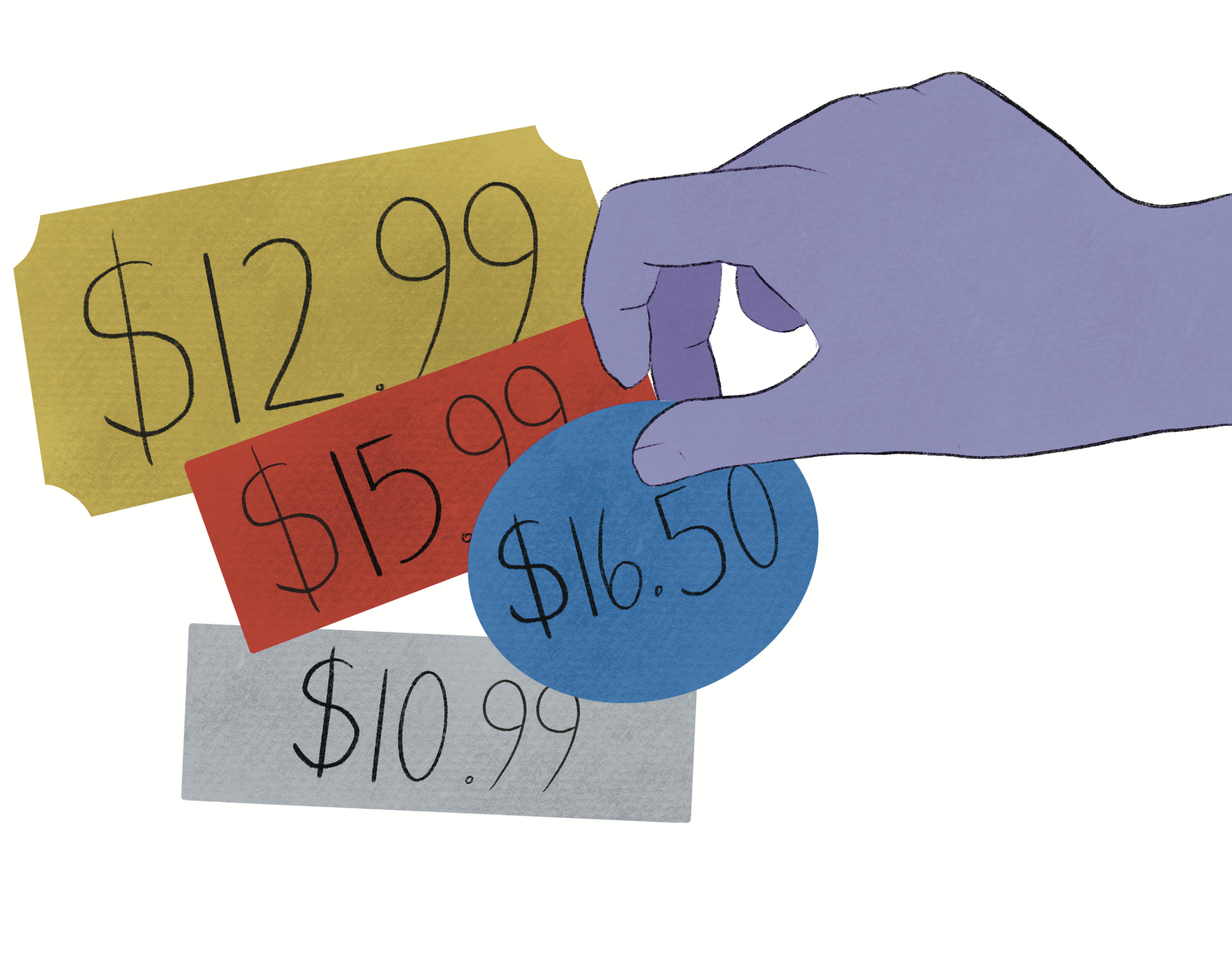
Despite the significant role price plays in consumers’ buying habits, dynamic pricing threatens to reshape how customers understand price.
Dynamic pricing, a strategy that adjusts prices to real-time demand, is not a new practice. Before the introduction of advertised pricing in the 1870s, fixed prices did not exist. Rather, prices were determined through haggling. This system required that shop owners keep track of the cost of a good, the range of profitable prices a product could be sold for, as well as their competitors’ prices. Because of this, a clerk’s position could not easily be filled. Shops retained apprentice shopkeepers who learned the process of haggling through years of training to serve as clerks. However, as businesses grew during the Industrial Revolution, the art of price negotiation proved to be inefficient. The lengthy process of negotiation resulted in long lines, and inconsistent pricing resulted in growing consumer dissatisfaction.
Despite its widespread use at the time, haggling was rejected by the Quakers who believed it to be morally wrong to charge different prices for the same product. Agreeing with the Quakers’ ideology, John Wanamaker, a Philadelphia businessman and practicing Presbyterian, decided to introduce price tags in his clothing store. Taking place right after Wanamaker’s grand opening, the 1876 world fair in Philadelphia gave millions the opportunity to experience fixed prices and price tags for the first time. Soon after, price tags became the standard practice for retailers in the West.
Although the introduction of the price tag largely made extinct the practice of price haggling in the Western world, dynamic pricing remains alive and well. While it is most famously associated with the airline industry, dynamic pricing is commonplace in many other marketplaces. Its mainstream use, however, has had adverse effects on unsuspecting consumers.
Allegations of rent-fixing against American and Canadian landlords have been raised in recent years. RealPage and Yardi, property management software providers, were recently under investigation by Canada’s Competition Bureau regarding their algorithmic pricing practices. Allegations suggested that the software train algorithms on competitively sensitive information provided by competing landlords, generating rent suggestions that are above the market value. Although the Bureau ultimately concluded that there was insufficient
evidence that RealPage and Yardi took part in abuse of dominance or anticompetitive conduct, its report suggests that it believes in the possibility of collusion through the use of algorithmic pricing.
If you think that dynamic pricing does not affect you because you are not a tenant, think again. The increased globalization of online shopping has made the practice inescapable. On websites, cookies — text files with small pieces of data — track user data, including searches and purchases. These cookies are in turn shared with third parties that can utilize user data, affecting the prices consumers see.
Artificial intelligence (AI) adds another layer to the issue. A new report suggests that 51 per cent of Canadian shoppers are open to AI completing the entire shopping process for them. The report also finds that 56 per cent of shoppers want AI to help recommend products that they may like. On the other side of the register, 78 per cent of retailers are open to agentic commerce — a next step in e-commerce where shopping is powered by AI agents acting on customers’ behalf.
What effect will this have on prices? Well, AI chatbots can easily gather sensitive personal data on consumers, and they have already been doing so. This data not only personalize product recommendations but can also be used as a means to predict consumers’ shopping habits, influencing prices. The influenced price is personalized — not everyone sees the same figure for the same product. In relation to algorithmic pricing, the data collected by AI is used to determine the highest price an individual is personally willing to spend, and a product’s price is presented accordingly.
While alarm bells have been sounding online, consumers may be unaware that new dynamic pricing practices are making their way onto shelves in brick-and-mortar stores. Replacing traditional price tags and labels are electronic shelf labels, available at local Whole Foods and Kroger stores across the United States. Walmart has stated intentions to follow suit in 2,300 of its stores. Although grocery prices have long been affected based on supply and demand, these labels allow employees to update shelf prices in minutes, compared to the two-day average it previously took.
While companies like Kroger claim that electronic labels allow them to effectively reduce prices and manage inventory, there is still a fear that retailers will take advantage, resulting in a surge in the price of basic goods. In Maryland, the governor has proposed the introduction of the Protection from Predatory Pricing Act, which seeks to ban dynamic pricing in supermarkets as a direct response to consumer concerns. Globally, consumers are calling for their local governments to follow suit to maintain affordability.
“Like empires, prices rise and fall,” reads one Expedia advert, referring to the dynamism of flight prices in the airline industry. It is true that, like empires, pricing conquers markets and encourage competition between rivals. Also, like many empires, fixed pricing may be a thing of history. It may be the case that prices were never really static to begin with. In any case, transparent dynamic pricing is a new normal that customers must adjust to.