St. Paul’s College hosted its annual Scholars’ Recognition and Reception on March 12 at the Fr. Harold Drake Library, bringing together faculty members from across disciplines to present their research contributions over the past year.
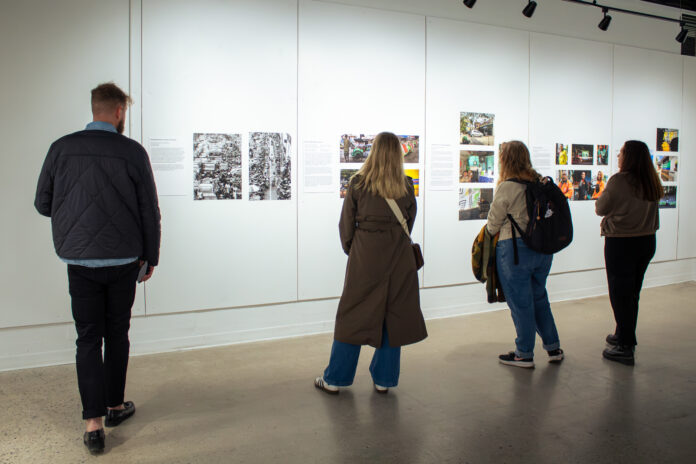
Faculty members from diverse fields were invited to share brief presentations about their research projects, allowing attendees to gain insight into ongoing academic work.
Christopher Adams, rector of St. Paul’s College, said the event was intended to show the interdisciplinary nature of the college’s academic community and “highlight all the work that’s happening among [their] scholars.”
During the reception, each scholar was given two minutes to present their research. This offered a snapshot of topics ranging from genetics and agriculture to political science and religious studies.
According to Adams, the event reflects the college’s unique interdisciplinary environment where faculty members from various U of M departments collaborate and share ideas. The gathering also allows students and visitors to see the scope of research being conducted beyond the classroom.
Dilantha Fernando, dean of St. Paul’s College and professor in the faculty of agricultural and food sciences, emphasized that bringing researchers from different disciplines together can strengthen academic work. Interdisciplinary research allows scholars to “learn from each other” and build collaborations that can lead to new research proposals and solutions to real-world issues.
Meredith Bacola, associate professor in Catholic studies and acting director of the Jesuit Centre for Catholic Studies, said events like this provide an opportunity for students to learn about faculty members’ areas of expertise and the research they conduct alongside teaching responsibilities.
“Sometimes they only see us as professors or staff members here within an institution,” Bacola said. “The other part of academic work is that we are all researchers or experts in our own field or discipline.”
For faculty members who would want to join the community, Fernando clarified that the college welcomes faculty from any department at U of M who are interested in contributing to its mission of social justice and community engagement.
Despite the impact of research, academics said balancing responsibilities can present challenges. Bacola pointed to time management as one of the difficulties scholars face. “The demands within a term, as our students know very well, are very cyclical,” she said, noting that faculty members often have to balance teaching, marking and administrative responsibilities while finding time to conduct research.
Researchers also emphasized that collaboration plays an important role in overcoming these challenges. Maneka Malalgoda, assistant professor in the department of food and human nutritional sciences, said partnerships with other researchers can help advance projects by combining different areas of expertise.
Malalgoda shared one of her recent projects focusing on improving the nutritional value of bakery products by increasing fibre and protein content, reflecting growing consumer interest in nutrient-dense foods.
For students interested in pursuing research, scholars at the event encouraged curiosity and initiative. Bacola advised students to pursue topics that genuinely interest them. “Follow your passion,” she said, adding that curiosity often leads students toward meaningful careers.
Malalgoda also encouraged students to take advantage of research opportunities offered by the university and funding agencies. “If you have the opportunity, I think students should definitely apply,” she said, encouraging students to reach out to professors whose work interests them.
Similarly, Haskel Greenfield, distinguished professor of anthropology, encouraged students to get involved by volunteering in research labs. “Find a professor that you want to work with and volunteer in their lab so that they get to know you,” he said as such connections can lead to future research opportunities and funding.
The college is set to celebrate its 100th anniversary, marking a century of academic scholarship, community engagement and interdisciplinary learning within the university community.
Fernando described the upcoming milestone as a reflection of a century of scholarship and collaboration. “[The] centennial means a lot because we have come a long way, a hundred years of excellence in academics,” he said.
The centennial celebrations are expected to begin in September 2026 and continue through the 2026-27 academic year, featuring scholarly and community events that celebrate the college’s history and contributions to the U of M community.
Students, alumni, faculty and community members who wish to take part in this celebration are invited to open this link to explore the various ways to get involved.