
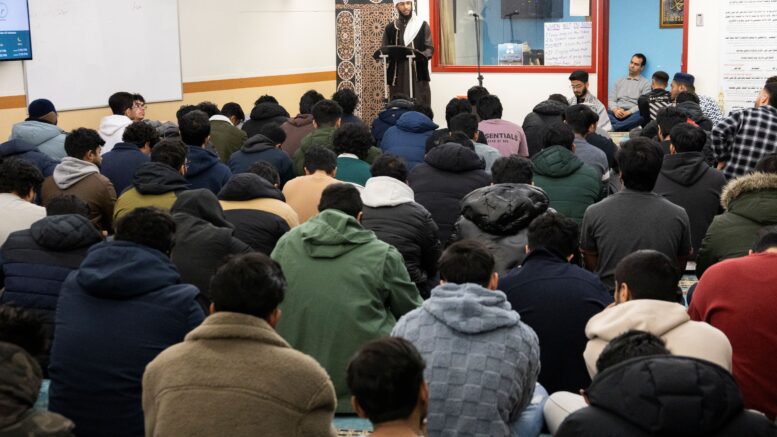
As the month of Ramadan continues at the U of M, the Muslim Students’ Association (MSA) is hosting nightly iftars and prayers, creating a space for students to gather, reflect and break their fast together.
During Ramadan, Muslims fast from dawn until sunset as an act of worship. Each evening, they gather for iftar, which is known as the meal that breaks the fast.
On campus, MSA organizes free iftar every day of the month, along with suhoor, the pre-dawn meal, during the last 10 nights.
Aryan Fida Nur, MSA internal relations manager, described Ramadan as “the best month.”
He explained that one of the reasons MSA is hosting iftar is because “sometimes students […] on campus, [do not] have time to go home and to break their fast.”
According to Fida Nur, the initiative has become a longstanding tradition supported by community sponsors.
“It happens through our sponsors. We have a very huge number of sponsors who donate the money to serve students.” The meals are free and open to everyone.
“The iftar is for everyone, for all the students, community members,” he explained. “Even if any non-Muslim wants to […] join.”
Haris Kamran, a civil engineering student and volunteer, also helps MSA during Ramadan.
“[I’m] making plates for them, making their seating plans, setting up everything so everything works accordingly for the students coming here to have food.”
Kamran said that non-Muslims are welcome to attend and observe.
“It is a very good opportunity to learn about […] the routine of a Muslim in Ramadan and how […] Muslims break their fast,” Kamran explained.
Bareera Kamran, MSA secretary and food lead on the sisters’ side during Ramadan, described the month as a time of increased worship and discipline.
“We make sure that we’re on our best behaviour,” she explained. “We pray five times a day and we try to practice more of our deen and do more religious acts because they are highly rewarded.”
Due to fire safety regulations, attendance at the mosque is limited to 250 people.
“Because of this capacity limit, we have to put a cap on the number of meals we order every day for iftar,” Bareera said.
Bareera expressed appreciation to the volunteers involved in this initiative.
“There’s about 30-35 people that are involved at iftar time every single day that show up to help us with setup, cleanup [and] food serving,” she said.
“Our Ramadan operation would be incomplete and wouldn’t even be possible without our volunteers.”
