Health Sciences Centre (HSC) Winnipeg has unveiled a next-generation Gamma Knife system, marking a major advancement in minimally invasive brain surgery in Manitoba. The new Elekta Esprit unit, funded through the HSC Foundation’s Operation Excellence campaign in partnership with the Province of Manitoba, replaced an aging system that had reached the end of its service life.
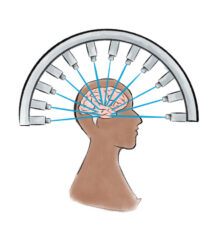
A Gamma Knife is not a traditional surgical instrument. First developed in Sweden in the 1960s, it is a form of stereotactic radiosurgery that delivers highly concentrated beams of gamma radiation to treat brain tumours, vascular malformations and other neurological conditions without making an incision. At HSC, more than 5,000 patients have been treated with Gamma Knife technology since its introduction in 2003.
Dr. Anthony Kaufmann, HSC neurosurgeon and co-director of Canada’s first Gamma Knife radiosurgery program, has been closely tied to the technology’s development in Manitoba. A Winnipeg native and U of M alumnus, Kaufmann completed medical school and neurosurgery training in Manitoba before gaining experience with one of the first commercial Gamma Knife programs in the world at the University of Pittsburgh.
In 2003, Kaufmann and Dr. Michael West helped establish Canada’s first Gamma Knife radiosurgery program at HSC. Since then, utilization has grown steadily. What was initially projected to serve about 100 Manitobans annually now treats more than 200, reflecting a broader recognition of radiosurgery as an effective treatment option.
The new Elekta Esprit introduces several upgrades over previous generations. According to the press release, it can treat larger tumours and includes integrated CT imaging, which eliminates the need for same-day MRI scans. Kaufmann explained that this added imaging capability improves scheduling flexibility across the hospital, benefiting not only neurosurgery patients but the broader system.
The system also offers a mask-based immobilization option, replacing the traditional head frame in some cases. This allows for “fractionation,” meaning larger tumours can be treated over several sessions instead of a single high-dose treatment. “We are able to treat patients with larger tumours compared to before,” Kaufmann explained. “If the tumour is too large, we have to divide that treatment up sometimes into three [to] five treatments.”
Planning efficiency has also improved. Kaufmann noted that the upgraded software allows neurosurgeons to adjust radiation plans quickly and interactively. “With the new technology, we can make those adjustments […] very efficiently using some AI-type technologies that allow us to interact with the computer to make the perfect plan.”
Gamma Knife radiosurgery now accounts for approximately 20 to 25 per cent of all brain surgery in Manitoba, according to Kaufmann. It is particularly effective for metastatic cancers that have spread to the brain from other parts of the body, such as lung or breast cancer. However, it does not replace open surgery in all cases. Large tumours causing immediate pressure often require conventional surgical intervention, and certain primary brain cancers are not suitable for radiosurgery.
Having the technology in Manitoba reduces the need for patients to travel out of province. Kaufmann emphasized that Manitobans can receive advanced treatment “with the best technology and with one of the largest experiences, over 20 years of experience,” eliminating the need to seek care elsewhere.
Beyond patient care, Kaufmann expressed broader implications for neurosurgery and medical training in Manitoba. He noted that maintaining advanced technology helps recruit and retain skilled neurosurgeons and creates educational opportunities.
“It’s important to maintain a level of excellence,” Kaufmann said. “You want to know that your doctors are not just competent, but they’re actually pursuing excellence.”