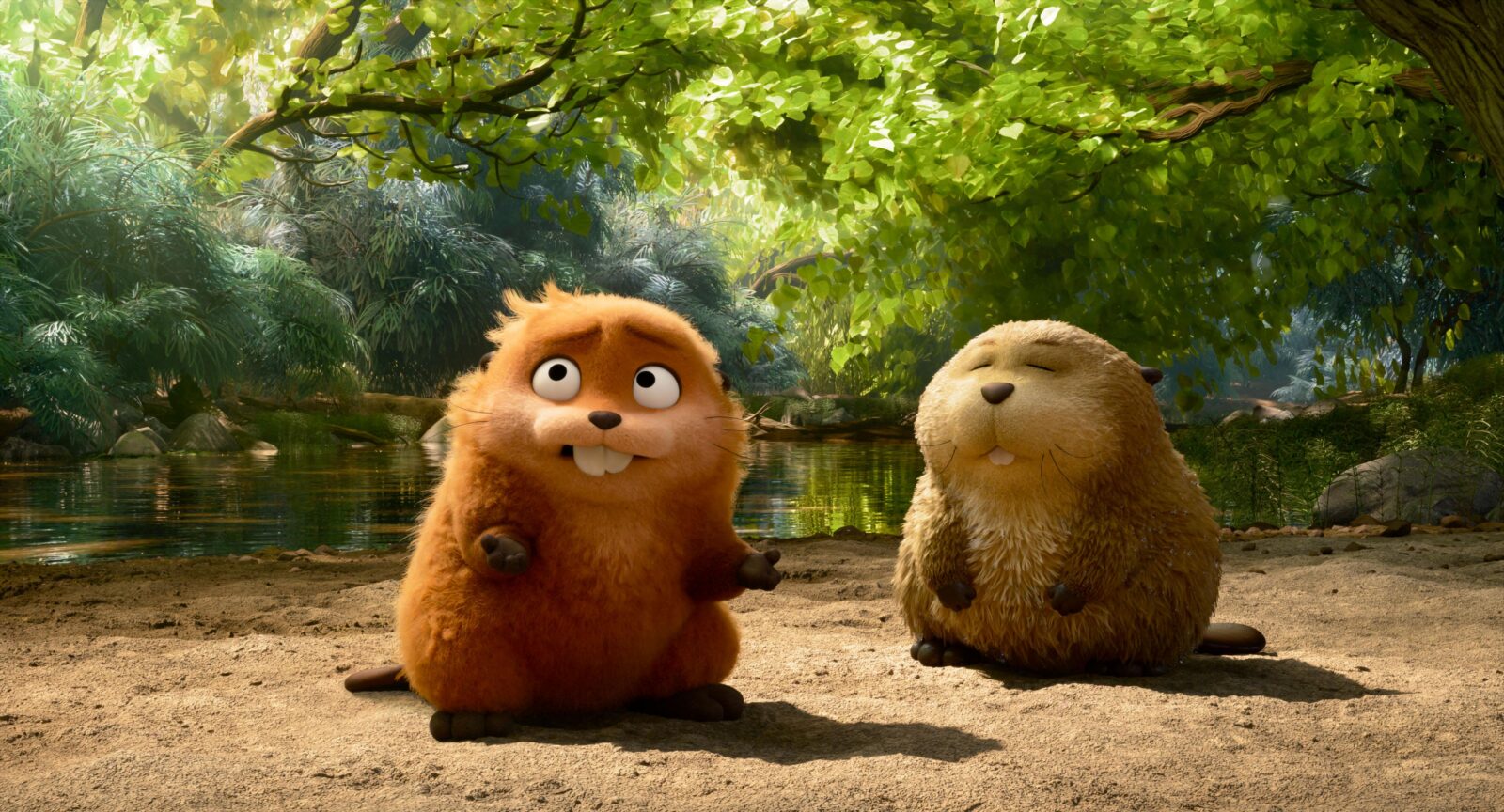
Pixar released their latest sci-fi comedy Hoppers earlier this month. Directed by Daniel Chong, the creator of the popular cartoon We Bare Bears, this whimsical, sometimes unhinged beaver-centred environmentalist film is entertaining, but also surprisingly philosophical and anti-establishment.
The film follows Mabel (voiced by Piper Curda), a nineteen-year-old animal-loving university student and environmental activist in Beaverton. She grew up at her grandmother’s house, spending much of her time admiring the wildlife in a nearby glade. One day, to Mabel’s distress, Beaverton Mayor Jerry (Jon Hamm) decides to build an overpass in the area, draining the glade and displacing the animals.
Mabel eventually discovers that her professors have created a “hopping” technology that allows people to transport their consciousness into lifelike robot animals. Determined to save the glade and bring the wildlife back, she hijacks the professors’ project and hops into a beaver model to rally the animals. However, in the process, the outspoken teenager inadvertently sparks an uprising in the animal kingdom, which now wants to assassinate Jerry.
Truthfully, some of the Pixar releases of this decade have been rather lackluster. Moreover, the environmentalist theme has already been explored in WALL·E, and the hopping technology in Hoppers is suspiciously similar to that of Avatar, prompting one Letterboxd user to call the film “Avatar (2009) for furries.”
However, I enjoyed the film, and there are things that Hoppers does well. The rotund and plush design of the animals are delightful, and the beavers, particularly King George and Loaf, are charismatic and endearing. The plot keeps the audience on their toes as well, with a climax that made the whole theatre gasp.
The film tackles relevant and important topics, depicting habitat loss due to human encroachment in a fun and digestible way. It highlights the interconnectedness and value of all beings, a notion known as deep ecology. The animals even see humans as their equals despite the destruction of their glade, before they got radicalized by Mabel.
Hoppers reminds viewers that non-human animals have agency, which must be recognized and respected. In both the movie and in real life, beaver dams create wet ecosystems that can stop forest fires. While animals in real life cannot exactly conspire the assassination of a politician, the film teaches that bad things can happen when capitalistic hubris oversteps boundaries.
Lastly, the film depicts a young person as a driver of social change on the front lines of conservation. Mabel is not afraid to take initiative, even if it means doing it alone. Although she accidentally incites violence against Jerry, she takes accountability and unites the human and non-human worlds in the end.
Unfortunately, the Moana-esque grandmother arc in the film feels shallow and cliché. The film’s art style and slapstick humour work well with children, but the ending derails into absurdity and uncanny body horror, which will likely frighten younger audiences. It is, however, still less unnerving than the blue humanoids in Avatar.
It is also hard to overlook the irony of Pixar, owned by the multibillion-dollar Walt Disney Company, producing an anti-establishment film. Despite pledges of sustainability and donations to conservation efforts, it came to light in 2021 that Disney is part of a lobby group that fights against climate legislation in the U.S. — a rude awakening from the kumbaya ending in Hoppers.
Can Hoppers top animal-themed Pixar classics such as Finding Nemo and Ratatouille? Probably not, but it is one of the more memorable and charming films to have come out in recent years. For those interested in animated films, environmentalism and lovable beavers, Hoppers might be the right log for you to chew on.