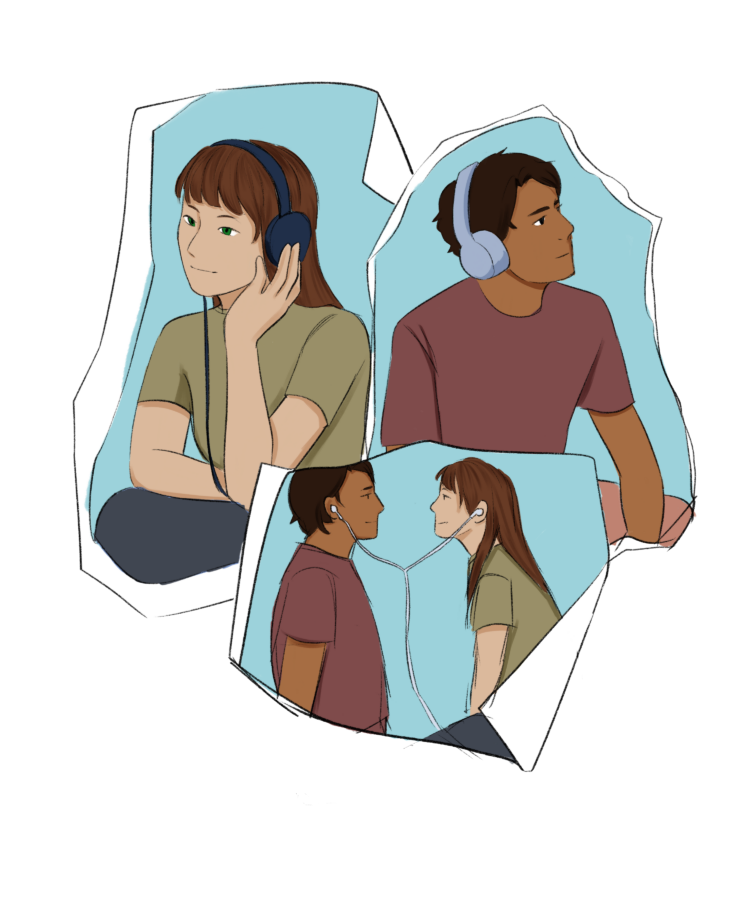
How do people form, maintain and experience meaningful relationships? Research suggests that many romantic relationships may not begin with a first date at all. Instead, they often grow out of friendship.
Jessica Cameron, a professor of psychology at the U of M, is exploring how romantic relationships form and why many begin with a platonic connection. Her work focuses on interpersonal relationships and the ways personality, identity and perception shape how people connect with others.
Broadly, Cameron’s research falls within social and personality psychology. Her interest in the topic stems from a broader fascination with human interaction.
“Lots of research from numerous labs demonstrates how important good quality relationships are for both psychological and physiological health,” she explained. “We are social animals and relationships are incredibly important to us.”
One of Cameron’s recent research projects examines what she calls “friends-first” romantic relationships. These are relationships that begin as platonic friendships before becoming romantic. The work builds on a 2022 study showing that about two-thirds of romantic relationships develop from existing friendships.
Since then, Cameron and her collaborators have conducted several studies comparing friends-first relationships with those that begin through direct dating. They asked participants to report on their romantic or sexual attraction toward a friend whose gender was compatible with their sexual orientation.
The results revealed an interesting paradox. Although many romantic relationships begin as friendships, most friendships themselves do not involve romantic attraction. “What we found was that attraction was only present in a small set of these friendships — roughly 10 to 20 per cent across the data sets we’ve collected to date,” Cameron said.
The research also suggests that the pathway through which a relationship begins may influence its dynamics later on. For example, Cameron noted that one of her graduate students found that participants in friends-first relationships reported somewhat higher relationship quality compared with those who began dating without a prior friendship. Another study led by an undergraduate student examined power dynamics within relationships. Participants in friends-first relationships reported a more egalitarian power structure, meaning partners tended to share decision-making more equally than those in dating-initiated relationships.
Cameron’s team is also studying what influences people’s preferences for different ways of starting relationships. Early findings suggest personality traits may play a role. For example, individuals who score higher in extraversion are more likely to prefer meeting someone new and beginning a relationship through dating. By contrast, people who hold stronger egalitarian values appear more likely to favour friends-first relationship initiation.
Looking ahead, Cameron is particularly interested in understanding what people mean when they say they were “friends” before dating their partner. Her team is preparing to conduct a thematic analysis of written descriptions from participants about the nature of their friendship prior to the start of their romantic relationship.
The goal is to identify patterns in the kinds of friendships that are most likely to transition into romance.
She continues to explore how individual differences like gender, sexual orientation, culture and personality shape relationship initiation. These projects involve collaborations with several graduate students studying relationship psychology. “I hope our work encourages other researchers to look beyond the traditional dating script in our culture and to study different pathways to forming romantic relationships,” she said.
Cameron hopes the research can have practical implications and believes it may help people better understand how meaningful relationships can develop. “Understanding how [relationships] form is incredibly important,” she said. “To reap the benefits of relationships, we must first form them”
Cameron’s broader research examines topics such as bias in relationship science and similarities between romantic partners.