Warren Blunt is an assistant professor in the U of M’s department of biosystems engineering. Blunt’s research uses industrial biotechnology to convert agricultural waste into environmentally friendly products that could reduce dependence on non-renewable resources.
His work focuses on the use of specialized microorganisms and enzymes to “upcycle” materials that would otherwise be discarded. In the context of the Canadian Prairies, that often means crop residues such as wheat straw or corn stalks. Rather than being left in the field or treated as waste, these materials can become inputs for new, sustainable value chains within agriculture.
“One of our projects is investigating the feasibility at taking inedible crop residues like wheat straw or corn stalks and using a specific bacterium to transform them into molecules with properties that can be used as biodegradable, non-eco-toxic fungicides,” Blunt explained. The goal is to create products that are both effective and less harmful to ecosystems, while also adding value for farmers.
Blunt’s interest in agriculture began early. Growing up in a rural area, he recalled spending hours watching farm machinery work nearby fields. Although he did not grow up on a farm, that fascination stayed with him. He initially pursued engineering with the expectation of a career in consulting, but an undergraduate research experience shifted his path. What began as a way to strengthen his resume became a long-term interest driven by curiosity, discovery and a desire to support sustainable development.
At present, Blunt’s research program is built around several pillars, including microbial carbon capture — a bioelectrochemical system that uses carbon dioxide and organic waste to produce biomass and generate electricity. Many existing biotechnological processes rely on sugars or other organic carbon sources to feed microbes. A significant portion of that carbon is released as carbon dioxide, much like human respiration. Blunt’s work explores alternatives.
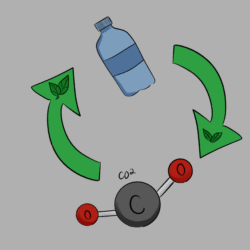
His lab has already made progress. Several microbes that use carbon dioxide have been successfully grown at small scale. These organisms can store energy in the form of a polyester material that can be extracted and used as a biodegradable plastic. Over the coming months, Blunt and his team plan to scale up this process and optimize production.
Blunt sees this work as addressing a major limitation in current “green” technologies. Many commercial bioprocesses still rely on crops grown specifically to produce industrial feedstocks, such as corn or sugarcane used in ethanol production. These systems compete with food production and depend on agricultural land.
According to Blunt, autotrophic microorganisms offer a different pathway. By eliminating the need to grow plants solely to capture carbon, these technologies decouple biomanufacturing from the ecological impacts of agriculture. “From an equity point of view, I think a better use for the acres we cultivate land is always feeding people directly as a priority,” he said, especially as the global population continues to grow.
Looking ahead, Blunt is also interested in expanding microbial biotechnology into food-grade applications. “Through [initiatives such as] the Protein Industries Canada supercluster, Canada is seeking to position itself as a global leader in plant protein,” he noted. Microbes could play a role in improving the quality of protein isolates from crops like peas, as well as finding uses for by-products like starch left over from protein extraction, Blunt explained.
Beyond research outcomes, Blunt emphasized the importance of training students. He described creating opportunities for students to build skills, experiment and grow as the most rewarding part of his work. While he no longer spends much time at the lab bench himself, he values mentoring students as they move through the process of discovery.
For students interested in entering this field, networking and risk-taking are important, according to Blunt. He encouraged students to explore summer jobs, join technical societies and speak with professors about research opportunities. “We are always happy to hear from students,” he reiterated.