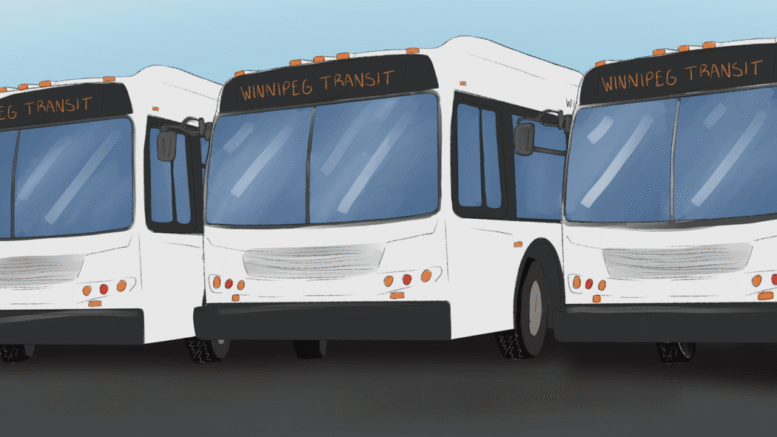
A transit riders union — successful in many other cities — is the next logical step toward restoring trust and accountability in Winnipeg’s transit system, which continues to face serious challenges.
Winnipeg Transit’s problems begin with reliability. Frequency issues were among riders’ top complaints, prompting the rollout of the Primary Transit Network, a spine-and-feeder system meant to reduce wait times and increase frequency. While some routes were improved, others were worsened with longer waits, continued bunching, missed connections and reduced service hours, especially in inner city neighbourhoods.
Bjorn Radstrom, Winnipeg Transit manager of service development, acknowledged these challenges and noted ongoing adjustments, which include an expanded On-Request service and longer hours on select routes. Still, riders remain frustrated, especially during evenings and weekends.
Concerns about safety have escalated sharply. According to Statistics Canada, violent incidents on Winnipeg Transit increased 281 per cent between 2016 and 2024. In response, Mayor Scott Gillingham launched a community safety force in 2024, investing millions of dollars. Recently, this force has focused on fare evasion, citing millions in lost revenue. Yet over-reliance on enforcement — especially when most riders affected are low income, Indigenous, women or people of colour — risks further eroding trust.
Meanwhile, fares continue to climb. Adult cash fares now sit at $3.45, on par with Toronto despite much lower service quality. Youth and senior fares have also risen. Most violent incidents are tied to fare evasion, which is driven by high fares. Despite rising costs, service has not improved, ridership has dropped and public confidence continues to fall.
Winnipeg cannot meet its climate goals without strong transit. Transportation accounts for nearly 50 per cent of the city’s emissions, mostly from private vehicles. The Transportation Master Plan targets a 50 per cent non-automotive mode share, but again, poor service disproportionately harms low income, Indigenous, newcomer and disabled riders who rely on transit most.
A transit riders union — representing those who use the system daily — is overdue. Transit decisions in Winnipeg are made with little meaningful rider input. Riders are the lifeblood of any public transportation system, yet as individual riders, their influence is limited.
A transit riders union reframes riders from “customers” to a political constituency. As the Seattle Transit Riders Union describes itself, it is “a democratic organization of working and poor people — including students, seniors and people with disabilities — taking control over our own lives, and building up the power we need to change society for the good of humanity and of the planet.”
Across North America, rider unions have won real gains. Toronto’s TTC riders recently forced a fare freeze for the third consecutive year. Seattle’s Transit Riders Union secured reduced fares for low income riders and coordinated a new transit map. These victories show what organized riders can achieve.
Winnipeg lacks an equivalent force. Past groups, like Functional Transit Winnipeg, have greatly contributed to public transit advocacy. Today’s challenges, including service reliability, equitable fares and balanced safety strategies, need to go one step further with a democratic riders union focused on those most affected. A transit riders union can identify service gaps, fight rising fares, advocate for funding that caps adult fares and ensure youth, seniors and vulnerable riders face minimal financial hardship. It can also push for safety approaches that include social supports, not just enforcement, while demanding transparent reporting and climate-aligned investment.
Students should help lead this effort. As one of the city’s largest transit-dependent groups, students at the U of M, University of Winnipeg and Red River College bring energy, vision and organizing capacity aligned with climate justice and public equity.
Winnipeg Transit riders are not just customers. They can be a powerful force for change. A safe, affordable, reliable and climate-aligned transit system is possible if riders choose to organize. A transit riders union is needed now more than ever.
Adam Johnston hosts “Not Necessarily The Automobile” on Thursdays at 11:30 a.m. on UMFM 101.5. He can be reached at [email protected]