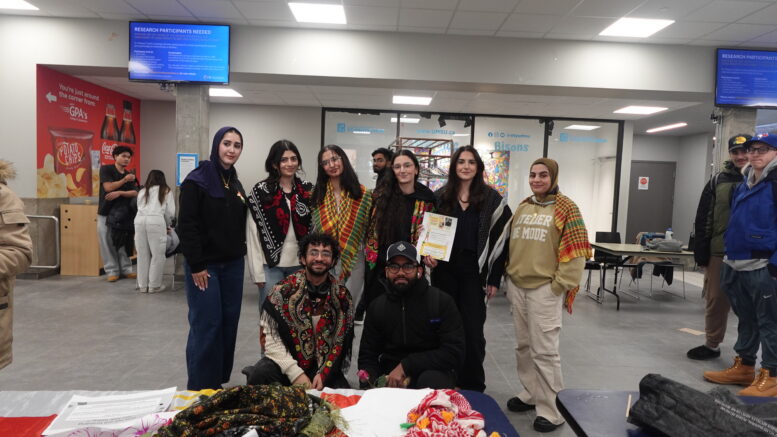
The Kurdish Student Association (KSA) hosted a solidarity event titled Braid Your Hair on Jan. 27.
The event aimed to educate attendees about the Kurdish people and raise awareness on the ongoing humanitarian crisis in Rojava. Hair braiding serves as a symbol of resistance and strength, inspired by a Kurdish fighter who died with her hair braided. After her death, a man cut her hair in an act of mockery, turning the braid into a powerful symbol of defiance and remembrance.
The Kurdish people are indigenous to the Middle East and inhabit regions across Syria, Turkey, Iraq and Iran.
They have their own distinct language, Kurdish, yet remain one of the largest ethnic groups in the world without a sovereign state, with a population of approximately 30 to 35 million. Throughout history, they have faced displacement and violence at the hands of various governments while also playing a crucial role in fighting against ISIS to protect Kurdish communities and the wider Middle East from its influence.
Diljin Nassan, KSA president, explained how they wanted to create a peaceful space for awareness as well as solidarity and support for the Kurdish students who are affected.
“The event was important because many people don’t know who the Kurdish people are and what is happening to them right now. Silence and lack of awareness allows violence and dehumanization to continue,” Nassan said.
Nassan was happy about the turnout. Many students interacted, engaged and asked questions about the Kurdish people and their current situation.
KSA’s next event will be a cultural event where traditional Kurdish clothes will be showcased, and people will also be able to learn about Kurdish history. “We will talk about assimilation,” Nassan explained. “A lot of people lost their identity. Some Kurdish people identify as Turks, Arabs [and] Persians as a result of assimilation and the ongoing violence they’ve been facing.”
Nassan hopes that everyone who visited their table during the event left with a greater understanding of the Kurdish people and their ongoing struggle. Reflecting on the event, Nassan emphasized that it was not political in nature. “We are not taking any side. We’re just standing for the children that died — we’re standing against the dehumanization.”
“Kurdish women fighters have played a historic role in the fight against ISIS,” she explained. “The event should be important for everyone for this important reason.” By braiding hair, attendees were acknowledging the sacrifices Kurdish women have made and showing respect to their strength and resilience.
Nassan hopes that people will help raise awareness, share what they have learned with others and stand up for the oppressed.
