After months of anticipation, the U of M Graduate and Postdoctoral Society (UMGPS) has announced the recipients
of its 2025–26 Teaching Awards, recognizing outstanding contributions to graduate education.
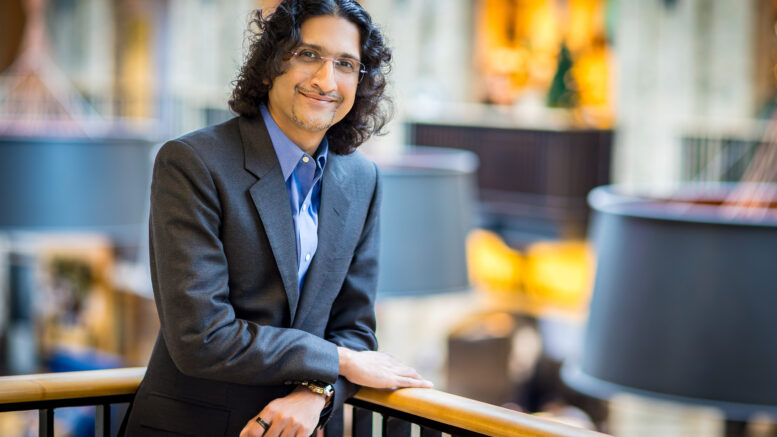
This year’s teaching award was presented to Saad Ahmad Khan, a faculty member at the University of Winnipeg’s
global college and a core faculty member of the joint MA program in peace and conflict studies at the U of M.
Khan, who serves in a dual academic role across both institutions, described the recognition as deeply
meaningful, both personally and professionally.
He described the award as a source of encouragement, particularly at a time when educators face growing
challenges in the classroom. “It is recognitions such as this one that give us the courage to go into the classroom,”
he said, pointing to the importance of affirmation and student support in sustaining meaningful teaching practice.
The award places Khan among a group of educators within the peace and conflict studies community to receive
this distinction. Three years on, he becomes the third recipient from the department, joining his long-time mentor
in what he described as a shared legacy of excellence. “My mentor […] Sean Byrne received this award a few years
ago,” Khan said. “To be the recipient of the same award is […] an honour which I cannot fully express in words.”
As a fourth-generation academic, he characterized teaching as “a familial vocation” that he approaches “with a lot
of humility, care and responsibility.”
At the centre of Khan’s work is a teaching philosophy grounded in engagement, openness and relevance. Drawing
inspiration from educator Parker Palmer, Khan emphasized the importance of cultivating classrooms where ideas
are actively exchanged and critically examined. He said, “the classroom should be a space where students feel
comfortable expressing their viewpoints and asking questions.”
He stressed that graduate education must go beyond the transmission of information to support deeper
intellectual development because “learning becomes most meaningful when students can connect [course]
material to real-world contexts and their own lived experiences.”
In accepting the award, Khan expressed gratitude to those who have shaped his academic journey —individuals
who have influenced his intellectual and professional life, including his family. “None of what I have achieved
would be possible without them,” he said.
He also credited students for building trust and confidence within the classroom. “[Students] are the future,” Khan
said, adding that they remain “the inspiration for the work we do.”
For educators aspiring to excellence in teaching, Khan offered advice rooted in authenticity and purpose. He urged
instructors to be “honest” with themselves, their goals and their students. “A classroom is a sacred space,” he
said, describing it as a place where educators “nourish and nurture the architects of tomorrow.”
He reminded educators of the lasting impact of their work. While change may not always be immediately visible,
Khan said, teaching ultimately leaves “footprints in the sands of time.”
Khan is an academic and international human rights lawyer whose research examines the factors contributing to
the radicalization of second-generation immigrants in countries such as Canada. His work also spans international
and counter-terrorism law, international criminal law, immigrant resettlement, post-conflict reconstruction and
civil liberties in polarized societies.
From student to faculty, Khan wins Teaching Award
U of M honours PACS educator for excellence in graduate teaching