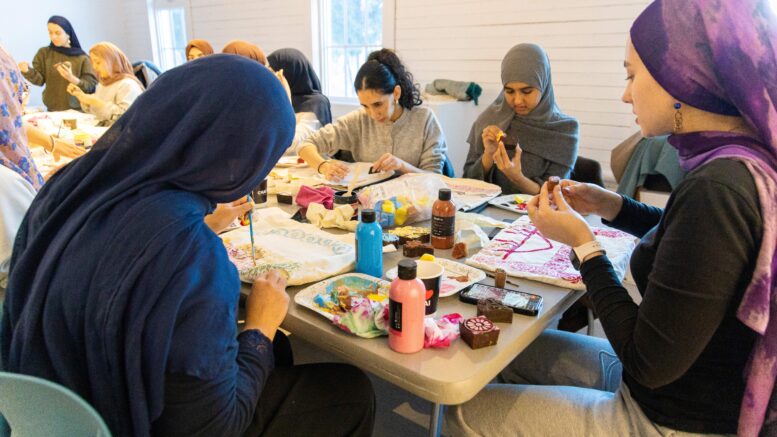
Kaarigar hosted a block printing workshop at the U of M Art Barn on Jan. 15 in collaboration with another creative
venture, Kas Enn Poz. The event was free and available for racialized (BIPOC) women.
Ifra Shami and Alayna Shami, founders of Kaarigar, explained that the name of their brand means “craftsperson” or
“artisan” in Urdu. Coming from a Pakistani background, the Shami sisters developed the program in response to
needs they observed within their community.
There is a large disconnect from traditional and cultural crafting practices because of migration and a lack of
teachers to learn these practices from. Their goal is to connect racialized women and students with people and
crafts and help them carry on these traditions.
Ifra mentioned that from their audience, which is racialized women, they rarely see people allow themselves
unconditional permission to rest, especially in a society where someone’s worth is often linked to how productive
they are.
“We find that [crafting is] a really mindful process that allows you to slow down and be very intentional with what
you’re creating,” she said.
Another issue that is common is that when people learn crafts, they are often taught without the cultural, social
and political contexts that surround these crafts. The Shami sisters want to change that by having people from
different backgrounds in their workshops who can share their knowledge and talent.
Their first event was an Ethiopian coffee ceremony where students got to learn how to make a jebena, a traditional
handmade coffee pot. Shami described the event as “intimate and intentional.” Crafting is not just a way to
preserve culture, but it is a form of resistance as well. “[Crafting] also always holds histories […] especially in crafts
that are cultivated by women […] Women have always observed their surroundings and their environment through
their crafts, so it’s another way of documenting history,” Shami explained.
Kaarigar is supported by Community Engaged Learning’s (CEL) Grow Your Community Fund and the Community
Leadership Development Program. Shami said they have received a lot of support from CEL’s office. CEL not only
helps with funding, but they also provide tools to help put the program in place and make it successful.
The Shami sisters hope to host an Indigenous beading and a Palestinian cross-stitching workshop soon. Their goal
is to help at least one person obtain knowledge about their own or someone else’s craft. They want to make art and
craft accessible and affordable to those who did not have the resources to learn while growing up
Craft as care and resistance
Kaarigar’s workshops connect racialized women with cultural knowledge