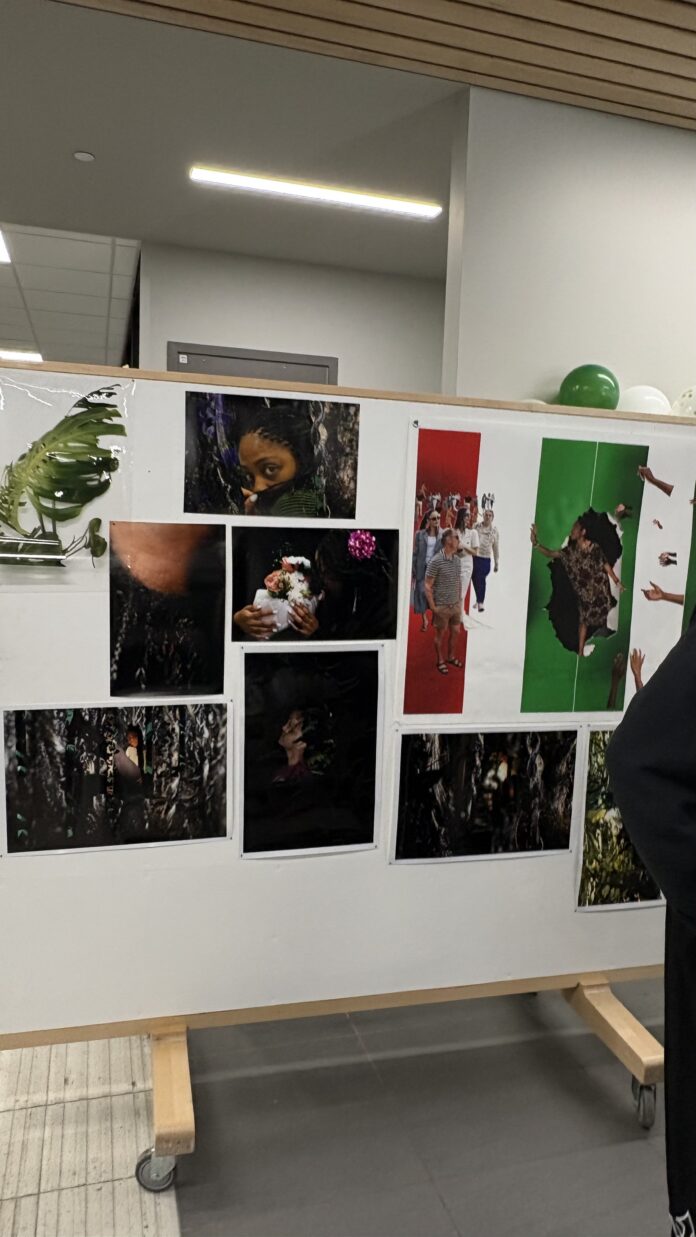
A truly haunting exhibition four years in the making had its U of M opening at the School of Art Gallery last week, where it summoned 100 years of ghost photography through a blend of contemporary art and historical photographs.
The Undead Archive: 100 Years of Photographing Ghosts is open at the School of Art Gallery, the UM Archives and at the University of Winnipeg in Gallery 1C03.
The exhibit is based on archival ghost photographs taken by Winnipeg physician Thomas Glendenning Hamilton and nurse Lillian Hamilton in the 1920s and ’30s.
The couple were inspired by Sir Arthur Conan Doyle’s lecture titled “Proofs of Immortality,” which he gave in Winnipeg about 100 years ago. The Undead Archive honours the work of its predecessors by recreating and re-establishing the artistry of psychical science.
Serena Keshavjee, professor of art and architectural history at the University of Winnipeg and curator of The Undead Archive, said the artists involved in the exhibit were essentially creating in response to the photographs.
There are 25 artists featured in the exhibit, including Estelle Chaigne from France. Chaigne reimagined some of the archival images in reference to an automatic writing phenomenon of the 19th century, which held that spirits were able to communicate through individuals in hypnotic states, and they would write out what they were hearing. Also on display is work by American artist Shannon Taggart, who Keshavjee said has documented “ectoplasmic excretions and spiritualist phenomena” through photography for 20 years.
When asked if she had any favourite pieces, Keshavjee said it’s impossible to choose.
“I love each and every one of them,” she said. “They were all very, very carefully picked.”
While the original archival photos serve as the basis for the exhibit’s new creations, Keshavjee noted that they are more than just inspiration for other work.
“I do find them artistic in themselves,” she said. “I find them very sophisticated technologically and aesthetically really appealing, and clearly I’m not the only one.”
However, the significance of the photographs goes beyond the artistic. The photos make up “one of the most important psychical science archives in the world,” Keshavjee said, adding that the people who took them “understood them as scientific documents.”
For Keshavjee, the images are one example of why historical archives are important.
“With archives, you get to see these forgotten, suppressed or lost histories,” Keshavjee said.
“To me it was really important to showcase this rich archive that we have here down the road, and then also to show how archives first of all introduce or reveal these forgotten histories, but [also] how they can continue to be important in pop culture.”
Programming related to the exhibition will be taking place until November, and Keshavjee’s book, The Art of Ectoplasm: Encounters with Winnipeg’s Ghost Photographs, launches Nov. 1 at the Grant Park McNally Robinson location.
The Undead Archive: 100 Years of Photographing Ghosts will be featured in Gallery 1C03 at the U of W and in the School of Art Gallery at the U of M until Nov. 10. UM Archives & Special Collections will feature the exhibit in room 330 of Elizabeth Dafoe Library until April 21, 2024. All venues are free to attend.
— with files from Gillian Brown